Showing posts with label The Roots. Show all posts

October 16, 2018

My Gut Reaction: The Roots - ...and then you shoot your cousin (May 19, 2014)


The Roots tend to rank among my favorite hip hop acts. The genre’s most well-known live band has never received the commercial success they absolutely deserve, but the Roots Crew have been critically acclaimed almost from the jump, and for good reason: they’re fucking great. Led by drummer Questlove and one of the best, if not the best, rappers in the game, Tariq “Black Thought” Trotter, The Roots have been honing their craft ever since their first offering, 1993’s Organix. Through their efforts, Philadelphia is no longer known as a hub of criminal boasts (see: Beanie Sigel, Freeway, Meek Mill), nor just as the hometown of the Fresh Prince. The fact that they appear on broadcast television every weeknight as Jimmy Fallon’s house band on The Tonight Show Starring Jimmy Fallon is just icing on the cake, a fitting reward for a career well-done. 

But that’s just it: they’re not done.

August 5, 2014

The Roots - The Tipping Point (July 13, 2004)


2004 was apparently a transition year for Philadelphia-bred hip hop band The Roots. After the release of their fifth album, Phrenology, two years prior, the group saw their numbers dwindling a bit. In the span of two years, they lost several band members, secondary emcee Malik B. (who, sadly, chose drug addiction over making music, although he's gotten a lot better, as I understand it), and human beatbox Scratch, best known for not being Rahzel, the Roots Crew's other human beatbox, who had left to pursue solo ventures quite a while ago. (They also lost guitarist Ben Kenney to the rock band Incubus. Seriously. I like a couple of Incubus songs, but honestly, he may as well have defected for Limp Bizkit or some other band so irrelevant today that they don't even make radars capable of measuring their impact.)

December 8, 2011

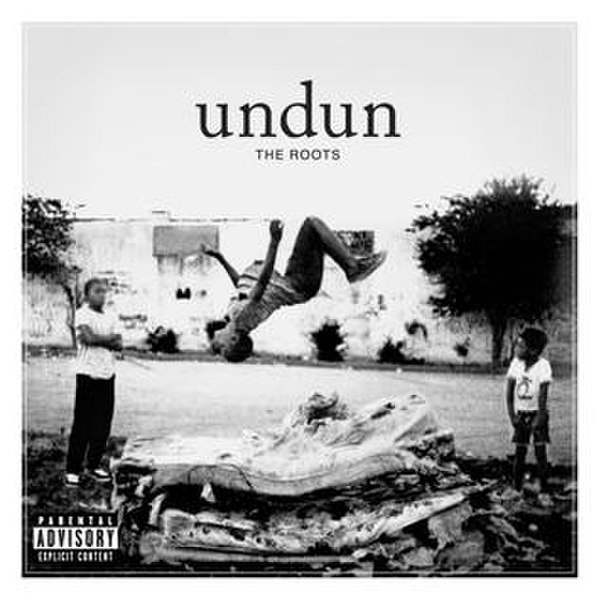
My Gut Reaction: The Roots - Undun (December 6, 2011)

Undun marks the eleventh studio album from Philadelphia-based rap band The Roots (not counting live albums or EPs, but including the John Legend/Roots collaborative project Wake Up! in the fold).  Which is a remarkable feat: there aren't many acts that are still a part of our chosen genre that make it to eleven officially released albums (because mixtapes, or "street albums", don't count).  What makes this even more impressive is the fact that The Roots have never really been a mega-successful act: they have their core group of fans who rush out to buy everything they put their hands on (read: me), they have the critics in their pocket because they actually perform an incredible live show (unlike most rappers), and they have seamlessly transitioned from hip hop underdogs to taking the house band gig at NBC's Late Night With Jimmy Fallon, which undoubtedly has increased the size of their fanbase and helped make the marketing of Undun much easier for Def Jam's promotional team.

To celebrate this feat, The Roots have written and produced Undun, their first concept album, one that serves as "...an existential re-telling of the short life of one Redford Stephens (1974-1999).  Through the use of emotives and Redford's eternal dialogues, the album seeks to illustrate the intersection of free will and prescribed destiny as it plays out 'on the corner'".  I took that description of Undun's general storyline directly off of the sticker affixed to the plastic wrapping, since nowhere in the goddamn liner notes does it even mention that Undun is a concept album.  I'm sure this is even more confusing for those of you who steal buy your music digitally.

Undun is a dark project that follows Redford Stephens and his life, which he spends hustling on the streets until his demise, which isn't a spoiler, since the sticker on the wrapping gives away our lead character's year of death.  ?uestlove and Black Thought lead their charges through a fourteen-track odyssey that follows Redford's life in reverse chronological order, beginning with his passing and working its way to a time when he was slightly happier.  This is done using Thought's verses as the internal dialogue and multiple instrumental tracks which set the tone masterfully.

This would be quite ambitious for any musical genre, let alone one as simultaneously simplistic and convoluted as hip hop. 

(Side note: I'm numbering the tracks in the numerical order they appear on the disc and not in the Roots Crew's usual fashion of labeling as a part of a bigger catalog, because (a) I feel like doing it this way, (b) this is how I've traditionally handled Roots gut reaction posts, and (c) I don't agree with one of the tracks on Undun being considered as a part of the Roots discography.  I'll elaborate when I get to the track in question.)

1.  DUN
As I'm sure you've seen reported elsewhere, Undun starts off with the sound of a heart monitor flatlining, and the music surrounding that effect grows a bit more uneasy as the intro moves along.  This sounds confusing, but life is confusing, and I couldn't think of a better way for Redford's tale to begin.  Believe me, I tried.  Now would I ever feel the need to listen to "Dun" again?  Never.  That's just how it goes.

2.  SLEEP (FEAT. AARON EARL LIVINGSTON)
The first song on Undun continues that unnerving trend, as Black Thought gives a one-verse dissertation on the mindstate of Redford Stephens while guest vocalist Aaron Livingston croons what serves as a chorus of sorts.  Truth be told, I liked Livingston's line, "I've lost a lot of sleep to dreams" before Thought essentially recycled the same idea during his performance.  But I liked the track overall: it sets the story in motion, and Tariq is as on point with his flow as ever.  Dude even sounds tired and defeated behind the mic, hopefully on purpose.

3.  MAKE MY (FEAT. BIG K.R.I.T. & DICE RAW)
This was the first track from Undun that leaked.  The album version sounds a bit different than what I remember first hearing, but I'm probably just insane.  The Roots gracefully hand off the first verse to guest star Big K.R.I.T., who impresses with his brief contribution that will probably endear him to the fans of Late Night With Jimmy Fallon who (a) are only familiar with the Roots Crew because of the show, and (b) haven't stopped watching after that stunt they pulled on Michele Bachman (which I thought was funny (and accurate), but whatever).  Thought continues the reverse narrative, still sounding weary (nice touch with the consistency), while Dice Raw provides a decent (sung) hook.  I liked how ?uestlove, Khari Mateen, and Ray Angry (who are all credited as producers) reserved the back half of "Make My" for a smooth instrumental that almost sounds...hopeful?  No, that can't be right.

4.  ONE TIME (FEAT. PHONTE, DICE RAW, & JAZZYFATNASTEES)
This shit was dope.  I know that "One Time" is technically part of a concept album, but it could easily slide onto any other Roots project, which is a pretty high compliment coming from me.  Over a fantastic Ritz and ?uestlove instrumental, Phonte (formerly of North Carolina crew Little Brother) takes the lead-off verse, dropping an Occupy Wall Street reference that proves he just recorded it within the past few weeks, but still sounds pretty good.  Thought handles the midsection, and Dice Raw both raps (during the final stanza) and sings (on the hook), giving the audience an opportunity to decide which version of Bert Jenkins they prefer.  For me, it's the rapper, although his singing voice has improved greatly.  Anyway, this shit was nice.

5.  KOOL ON (FEAT. GREG PORN & TRUCK NORTH)
I liked this track, but I can still like it and feel that ?uestlove's instrumental was kind of lazy, with looped soul vocals essentially becoming the beat.  The verses were pretty good, though: Truck North, Thought, and the artist formerly known as P.O.R.N. (although who really thinks that 'Greg Porn' is better?) all unleashing some fucking ferocious verses.  The overall theme of the Undun story remains on "Kool On", but you'll be forgiven if you've forgotten the overall existential themes of the record while listening to this track, thanks to the positive vibe that it attempts to give off.  At least, that's what happened to me.

6.  THE OTHERSIDE (FEAT. BILAL & GREG PORN)
I wasn't a fan of Bilal's chorus: it seemed a bit too cheesy for an album that is actually fairly dark.  I can get with everything else, though: Black Thought picks the story back up for those of you actively paying attention to it, and Greg Porn (it's going to be pretty hard getting used to that name) closes things out on the rhyme side.  The true star of "The OtherSide" is the instrumental, which is deceptively simple but keeps your head nodding...right up until the end, where everything slows to a crawl in the creepiest of ways.  Not bad, but could have been better had they left Bilal on the cutting-room floor.

7.  STOMP (FEAT. GREG PORN)
Early word on "Stomp" had placed producer Just Blaze both behind the boards and in a performance capacity, redoing the same vocal distortion trickery he first used on Jay-Z's "P.S.A." in order to make his voice sound like a sample from an old political speech.  Well, everyone was wrong about the production part, at least: former Bad Bot Hitmen Sean C and LV actually handle the music, to which there isn't much to write about.  (The jury's still out on the "sample", though, since the liner notes don't mention anything about source material or a guest appearance from Justin.)  Both Thought and Gregory Porn (which sounds like a childrens book character from the UK) each spit a single verse.  It's alright, but it isn't real enough to throw onto your Roots iTunes playlist.

8.  LIGHTHOUSE (FEAT. DICE RAW & JAZZYFATNASTEES)
Swings the pendulum back in the right direction.  Dice Raw and Black Thought trade off verses over a drum-heavy concoction that is as uplifting as it is depressing.  Comes across more as a Dice Raw track featuring Tariq, but that's a minor quibble.  Well, maybe not that minor, since Bert overpowers his host and manages to sound more impressive with both his verse and his two distinct choruses.  Still, I liked this song quite a bit.

9.  I REMEMBER (FEAT. JAZZYFATNASTEES)
I don't really seek out hip hop for its melancholy: if I'm feeling blue, I gravitate toward other sad bastard music.  But I dug "I Remember".  Black Thought finally appears on a song by himself again (the guest vocalists on the hook don't count for what I'm measuring right now), and he commits himself to Redford's tale over the course of multiple verses, but while he sounds good in doing so, I found his weary delivery a bit inappropriate, since this song appears near the end of the album, which is the beginning of Undun's story in the timeline, so now I think Black Thought has just gotten older, and hearing one of my favorite rappers sound like this makes me face my own mortality, which actually makes "I Remember" a lot deeper than it was originally intended.

10.  TIP THE SCALE (FEAT. DICE RAW)
Black Thought-as-Redford attempts to think somewhat optimistically, which sounds strange on this project, considering how it originally started off.  Unfortunately, I didn't care much for this song, so that's all I got.

The last four (instrumental) tracks on Undun constitute the "Redford Suite".

11.  REDFORD (FOR YIA-YIA & PAPPOU) (PERFORMED BY SUFJAN STEVENS)
12.  POSSIBILITY (2ND MOVEMENT)
13.  WILL TO POWER (3RD MOVEMENT)
14.  FINALITY (4TH MOVEMENT)
Undun concludes with a four-movement instrumental piece that reminded me of Phrenology's "Water" (especially during the third act, "Will To Power"), except without having the need to cope with former Roots member Malik B.'s drug abuse.  The first component, the excellent "Redford (For Yia-Yia & Pappou)" shouldn't ever really count as a Roots song, as it is both credited to and performed by Sufjan Stevens (and was lifted from his 2003 album Michigan), although it could be argued that his work is what inspired ?uestlove and company to write Undun in the first place, what with the main character's last name and all.  What is impressive is how well it meshes with the other three original pieces: when listened to as a whole, it sounds as beautiful as it is tragic, as though the music is being filtered through the ghost of Redford Stephens himself.  Which would scare the ever-loving shit out of me, since Redford Stephens is supposed to be a fucking fictional character.  There aren't many rap albums that would have the balls to tie things up in this fashion, but then again, The Roots have never been what you would consider to be "average".  And with that, we're out.

THE LAST WORD:  Undun is relatively short, sweet, and to the point.  The strokes painted by Black Thought, ?uestlove, and the rest of the Roots Crew are broad enough for listeners to enjoy the music without thinking too much about the underlying narrative, although that does exist for those of you who seek it out.  Ultimately, I enjoyed most of Undun.  There were a couple of tracks that I just didn't give a fuck about, and I even spun this entire album twice just to make sure, but most of Undun is really goddamn good.  The Roots sidestep their typical need for scene-setting intros, spoken word poetry, and, as of late, political anger in favor of a cohesive storyline that pays tribute to the late Redford Stephens in such a fashion that you'll almost forget that he isn't real.  Almost.  Undun is worthy of picking up.  It isn't perfect, and you probably won't sit through the entire project more than just the once, but the music itself marks a new-found maturity for a rap band who never had a problem with deviating from the norm.  Besides, that price in the Amazon link below is fucking amazing.  You two better jump on that before it goes away.

-Max

RELATED POSTS:

September 6, 2011

The Roots - Phrenology (November 26, 2002)


Thanks to that Reader Review of Game Theory that I ran last month, I was inspired to at least make some further headway on the overall catalog for the Philly-based hip hop band The Roots, mainly because, even though I'm happy for the fact that they seem to be earning a steady paycheck and are providing for their families and whatever, I would still rather not think of them solsly as the house band for NBC's Late Night With Jimmy Fallon.  

Phrenology is the crew's fifth full-length project, released on Geffen/MCA Records in 2002, three years after their previous magnum opus Things Fall Apart.  It followed both The Legendary EP and a live project, The Roots Come Alive, so it isn't as though the crew was taking a nap or anything.  It didn't sell nearly as well as their previous work, and commercially, it was deemed rather inaccessible, but critics seemed to love it anyway, as they are prone to do whenever The Roots release another album.

Phrenology is notable mainly for what was happening behind the scenes with the group at the time.  Since its inception, the two main rappers in the crew were Black Thought and Malik B: although you two are clearly more familiar with the work of Thought (by design), Malik B still played a vital role, reinforcing his boy's vocals when necessary and chiming in to add his two cents whenever the occasion called.  He was always considered a major component in what made The Roots the band they are today, so when he left the group in 1999, it was damn near heartbreaking.  When everyone found out that he left the group because he essentially chose drugs over music, it was mind-numbing.

Black Thought, the sole remaining rapper, and ?uestlove, the drummer-slash-leader, elected to keep the party going with their crew, but their minds were clearly in a fog, and most of Phrenology reflects that sense of unease that they felt during the recording process.  Not only were they dealing with the departure of a friend who chose a potentially deadly addiction over them (a subject tackled on the album's centerpiece, "Water"), they were also unhappy with their label situation, as they felt that the MCA machine that backed them at Geffen wasn't working as hard as it should have to promote their work.  

As a result, Phrenology is a Roots album that I don't really ever listen to, save for one specific song that will become obvious as this write-up continues.

(Tracks 81-86 were included on the limited edition two-disc version of The Roots Come Alive, hence the weird time jump between Things Fall Apart and Phrenology. I may get to that live album eventually, but for now I feel it's best to focus on the task at hand.)

87. PHRENTROW (FEAT. URSULA RUCKER)
Ursula Rucker's spoken-word introduction, which was inching towards pretention even with the few words that were actually spoken, is interrupted to bring you...

88. ROCK YOU
...this uncompromising missive, curiously produced by DJ Scratch instead of the usual suspects. Black Thought attacks the microphone and delivers bars chock-full of venom, lyrically decimating his enemies while subtly explaining that Phrenology will be nowhere near as commercial as Things Fall Apart. The man succeeds, as well: “Rock You” is really fucking good, and it kicks off the project well. The only real complaint I have is that there doesn't seem to be much in the way of participation from the rest of the Roots Crew: “Rock You” may as well be just your typical rap song featuring Tariq Trotter. Still, it sounds fucking balls-out rocking, so I wasn't that miffed.

89. !!!!!!!
A quick punk interlude-slash-song that signifies, once again, that Phrenology won't be your average rap album. A bit unnecessary and extremely jarring, but still not entirely awful.

90. SACRIFICE (FEAT. NELLY FURTADO)
After the pulse-pounding “Rock You” and the genre-defying previous track, The Roots present listeners with...well, with this shit. “Sacrifice” brings the momentum of Phrenology to a standstill with its focus on imparting a lesson to the audience (anything worth fighting for will demand some amount of sacrifice), wasting a perfectly decent pre-Timbaland Nelly Furtado performance in the process. Black Thought's lyrics are decent enough, but the instrumental is too fucking boring to fit in with the rest of the tracks on the first half of the project. I'm starting to remember why I don't really listen to most of Phrenology anymore.

91. ROLLING WITH HEAT (FEAT. TALIB KWELI & DICE RAW)
The Roots Crew snap back to their senses for this heavy-hitting collaboration with underground stalwart Talib Kweli, who sounds excited to have finally earned a spot alongside the group (as his vocals were deleted from Things Fall Apart's “Double Trouble” to make more room for his Black Star partner Mos Def), which translates into an entertaining performance. Thought blows his shit out of the water easily, with a verse that carries all of the titular heat that he is allegedly rolling with, and the chorus is so lackadaisical that you can't help but laugh (especially as it features it features the first singing performance of Dice Raw, who doesn't (officially) appear anywhere else on Phrenology), This shit was pretty fucking great, but the outro at the end (which leads into the next song) wasn't necessary.

92. WAOK (AY) ROLLCALL (FEAT. URSULA RUCKER)
Ursula Rucker, who oddly did not retain the end slot on Phrenology, returns for another interlude, one which lists the names of two hundred and thirty rappers and groups (according to the liner notes, anyway) within the span of fifty-nine seconds. The real question is: how in the fuck did Justin Warfield score the final shout-out?

93. THOUGHT @ WORK
This “Apache”-sampling masterpiece showcases Black Thought at his finest (which is weird, considering that his entire performance is an homage to Kool G Rap and DJ Polo's “Men At Work”), as he flows effortlessly while moving the crowd, even when singing on the hook. The song that appears on Phrenology is pretty awesome, but the original version, which was earmarked for Thought's Masterpiece Theater solo album which never materialized, featured a Beatles sample (specifically “Hey Bulldog”) that proved impossible to clear: that earlier effort, which is otherwise exactly the same as what listeners actually ended up with, can be found pretty easily on the Interweb and is worth the price of admission. I love both incarnations of “Thought @ Work” for different reasons, but the one consistent point between the two is that the track is fucking amazing.

94. THE SEED (2.0) (FEAT. CODY CHESNUTT)
Phrenology's second single is a remake of a Cody ChesnuTT song (obviously called “The Seed”), with the original artist thrown in for good measure. It's amazing just how good Thought can sound over nearly any type of instrumental, especially this rock-tinged piece, and their invited guest sounds so good alongside his new collaborators that it is kind of sad that nothing further ever came of this pairing (although there have been rumors of new tracks floating around, none of them have ever made the final cut of any Roots album). Oh well, at least he scored a starring role on a Roots album with a fairly profane and heartfelt performance.

95. BREAK YOU OFF (FEAT. MISIQ SOULCHILD)
I never cared much for “Break You Off”, Phrenology's first single: in fact, its mere existence made me briefly reconsider my blind love for the Roots Crew. It doesn't help that the album version of this track is over seven minutes long, which seems all sorts of redundant. Black Thought uses the R&B-lite instrumental to woo a woman away from her man, and special guest star Musiq Soulchild (who, according to ?uestlove's extensive liner notes, was far from their first choice for the slot) sings about it as though stealing someone's girlfriend is the most natural action in the world. “Break You Off” wears out its welcome well before the beat takes an odd drum-n-bass turn toward the end. This song is proof that some of the group's impulses need to be regulated just a tiny bit more.

96. WATER
Phrenology's ten-minute-plus centerpiece is another example of excess on the part of The Roots, but in this case it all makes sense, sort of: after hearing Black Thought witness his friend and rhyme partner Malik B. choose drugs over music, ?uestlove uses the remaining two-thirds of the track to score the uncertainty of how the band felt about this fucked-up turn of events. A bit too experimental for its own good, perhaps, but it draws you in and refuses to give you room to breathe. My wife loved this song the first time she heard it while driving, so it isn't inaccessible, but I guarantee that it will turn off most of the Roots Crew's fans, not because of its length, but mainly because the feelings put on display are so unflinching that it may simply make them uncomfortable: Thought sounds so mournful that you will need to be reminded that Malik B. hasn't passed away. It should be noted that “Water” is an extended version of yet another track intended for Masterpiece Theater, broken into three separate movements, the first (conveniently titled “The First Movement”) being the original Tahir-produced song, and the other two instrumental segments (“The Abyss” and “The Drowning”) handled by The Grand Wizzards.

97. QUILLS
On any other album, “Water” would have called it a day, but The Roots still have much more to say. In spite of the pleasant-sounding but still really fucking weird interpolation of “Breakout” from The Swingout Singers used as a chorus, “Quills” is a simple banger featuring Black Thought giving every other rapper in the industry a run for their money, thereby helping the audience understand why Phrenology was originally supposed to be his solo album in the first place. His bars aren't especially memorable, but the track remains consistently entertaining, right up until the goofy interlude that ends the song on an off note.

98. PUSSY GALORE
This track is the recipient of the goofiest comment in ?uestlove's liner notes: after listening to it, Nelly Furtado (who does not appear on here, mind you) said that it sounded like walking barefoot through a sleazy alleyway in Thailand. Personally, I don't hear that distinction: “Pussy Galore” just sounds like a suck-ass song that hides its message behind an intentionally vulgar facade (in this case, the title), not unlike pretty much every single episode of South Park. Former Roots member Scott Storch lends the team an instrumental that isn't nearly as grimy as it wishes it could be, and Black Thought is left to sweep up all of the pieces. Groan.

99. COMPLEXITY (FEAT. JILL SCOTT)
Black Thought and Jill Scott reunite to deliver a follow-up to their original cut of Things Fall Apart's “You Got Me” (before Scott was replaced by Erykah Badu at the label's behest), and this track sounds lust as dull and out-of-place as that Grammy Award-winning song did. It isn't technically a bad song, but it sounds as though Thought was panicking and elected at the eleventh hour to record a song for the ladies, failing to understand that any woman listening to The Roots already likes him for the battle rapper that he is. There are genuine feelings revealed on “Complexity”, but there is no real reason for you two to actually try to find them or anything.

100. SOMETHING IN THE WAY OF THINGS (IN TOWN) (FEAT. AMIRI BARAKA)
The concluding spoken word slot on Phrenology is occupied by Amiri Baraka, who fills over six minutes of space with a reading that would severely try my fucking patience had it not been for the music lying underneath, which helped things move along. Still, this is spoken-word poetry, and any longtime reader will know how I already feel about that.

Phrenology contains two blank data tracks, and then the bonus songs kick in.

RHYMES AND AMMO (FEAT. TALIB KWELI)
After a lot of dead air, this hidden track, which also appeared on the Soundbombing III compilation, finally appears, and when compared to that other Roots/Talib Kweli collaboration found on Phrenology, it fails miserably, as it sounds much more conventional than “Rolling With Heat” (although I will admit that it is interesting that both of their collaborations casually reference guns in their titles). At least Black Thought sounds invested in his work, anyway. But of the Roots had to pilfer their back catalog for a bonus track to give their fans, there were surely some better alternatives in the vault.

THIRSTY!
A needle scratches the record, and suddenly “Rhymes and Ammo” becomes “Thirsty”, which flips Phrenology's script entirely even though the two songs share the same audio track. I'm fairly certain that this electro-tinged dance song, which barely features Black Thought, was taken from a different source, but I couldn't find any information about it online, and since it's technically a bonus track, the liner notes don't seem to be aware of its existence. The song itself was incredibly slight and probably wouldn't even warrant a first listen, let alone repeat offenses, had it not been for a brief appearance from who I believe to be former Roots member Rahzel, whose human beat-boxing elevates the track into the realm of a curiosity piece. Still, what a weird way to end the album.

Actually, I take that last statement back: Phrenology actually ends with yet another blank data track, but there are no surprises hidden afterward.

FINAL THOUGHTS: The Roots set out to record an anti-Things Fall Apart with Phrenology, and to that end they were very successful, even though a lot of this album is ridiculously hard to give two fucks about. In fact, it's damn near impenetrable, and aside from some selections from the first half, it sure as fuck isn't very accessible. Black Thought, ?uestlove, and company experiment with the very idea of what a hip hop album is supposed to sound like, mixing elements together that shouldn't really mesh, and for the most part, they really don't. There are some fantastic tracks on Phrenology, but their sporadic appearances are bookended by a low budget indie film-level of pretention, which I gratefully accept for the deep “Water” but not for the rest of this shit. I give credit to The Roots for refusing to sit on their laurels and for actually challenging the audience, but on Phrenology, they overstepped their boundaries and only barely recover. It's pretty hard to recommend Phrenology to anybody, including actual Roots fans.

BUY OR BURN? While there are some excellent songs on Phrenology, it only deserves a burn, as the majority of it will collect metaphorical dust on your hard drive. Nice try, Roots Crew, but “Thought @ Work”, while great, isn't a strong enough track to elevate the entire fucking project.

BEST TRACKS: “Thought @ Work”; “Water”; “Rock You”; “Rolling With Heat”

-Max

RELATED POSTS:

August 21, 2011

Reader Review: The Roots - Game Theory (August 29, 2006)


(While I'm still working on the back catalog of seminal hip hop band The Roots, frequent contributor A.R. Marks has decided to skip ahead and provide his thoughts on their seventh album (and first for their current label home Def Jam Records), Game Theory. Leave your comments for him below.)

The Roots have been around pretty much forever. These guys started up in 1987 under the name The Square Roots, which, coincidentally (prepare to feel old, 80's babies), is the same exact year that this reviewer was born. It took them until 1993 to release an album, entitled Organix, a mishmash of progressive jazz noise interspersed with scat-styled exclamations from the group's then current emcee lineup of Black Thought and Malik B.

I mention all of this only to draw incongruous and, possibly, shocking contrasts between the group as it was then and how The Roots look today (or, at least, how they looked in 2006, when the album I'm writing about was released). I present to you, the reader, that no other group or act in the history of hip hop has seen such an extended period of activity, relevance, and popularity. Sure, they never achieved the quasi-messianic status of The Notorious B.I.G. and 2Pac, the Bill Gates-esque stature of Jay-Z, or the nearly-all-encompassing popularity of Kanye West and Eminem...but consider this: their debut album dropped when A Tribe Called Quest was considered fucking cutting-edge, and their most recent offering for 2010 (How I Got Over) finally, finally saw the group penetrate somewhat into pop culture consciousness, and despite their constant touring schedule they've never once gone more than three years without releasing an album during that entire span of time.

The group's lineup has been continually skewed, and in 2006 their DJ, Scratch (not to be confused with the producer DJ Scratch) departed. Furthermore, bassist Ben Kenney had left the group to join, of all bands, Incubus (approximately five years after they had reached the height of their fleeting popularity), leaving the band with – gasp - only one bassist, Leonard Hub. Their seventh album, Game Theory, was their first on the newly-Jay-Z-helmed Def Jam Records, and it saw the sort-of-return of long lost crew member Malik B., who sources say had found a mysterious board game in a construction site, unwittingly rolled a turn, and ended up imprisoned within the game's jungle-esque alternate reality until such time as ?uestlove and Black Thought completed the session and freed him a full seven years later, just in time for the recording of this project.

1. DILLTASTIC VOL. WON(DERFUL)
In deference to the recently-deceased super-producer J. Dilla, who ?uestlove has openly admitted had input on every last beat the drummer produced from the group's inception until his death that year, the group kicks off their album with an appropriately pretentious, empty introduction that features a synthesizer augmented with boring filters. Running at about fifty-four seconds, this track is just long enough to be worth skipping the hell over.

2. FALSE MEDIA (FEAT. WADUD AHMAD)
Thankfully, the second track picks things up with speed. This real introduction to Game Theory utilizes crisp drums (the hallmark of using a real drummer, rather than some drum machine bullshit), some trippy effects and synthesizers, and a refrain culled from a Chuck D sample that serves as this album's mission statement. Black Thought follows this with a terrific, claustrophobic verse aimed at bringing you into the group's paranoia in real time.

3. GAME THEORY (FEAT. MALIK B.)
The title track fades in over winding guitars and dynamic horns laid in for effect, before jumping to full momentum with Black Thought wrecking both heaven and hell. Then comes the moment Roots fans were waiting for: the return of Malik B.! Although he kicks a pretty impressive verse, his contribution comes off as sort of superfluous, as the two emcees lack the chemistry that they had shared back when Malik was still an official part of the group.

4. DON'T FEEL RIGHT (FEAT. MAIMOUNA YOUSSEF)
“Game Theory” feeds directly into “Don't Feel Right,” a dark, rolling concoction of melancholy piano chords, wailing vocal samples and the album's thus-far-trademarked combination of thumping bass and drums, while Thought continues to spit vivid, technically and structurally impressive, back-against-the-wall raps about freedoms being stolen and unseen oppressors watching the every move of the masses.

5. IN THE MUSIC (FEAT. MALIK B.)
Dialing down the tempo for a moment, The Roots deliver a haunting, hypnotic guitar arrangement suspended over trashcan drums by a building, shifting bassline and Thought's sneering indictment of the powers that be. After a fluid chorus (provided by what sounds like an uncredited Dice Raw), complete with trippy, echo-y filters, Malik B. makes his second contribution. Over the slower tempo, Malik provides a slightly better verse; on this track, he and Thought seem to be on a much similar wavelength.

6. TAKE IT THERE (FEAT. WADUD AHMAD)
The group coasts on its mesmerizing vibe, building a winding guitar backdrop for Thought to continue expressing his issues with modern society...before ?uest and co. give it an adrenaline shot, morphing the song into a threatening piano-and-drum-driven affair. Two thumbs.

7. BABY (FEAT. JOHN-JOHN)
A delectable, bluesy beat constructed out of muted a guitar and an elastic bassline, “Baby” is the album's centerpiece. Its mutating, drawn-out sound provides Thought with a platform to spit the mournful story of a girl in thrall to a cheating man who, just to make him a real bastard, constantly rags on her for liking hip hop.

8. HERE I COME (FEAT. DICE RAW & MALIK B.)
Kicking things up a few notches, The Roots provide some dynamic, uptempo drums and a cinematic synth line underscored by hard guitars. Dice and Malik provide quotable verses with laudable flows, but Black Thought really steals the show here, spitting one of the best verses on an album full of great lyrical work.

9. LONG TIME (FEAT. PEEDI CRAKK & BUNNY SIGLER)
The first even vaguely upbeat track on Game Theory, this jawn makes use of synthesizers, but in a decidedly more soulful and optimistic manner than anything the group had previously attempted. Astute listeners will note that this track is the cornerstone to the sound of The Roots' latest effort (as of this writing), How I Got Over. Guest star Peedi Crakk shows enthusiasm, but it's almost unavoidable to wish that The Roots had recruited one of his State Property cohorts instead, such as Freeway or Beanie Sigel. (Or both of them, even. Would that really be too much to ask? The Roots, Free, and Beans are all from Philly, they were all signed to the same general label (Def Jam) at one point, and two of them are already in a group together, for fuck's sake.)

10. LIVIN' IN A NEW WORLD (FEAT. JOHN-JOHN)
This track continues in the same uplifted vein of the previous song, utilizing subdued singing, a fluid, relaxed guitar line and lighthearted flutes thrown in for good measure, although Thought rants about a perceived tyranny here as well, providing a contrast. Short, but good.

11. CLOCK WITH NO HANDS (FEAT. MERCEDES MARTINEZ)
The Roots make a move toward the introspective, laying out a jazzy throwback to the days of illadelph halflife with tinkling synthesizer keys, a subtle saxophone buried low in the mix, and cymbal-and-snare-driven jazz drumming. Thought brings his A-game, laying bare his feelings in a way the normally stoic MC rarely does. One wonders if, when he spits the lines “My brother back in rehab / just had another relapse / within hisself it's like he been fightin' an inner Jihad / Tellin' me ain't nobody true when they pretend to be that”, he's talking about the same latent crew member who made his de facto return on this album, Malik B.

12. ATONEMENT (FEAT. JACK DAVEY)
Slowing things down even more, the group concocts a decidedly unorthodox backdrop using accordions, wailing vocal samples, violins, and a shifting tempo that doesn't quite match up with any one genre, but feels fitting in the context of Game Theory. Thought creates his own version of Jay-Z's “Regrets”, which saw Shawn Carter lamenting and coming to terms with some of his - say it with me now - regrets. The emcee does a commendable job of flowing over the awkward drums, and as always his wordplay impresses, but he still sounds somewhat out of his comfort zone.

13. CAN'T STOP THIS
Kicking off with a message from ?uestlove heaping more praise on J. Dilla, The Roots bring the album to a close with a tribute to the producer that is also the last beat the producer did with aforementioned drummer/producer ?uest. It bears the unmistakable hallmarks of Dilla's soulful, organic eccentricity, and coincides most closely with the work Kanye West put in on Common's Finding Forever, which was itself a tribute to J. Dilla and the sound he represented. Thought comes candid, making up for his previous discomfort by unleashing a flow with pinpoint accuracy, laced with definitive, determined lyrics. Halfway through, however, the track mutates into an overindulgence-fest; while hearing the praises heaped upon Dilla was probably gratifying to fans who felt the loss of a pioneer, the fact that it goes on for four-and-a-half-minutes, coupled with the difficulty in hearing the words through filters, the lack of context as to who is speaking, and the pretentious “trippy” sound effects laid underneath quickly destroy any interest.

FINAL THOUGHTS: Game Theory is a curious, fascinating effort from The Roots, one which I referred to in another review as a “dark gem of an album”, probably the best way I could describe its sound and its hold over me. Being one of the only albums I've consistently played since its release date (okay, technically its leak date), it's one of the rare projects that can carry different undertones depending on whether it is played during the day, cloudy or clear, or at nighttime. Needless to say I strongly recommend the project: for all its dark exploration and shifting tones, it never strays from its path, and stays focused at a tight thirteen tracks. Considering the group's critical difficulties in the post-bling era, big business, big sales label environment dominated by Nelly and Chingy (remember them?), Game Theory comes off as both a rebirth and a declaration of determination by the longest-running group in hip hop.

BUY OR BURN? Definitely a buy.

BEST TRACKS: “In the Music”; “Here I Come”; “Clock With No Hands”; “False Media”; “Baby”; “Take it There”

B-SIDE TO TRACK DOWN: BREAD & BUTTER (FEAT. TRUCK NORTH)
Cut from the American physical release of Game Theory (but included in the UK and Japan, and also on iTunes), The Roots' producers (credits for the song weren't available at the time of this writing) pull out a heavily blues-tinged beat, complete with claps, finger-snaps and a stomping bassline under tight, acoustic blues guitar and some low chanting. Truck North, originally an affiliate of Dice Raw, brings the lead-in verse: his voice sounds fitting for the organic sound of the beat, but his structure (as is always my complaint) is not fluid enough, nor is his flow, although his lyrics are quite enjoyable. After an uncommonly great chorus that fits the beat like a glove, Thought invades and conquers the track with his verse, transforming the song into an indictment for the aftermath of Hurricane Katrina near the end. Definitely worth the six seconds you'll use up Googling it.

-A.R. Marks

(Questions? Comments? Concerns? Leave your thoughts below.)

July 4, 2010

A Reader's Gut Reaction: The Roots - How I Got Over (June 22, 2010)

(For today's Reader Review, friend of the blog A.R. Marks returns with a counterpoint to my ridiculously positive (for me, anyway) write-up for How I Got Over, the ninth album from The Roots. It's always good to hear an opposing opinion. Make sure you leave some comments below.)


The Roots are (relatively) widely known as sonic heirs to the anticlimax that was A Tribe Called Quest and Pete Rock & C.L. Smooth, contemporaries of Nas, Jay-Z and Common (back when they were lauded as the jazzy new heroes of hip hop), mentors to the movements of Black Star and Slum Village, and the OGs on the scene that provided the framework for artists like Wale, Kanye West, Little Brother and Black Milk. Although the band's lineup has mutated consistently since the group's inception - its founders, MC Black Thought and drummer ?uestlove, being the only two constants - it has become readily apparent that The Roots have either predated or outlasted each and every act they've been associated with, giving them an almost unique history of longevity, owing to the overall quality of their music.


Out of all the group's main ingredients, their firm attitude toward experimentation is undoubtedly what keeps them sounding fresh. Sure, they started out with free-form, improvisational jazz blanketed over the most basic hip-hop structure, which led to my personal favorite album of theirs, 1996's illadelph halflife, and another fan favorite, 1999's Things Fall Apart. Yes, their attempts to move away from this sub-genre (the heavily-disdained The Tipping Point and the downright confusing Phrenology) became the group's equivalent of 808's & Heartbreak and Kingdom Come, to name two recent critical failures both readers of the blog will at least be moderately familiar with. But let's be honest: who wants to hear a group do the same exact thing for twenty years?


That's right: everybody.


But, failing that, hip-hop fans have been known to grudgingly accept good, if unfamiliar, music instead. Which brings us to the present-day. In 2006, The Roots signed with Def Jam Records, releasing a dark, brooding, uncompromising gem of an album called Game Theory right out the gate. The project spun them in a whole new direction, awash in ominous atmospherics and synth sounds; initially billed as then-President Jay-Z's tossed-off bone to the artsy rap crowd (its debilitating lack of promotion cemented the notion in many a fan's mind that maybe he wasn't the executive he claimed to be), the album was both critically acclaimed and applauded through the roof and all the way to the moon by those who actually heard it. It set the stage for Rising Down, the logical extension of Game Theory (but with more outrage and intimidation) in both sound and sentiment, this time almost entirely devoid of support from the label. Soon, their latest album, How I Got Over, was announced, then pushed back almost a full year for re-recording until it was, according to ?uestlove, perfect; no longer having to please their evil executive overlords (I read this as “Now that Shawn Carter is no longer with the label”) and given the crippling depression of their last two releases in a row, does How I Got Over enlighten, justify, threaten or jam like its predecessors?


Let's find out.


1. A PIECE OF LIGHT (FEAT AMBER COFFMAN, ANGEL DERADOORIAN, & HALEY DEKLE)
An album intro; although textural and pleasant, barely anything happens here musically.


2. WALK ALONE (FEAT TRUCK NORTH, P.O.R.N., & DICE RAW)
Making use of a piano chord set to “slow burn,” Truck North initiates the album proper with a proficient verse that nonetheless sounds like a paint-by-numbers Black Thought offering, which tends to be my standard complaint about the man, especially given his rather stiff, elementary structure. P.O.R.N., however, I have always been a fan of, even with Max's constant complaints about his name; the upstart has always impressed me, and I'm glad to hear him on the track, flowing well with a unique delivery and an emotional verse that brings out the soul in the beat beautifully. Dice Raw's hook is a little sloppy but definitely has something to it, and Thought enters the proceedings fiercely with a verse cut from the cloth of his G. Rap/Big Daddy Kane-inspired best.


3. DEAR GOD 2.0 (FEAT MONSTERS OF FOLK)
This song's slower and, if possible, even more melancholy than “Walk Alone,” but no less melodic or catchy, specifically when Thought's verse drops and the drums kick up the momentum a little. The hook feels contrived, but the soft piano/synth/harp concoction makes up for it in spades; at the same time, Black Thought spits some of his most introspective and revealing verses to date, which is saying something.


4. RADIO DAZE (FEAT BLU, P.O.R.N., & DICE RAW)
Picking up speed, thankfully, this song keeps the piano base but adds knocking drums and a thumping bass for underground favorite Blu to add his own brand of melancholia. His verse is pretty good; although I'm not a big fan, I can't deny this. However, P.O.R.N. comes through and utterly outshines the former thanks to his spirited delivery and vivid multisyllabic verse. Following the formula thus far, Dice gives a catchy hook—though he manages to sound totally different here—and Thought comes through to wrap things up nicely.


5. NOW OR NEVER (FEAT PHONTE & DICE RAW)
Switching things up, Thought kicks off this track after Dice Raw's hook, a similarly off-kilter offering to the “Walk Alone”. Somewhat more upbeat, the beat here is more subtle, offering little during the first listen but revealing more layers upon further investigation. Little Brother's Phonte actually kicks a verse here, thankfully; I had thought he had gone the way of André 3000, Cee-Lo, and Mos Def, singing because he knew he was so goddamn good on the mic his fans would hate him for it. Dice actually enters and intrigues with a verse of his own, sounding refreshed and outstripping his former contributions to various Roots albums, although his worth is measured much more easily in production skills than lyrical feats these days.


6. HOW I GOT OVER (FEAT DICE RAW)
When Dice Raw “left” The Roots in the mid-1990s, he never had anywhere else to go, and The Rooots survived the bump without any setbacks. Honestly, why is he still not considered part of the group? He's been on every single goddamn song so far, and co-produced just about every motherfucking track on How I Got Over, not to mention having his name and voice slapped all over every single Roots album there ever has been. So what the fuck? Aside from that, this single is extremely nice, from Dice and Thought's singing to the fantastic one-verse wonder Thought lays down over the uptempo banger of a beat. Two thumbs.


7. DILLATUDE: THE FLIGHT OF TITUS
A short interlude of the kind that I've never been into from any of the Roots albums.


8. THE DAY (FEAT BLU, PHONTE, & PATTY CRASH)
Never heard of Patty Crash, and to be honest, her overly-expressive voice sound like she's trying too hard and is reminiscent of the type of indie rock that I run from. But since this isn't indie rock, I guess I can stand it, especially since it's short. Blu returns, once again kicking a decent verse (It's not that I don't want to give him credit, fans; he does have technical skill, but I think his lyrics just seem to lack character, or sincerity, or something). Thought follows, unleashing a line about the girl of his dreams giving him “Einstein,” a euphemism as humorous as it is clever. I will say even though I don't really get into Blu, seeing him lined up alongside Thought and Phonte was a pleasant surprise for some reason. Like a trifecta of joint-smoking power, if you'll excuse my Pineapple Express reference.


9. RIGHT ON (FEAT JOANNA NEWSOME & STS)
Joanna Newsome, whoever that is, has a voice that is annoying as fuck. The beat here is pretty minimalist, and while Thought's verse is nice and the sound effects comprising the substance of the backdrop are intriguing, Ms. Newsome's hook is too damn distracting. To my mind, she should be called Joanna Nuisance. Also, whoever STS is fucks up the song by being equally as annoying as Ms. Nuisance (see, it works!).


10. DOIN' IT AGAIN
Initially, John Legend's (sampled) vocals are a little off-key, but much, much less abrasive than the singer from the last joint, so it's not like I remotely give a fuck. Aside from that, the beat reads like a livelier version of “Walk Alone”, with drums that are much harder and more engaging. However, to my disappointment, Thought reuses both his verses from the infamous BET cypher with Mos Def and Eminem, and sadly, this version features a slowed-down delivery that sounds watered-down and ill-fitting of the beat. Additionally, we don't get the satisfaction of hearing Thought and Em rip shit up back to back. B-minus.


11. THE FIRE (FEAT JOHN LEGEND) / THE FIRE (REMIX) (FEAT JOHN LEGEND & B.O.B.)
The album version is just Thought, but since I like the remix so much, I'll slip it in here instead as a product of wishful thinking and my penchant for rearranging albums to fit my tastes. I like Bobby Ray when he's not going out of his way to not sound like a hip hop “artist”, so his verse here easily impresses. Thought technically outshines his guest, but he sounds not so much bored, as Max asserted, but distracted. Still, given the simple but appealing beat and Mr. Legend's fitting vocals, the track works. I'm just not sure I'd want to hear it without the espresso shot that is Bobby Ray. (The remix can be found pretty easily on the Interweb if you have three seconds of spare time.)


12. TUNNEL VISION
Another interlude, but this one is pretty annoying.


13. WEB 20/20 (FEAT TRUCK NORTH & PEEDI PEEDI)
While I like Thought, and I can listen to Truck North and Peedi, the ADHD-suffering beat to this song is just way too goddamn annoying to sit through.


The final song on How I Got Over is labeled as a bonus track.


14. HUSTLA (FEAT STS)
The use of Auto-Tune here over a baby's cries is super-creepy and, since it's the plodding beat's only attempt at a melody, is annoying as fuck. I can't listen to more than 27 seconds of the song, so this portion of the review is over.


THE LAST WORD: How I Got Over is not what I was expecting from a continuation/end to what is, thus far, The Roots' Def Jam trilogy. Of course, ?uestlove and company delight in yanking the rug of expectations out from underneath the feet of their fans, so I'm not genuinely shocked. At first I was a little bit thrown by their heavy leaning toward indie rock, but hey, if it works, it works; my only complaints are that the group maybe adheres a little too strictly to the formula, using beats and hooks that start to run together after a while. Still, it's an album, and sometimes that factor is good for the project to maintain an aspect of cohesion. It's just that, with as many guests as there are, it seems too diluted to be, as ?uestlove has described, a “celebration of The Roots.” Some of the songs sound too simple to be wholesale reworkings of existing music, and ?uest, Dice and Thought seem to lose their focus after the title track—at 42 minutes, total, this album simply can't afford that.


-A.R. Marks


(Agree? Disagree? Do you want to throw a brick at your computer screen? After you buy a new monitor, leave your thoughts below, and for the sake of completion, here's a link to my own write-up.)

June 28, 2010

The Roots - Things Fall Apart (February 23, 1999)


Before I essentially take the month of July off from the blog (the tentative plan is for me to pop in from time to time with random updates in between Reader Reviews, but we'll see how that goes), I figured I would try to ride the high that How I Got Over created by jumping back into the discography of The Roots.  So the next logical step for me would be to move on to the collective's fourth album, Things Fall Apart.


During the three years between illadelph halflife and Things Fall Apart, The Roots found themselves suddenly traded up to the big leagues, but not by choice: the numerous mergers between record labels in the late 1990s resulted in many acts being shuffled around like a deck of cards, and the Roots Crew was essentially treated like the 'rules for playing poker' card that only's slightly more useful than the 'coupon for future purchase', as their label home DGC/Geffen sent them packing to parent company MCA, as they ultimately had no idea what to do with them.  (GZA/Genius, who was also a part of the Geffen family, saw this same move happen to his contract.  I've always wondered how The Genius and Black Thought shared a label home for so long, and yet never collaborated on anything.  That shit could have been epic.)


Undeterred, The Roots (led by idea men Thought and ?uestlove) continued to do what they did best: create music.  During the studio sessions that eventually formed their fourth album, the crew actually helped record three additional projects: D'Angelo's Voodoo, Common's Like Water For Chocolate, and Erykah Badu's Mama's Gun.  (Not coincidentally, all three artists appear on Things Fall Apart, although D'Angelo is stuck playing the bass in the background on one track, "The Spark".)  All four albums were produced under the banner The Soulquarians, a musical collective that shared the singular vision of bringing the soul back into aquariums the world over.  And they probably would have succeeded, too, had it not been for those meddling kids.


Things Fall Apart, whose title was borrowed from Chinua Achebe's novel, ended up being the crew's most successful album at the time, as its critical acclaim was, for the first time ever, matched by record sales of over five hundred thousand units.  This was no doubt caused by the project's first single, "You Got Me", which earned heavy-ish airplay on MTV (instead of being limited to just BET) and won a Grammy in 2000 for Best Rap Performance by a Duo or Group.  It also didn't hurt that Things Fall Apart's first pressing was a limited edition, in which fans got to choose from one of five distinct and collectible album covers: the photo I chose above isn't the cover that The Roots eventually ended up going with for the remainder of their run, but it is the one I actually own, so let's go with that.


Okay, let's do this.


(The tracklisting presented below represents how the songs factor into the overall Roots catalog, and also match the numeration that ?uestlove has assigned to the tracks himself, so if you're new to the blog, please don't get too confused.  There will be a handy link at the end of the write-up that will help you catch up.)


54. ACT WON...THINGS FALL APART
This rap album intro sheds light on something that The Roots have been afraid of their entire career: the fact that it could all end in a second because of a lack of support, combined with the thought that nobody supports them because the music they make goes over the head of the general public. (It's interesting how a sound bite from Mo' Betta Blues can sum up that exact argument.) Hopefully, music historians will treat the back catalog of The Roots as much more than disposable.


55. TABLE OF CONTENTS (PARTS 1 & 2)
Part 1 features Black Thought expending palpable energy over a tight-as-fuck lo-fi musical creation, making this an excellent reintroduction to the Roots Crew. My biggest complaint is that the track fades away while Tariq is still rhyming. (I ask again: what the fuck is the point of doing that shit?) Part 2, which immediately follows, features Malik B. going for dolo with unsuccessful results over a boring beat. Stick with the original recipe here, folks: the extra tasty crispy sequel will leave you feeling sad and empty.


56. THE NEXT MOVEMENT (FEAT DJ JAZZY JEFF & THE JAZZYFATNASTEES)
The second single from Things Fall Apart, this was the song MCA used to remind listeners that The Roots were still primarily a rap group. Its jazzy feel doesn't quite mesh with the majority of this album, which prides itself with its more direct hip hop tone, but this song still fucking rocks. Think of “The Next Movement” as the calm before the storm, or the tasty appetizers served before your main course at Benihana. Even the video for this song is goofy as hell, and I mean that in the best way possible. Will Smith's former deejay (and fellow Philly resident) DJ Jazzy Jeff provides some cuts and scratches for good measure.


57. STEP INTO THE REALM
I've always felt the inclusion of this track on Things Fall Apart was a mistake: its low-key sound and apathetic performance by Malik B. doesn't fit within this album's rich color scheme, and placing it so early in the sequencing runs the risk of the actual album, um, falling apart. Had this been included on illadelph halflife, it would have made much more sense, but as it appears on here, this track is best utilized as a smoke break.


58. THE SPARK
Meh. It troubles me to use that one-word review so early on, but then I remember what is still to come on Things Fall Apart, and my conscience feels that much better.


59. DYNAMITE!
This J Dilla-laced donut matches its tone with that of “The Next Movement”, but still manages to sound out of place on Things Fall Apart. (Those of you who are listening to this album while reading down the list may not have any clue what I'm referring to when I talk about the overall sound of the album: rest assured, starting with the next track, you'll soon see.) “Dynamite!” sounds like Beats, Rhymes & Life-era A Tribe Called Quest (and not just because of the Jay Dee connection), which most readers will either love or hate. I choose indifference.


60. WITHOUT A DOUBT (FEAT LADY B)
Thanks to a sample lifted from Schooly D's “Saturday Night”, “Without A Doubt” helps The Roots reach an old-school aesthetic that they both embrace and completely fucking destroy. Black Thought uses his verses to exercise their dominance over most rap acts, using threats of actual talent over those of violent acts (although Thought does mention that he will “send a verse in the mail like a death threat”). The final minute of the track is reserved for a quick jam session that blends seamlessly into...


61. AIN'T SAYIN' NOTHIN' NEW (FEAT DICE RAW & EVE OF DESTRUCTION)
That's not a typo: the artist currently known simply as Eve provides backup vocals for this track. This is actually my favorite song off of Things Fall Apart. The calm and collected beat contrasts directly with the harsh lyrics, which are chock full of goofy boasts (such as Black Thought's claim that “Chase Manhattan endorse[s] my mic checks”). Technically, this tirade against the overt sameness of hip hop at the time isn't really saying anything new either, but it is entertaining as fuck, even as it devolves into an abstract scat song toward the end. This still sounds as good today as it did way back in 1999.


62. DOUBLE TROUBLE (FEAT MOS DEF)
According to ?uestlove's liner notes, “Double Trouble” originally contained contributions from Mos Def's Black Star partner Talib Kweli, but he was soon removed because Black Thought liked the idea of an old-school back-and-forth between two emcees (and besides, the song is called “Double Trouble”, not “Triple Threat”). While I feel bad for Kweli (this would have most certainly been a good look for him so early in his career), I can't imagine this track playing out any other way: Tariq and Dante play off of each other with a chemistry that most romantic “comedies” would fucking kill for. The xylophone also helps add to the relaxing vibe. Mos Def's homage to “Planet Rock” at the end is all sorts of unnecessary, though.


63. ACT TOO (LOVE OF MY LIFE) (FEAT COMMON)
Judging by the title (and by ?uestlove's own admission), this was originally intended to be an interlude, built in the same fashion as the other two parts lying around elsewhere on the album, but The Roots somehow mysteriously turned this into an indirect sequel to guest star Common's “I Used To Love H.E.R.”. To his credit, Common's extended metaphor uses very little repetition from his original classic (and he even manages to send shots toward Puff Daddy, which I'm sure Roots fans fucking loved back in 1999). Lyrically, Tariq is also on point, and most listeners, even those who aren't “coffee shop chicks and white dudes”, will love the musical breakdown immediately following Lonnie's verse. Nice.


64. 100% DUNDEE
Human beatbox Rahzel doesn't make all of the music with his mouth, but he does supply the backbone, as Black Thought and Malik B. dance within the melody as if this were their senior prom. It was also very nice of Tariq to mention Chinua Achebe by name. Although he isn't the greatest rapper in the world and I know he has his own personal issues to deal with, Malik B.'s presence was missed on How I Got Over.


65. DIEDRE VS. DICE (FEAT DICE RAW)
Proving that a little bit of Dice Raw can go a very long way, he kicks a pretty good verse on this short interlude (with music provided by cello player Diedre Murray). I still hate it when songs songs fade out before the artist is finished, though.


66. ADRENALINE! (FEAT BEANIE SIGEL & DICE RAW)
Although this track is probably best known as the debut of Philly's own Beanie Sigel (spelled “Beenie Siegal" in the liner notes), recorded either shortly before or shortly after his signing with Roc-A-Fella Records (I'm not sure which), “Adrenaline!” can easily be seen as “Clones” redux, although M.A.R.S. Is switched out for the Mac Man. The beat, co-produced by Roots member Scott Storch (I added that tag because most people forget that jackass was once a part of the greatest hip hop band of all time) provides listeners with a nice headrush, while all four participants straight-up rip shit, with Beans providing a more-than-adequate reason to continue following his career. (That goodwill didn't extend very far, but oh well.) When compared to the rest of the Roots Crew's catalog, “Adrenaline!” still holds up today, which is impressive for what is essentially a posse cut.


67. 3RD ACT: ? VS. SCRATCH 2...ELECTRIC BOOGALOO
A beatbox skit that isn't long enough to become truly annoying, but isn't short enough to avoid hitting the 'skip' button.


68. YOU GOT ME (FEAT ERYKAH BADU & EVE OF DESTRUCTION)
I find the backstory for this Grammy-award winning single to be far more fascinating than the actual song. If you're not aware, The Roots wrote this love rap with a then-unknown Jill Scott and a then-unknown Eve Of Destruction (which is what Eve called herself while signed with Aftermath the first time around, prior to hooking up with the Ruff Ryders), both of them Philly musicians who would make waves within the music industry later in their careers. Jill Scott's vocals were replaced by Erykah Badu's, as Erykah was a well-known commodity at this point and the label felt she would help The Roots sell more copies of Things Fall Apart (this probably wasn't a bad move, given the overall result); Eve was allowed to retain her contribution on the song, but doesn't appear in the accompanying music video at all. (?uestlove apparently blames himself for this oversight.) I've always found this song too sickly sweet, more so sickly, as Thought sounds entirely out of his element, as if even The Roots knew that this song only existed to sell records. I'm glad they won the Grammy (even though that award means nothing, at least this means the band's name flashed on television screens for a split second back in 2000, as rap awards are never given out during the live broadcast), but I still wish it was for a better song. The drum-and-bass bit toward the end was a nice touch, though.


69. DON'T SEE US (FEAT DICE RAW)
This boring-as-shit song is best remembered for its out-of-left-field and out-of-context Radiohead reference and for its selective censorship (which happens often in Roots songs, for some reason). I suppose it would be virtually impossible to keep the pace that started with “Without A Doubt” and ended with “Adrenaline!” going forever, but the fact that The Roots didn't even try on this jazzy Do You Want More?!!!??! throwback (that's not a compliment, by the way) pretty much signifies the end of the album.


70. RETURN TO INNOCENCE LOST (FEAT URSULA RUCKER)
Ursula Rucker provides some more spoken word poetry to cap off the evening. This could have been a lot worse, but we all know how Max feels about this sort of thing.


Here's where things get interesting. The back insert under the plastic disc holder for Things Fall Apart teases that “there is no bonus track...or is there?”, or something to that effect (my plastic case is put away in storage, so I'm going off of memory here). Well, yes, there is a bonus track: the marketing card the record label slipped into the liner notes gives that shit away, as they include one more song than what is mentioned within the liner notes themselves. However, back when people listened to albums on actual compact discs, the only way to find this song was to skip to the final track and then rewind into the negative space, which I always found both sneaky and brilliant. Since you would more than likely be listening to Things Fall Apart on iTunes, the bonus track appears shortly after “Return To Innocence Lost” ends.


UNTITLED BONUS TRACK (A/K/A OUT THERE)
Hilariously, The Roots specifically refer to this as “the hidden track” right at the beginning of the song, which is far more meta than most rappers would ever dare to be. It doesn't really fit into the album's sequence: the beat is a bit too freeform to grasp. But Black Thought regains his composure and provides listeners with a proper sendoff that probably could have also ended illadelph halflife on a high note.


The compact disc version of Things Fall Apart ends with an additional track.


71. ACT FORE...THE END?
Because the bonus track plays out before this track even starts, we are left with four seconds of silence before Things Fall Apart just ends. The marketing card lists the title of this track, as does iTunes when you throw this disc into your computer for uploading, but there is no reference to a fourth “Act” interlude anywhere in the liner notes. Tricky bastards, The Roots.


FINAL THOUGHTS: Things Fall Apart is easily the most accessible album in the Roots Crew's catalog; it's just a bonus that it was also their most consistent (until How I Got Over, anyway). The continuing adventures of ?uestlove and Black Thought (inarguably the heart and soul of The Roots), along with their many musical friends, has its share of missteps (Malik B. is so outclassed behind the mic that guest Dice Raw sounds like Rakim by comparison), but the marriage of music and lyrics knocks more often than not, especially during the fucking brilliant second act. The Roots deserve a wider audience, and with Things Fall Apart they got what they wanted, albeit for only a short period of time. Based on sheer entertainment value alone, Things Fall Apart is their finest hour, although I will admit that The Roots have crafted much better material since 1999.


BUY OR BURN? Buy this shit. The masterful second act alone is worth the price of admission, and besides, you two will probably enjoy “You Got Me” more than I do anyway.


BEST TRACKS: “Ain't Sayin' Nothin' New”; “Act Too...Love Of My Life”; “Double Trouble”; “Adrenaline!”; “100% Dundee”; “Without A Doubt”; “Table Of Contents (Parts 1 & 2)” (Part 1 only)


-Max


RELATED POSTS:
Catch up on the back catalog of The Roots by clicking here.