Wow, haven't done one of these in a while. Rapper Jason Hunter of the Wu-Tang Clan, whose Christian name is Inspectah "Deck" Simonson, wasn't yet privy to the solo successes that were lavished amongst his more popular bandmates, as his debut album Uncontrolled Substance, which was released on Loud Records, didn't really sell as well as everyone else's. The disc was criticized as sounding "four years too late", as most magazines put it, so it wasn't much of a shock when he was sent packing from the label, only to turn up as the groundskeeper and softball coach for the other rappers in the Koch graveyard. A second shot at stardom, The Movement, was quickly recorded and released.Unfortunately, the only movement this album compels is walking toward the stereo, removing the disc from the CD player, and facilitating its movement into the garbage disposal.Plainly said, this album is awful. Inspectah Deck made the unwise decision to commission beats from outside sources like Fantom Of The Beats and Ayatollah, and while that isn't a terrible thing, all of the beats sound like thirdhand knockoffs of better, more successful songs. With these crappy musical backdrops, Deck is reduced to appearing as a guy playing catch-up with the rest of the hip hop game, instead of the hip hop veteran that he actually is. Songs such as "City High" (which does not feature Claudette Ortiz, sadly), "That N---a", and "Big City" might appear on someone else's album to showcase a world littered with soul samples and rough living with the promise of promise coming down like a bright light, or a giant light bulb, but on The Movement it's simply included to fill a fucking quota. In fact, the instrumentals for "That N---a" and "Big City" sound so similar that it took me almost five minutes to realize that the beat had changed in the most minute of ways.Oddly, part of the problem with The Movement is Inspectah Deck himself. The guy has undeniable skills on the mic, as the majority of his Wu-Tang verses and guest spots would attest to. Shit, even though Uncontrolled Substance wasn't that great, it still had its moments ("Show & Prove", especially). The ironic thing is that The Movement was titled as such to indicate that the album was representative of a "movement" of the hip hop sound from the commercial world back into its underground apartment in his mother's house, but the final product itself features some of the most blatant dumbing-down of Deck's lyrics and subject matter that it may as well be played on the radio, except that nobody would play it since it sounds, as I said before, awful. Specifically, piffle such as "Shorty Right There" (which features Wu-affiliate Streetlife) and "Bumpin' and Grindin'" illustrate the Rebel INS's ill-advised attempts to somehow show up the mainstream by trying to sound mainstream himself, and failing at it. "Bumpin' and Grindin'" is actually supposed to be a track for the clubs: who the fuck let the Wu into the club, anyway?Ultimately, that would be the real problem that I have with The Movement: it represents Deck's movement from within the comfortable couches of the Wu Mansion. (Participation from the Clan is limited to the aforementioned Streetlife and Killarmy's Killa Sin, and one song, "It's Like That", is produced by Arabian Knight, but that's all.) I can understand the need to branch out, since Raekwon essentially did the same thing with his terrible sophomore effort Immobilarity, but as most people seem to forget, Raekwon's rhymes were actually pretty good, it was just the beats that failed him. The Movement, in contrast, is the total package: bad rhymes, worse beats, and a free pissed-off demeanor for anyone unlucky enough to be subjected to it. If Inspectah Deck were a solo artist without any Wu-Tang affiliation whatsoever, and he came out of left filed with The Movement just like some of these underground cats do today, critics would believe him to be an average rapper with a poor ear for backing tracks. But, since he has the Wu brand on the back of his neck, there's a higher set of expectations for him to meet, and he appears to not have even fucking tried. However, since this is the Wu I'm talking about, I'm fairly certain that someone will call me out in the comments, saying that The Movement is the best album in the history of time and that I can go fuck right off. My two readers, I implore you: please don't let those Wu-colored glasses fool you.As a final note, I will state that there is actually one decent song on the entire album: "Framed", which features Kool G Rap and the aforementioned Killa Sin. G Rap's line "Fuck that, you and the D.A. spit shine the balls" is good enough to almost make me not regret dropping fifteen bucks on this drink coaster, but that doesn't mean that you need to do the same. Avoid this if at all possible.-MaxRELATED POSTS:Read all of the Wu-Tang Clan posts by clicking here.
 I'm expecting some pretty harsh commentary following the publishing of this post, but even the most hardcore hip hop head, one that has been listening to this great art form ever since the time of Kool Herc and the Sugarhill Gang, has to realize that Rakim, in my opinion the best rapper ever, put out a pretty shitty solo album here.The 18th Letter was released by megahyperconglomerate Universal Records a full five years after legendary producer/emcee duo Eric B. and Rakim released their final album together, Don't Sweat The Technique. Back in 1992, both artists expressed interest in recording solo albums, but ultimately their deals (and their partnership) went sour. Rakim Allah spent his five-year hiatus laying low, ostensibly to let label problems work themselves out, only popping up on fellow New York disciples Mobb Deep's title track to the Hoodlum soundtrack (a song that was pretty damn good, I must say). That guest spot both introduced him to a brand new audience and caught the attention of die-hard fans, those that still rock to "Paid In Full" and "Eric B. Is President" to this day.The short version of my The 18th Letter review is that, while he may be the best rapper alive (because he pretty much invented the rhyme styles of today, and is still good with his), he's pretty much in cruise control on this disc. The album is constructed around an interview that Rakim seems to be doing with absolutely nobody, explaining why he went solo and why he took so long to release his album. Out of the twelve actual songs featured here, one is a remix, one is an alternate take on the first single "Guess Who's Back", and the other ten just aren't any good.Rakim certainly has the clout to bring the best producers in hip hop together; however, he only pulls in Pete Rock, DJ Premier, and Clark Kent on the name-brand tip. Peter Q. Rock's "The Saga Begins" features a lazy beat built around some (admittedly compelling) keys and a drum kit, and is probably the best song on here. "When I'm Flowin'", conversely, is probably the worst PR beat I've ever heard in my life. Primo doesn't fare much better, as both of his contributions, "It's Been A Long Time" and "New York (Ya Out There)", feature bargain-basement Primo tracks with lazy Rakim lyrics that he probably came up with on the drive to the studio. (For the best Primo/Rakim collaboration, I invite you to check out his second, equally-shitty solo album The Master, which I will not review because I don't own it anymore. Their work together on "Waiting For The World To End" is better than every single song on this album combined.)DJ Clark Kent provides four songs for Rakim's comeback, including the first single "Guess Who's Back", which is passable, but the rest of his contributions aren't memorable or worth listening to. And the songs that the name producers had nothing to do with, such as "Show Me Love" and "Mystery (Who Is God?)" (produced by Naughty Shorts, the worst producer name in history), will cause you to apply pressure to the sides of your head in an effort to ease the pounding headache that wasn't there but three minutes ago.The sequencing on the album is also all wrong. (Apparently Rakim's A&R was too busy mountain climbing with his electric guitar to pay any attention to The 18th Letter.) The Suave House remix to "It's Been A Long Time" is unnecessary, inappropriate, and embarrassing; was Suave House even an industry force in 1997? Were they even that popular at this point, besides maybe Eightball and MJG? (And Tela. I remember liking Tela back in the day.) And the 'Alternative Mix' to "Guess Who's Back" would have been better off in the Universal vaults; the inclusion of these two songs is proof positive that Rakim didn't record enough material to warrant any sort of album release, so it needed to be padded like a pillow-top mattress. Also, these two tracks are at the end of the disc, but are followed by the outro; shouldn't they have been pushed to the very end as bonus tracks? The sequence of this disc may be horrible at best, but having these two tracks tacked on is beating a dead horse.I commend Rakim for creating an album in 1997 that was relatively clean; you could listen to The 18th Letter with your grandmother during Matlock. It's too bad that the best use for this disc is to hold your Bubble Tape when you happen to have lost the canister. Rakim Allah should have remained in the shadows and popped up for cameos on more albums before attempting the comeback special. Avoid this one at all costs.Actually, I take that back. In a HHID first, I'm about to recommend a Drink Coaster of an album, but not because of the disc itself, which is still completely fucking terrible. In 1997, the first pressing of The 18th Letter was released as a two-disc set, titles The 18th Letter/The Book of Life. The Book Of Life was the second disc, and it is fifteen tracks of the best of Eric B. and Rakim, as a way to get acclimated into the vocal style of Rakim. (This practice isn't unheard of: EPMD's last album to date, Out Of Business, came with a bonus CD of their greatest hits as well.) The second disc includes some of my favorites as "Know The Ledge" and "Let The Rhythm Hit 'Em"; in fact, the only track I had to hunt down was the "Paid In Full (Coldcut Mix)" (although the original version is preserved for your listening pleasure here). I'm not exactly sure how the legalities of having these songs attached to a Rakim album occurred, but I don't give a fuck; the second disc is the best primer to Eric B. and Rakim out there today, and if you must ignore the above paragraphs and pick up The 18th Letter, you had better pick up the double disc version, so that your disappointment will be cut by half.-Max
 I've read online of a survey, done around the 2003-2004 timeframe, which proved that Pharrell Williams and Chad Hugo, the Wonder Twins known as the Neptunes, were responsible for at least 43% of the songs on the radio at that time. That is not a typo: The Neptunes were responsible for producing damn near half of all songs heard on the radio in 2003 and 2004. (What surprises me the most is how many country and salsa jams they had their hands in, but the survey conveniently left those numbers on the cutting room floor.)
Anyway, Pharrell and (the currently-M.I.A.) Chad had their humble starts in the music industry, working for Teddy Riley, whom I understand doesn't like either one of them at the moment. Their production work started off with artists of no consequence, like SWV and Total, before moving on to the likes of Ma$e, Ol' Dirty Bastard, and Shawn Carter. However, it was their work on Queensbridge rapper Noreaga's debut album that would define their status as the Next Big Thing; their production work on "Superthug" was different, catchy, and not at all what you would expect to hear on an album by someone like Noreaga. (Ironically, this song also cemented Nore's name into the music industry's subconscious, and it would lead him into some questionable musical choices, such as reggaeton and death polka, a genre that, sadly, took off and is enjoying success in Antarctica.) After this from-left-field hit, the Neptunes were in high demand, and produced (arguably) some of the catchiest hip hop of the past ten years. (Of course, they have been met with a lot of criticism that all of their beats sound similar, and those complaints aren't without merit, but for sake of argument we'll notice that this is a "Drink Coaster" post and move on.)
Fresh from their rise to power, Chad and Skateboard P decided to release their "debut", The Neptunes Present...Clones, in 2003. The reason for its existence is twofold: ostensibly, it was to be a showcase for their Star Trak vanity label, which the Neptunes had been threatening us with ever since The Clipse saw their first album shelved. However, when you read the back of the CD case and the liner notes, keeping a mental tally of all of the A-list superstars that pop up during the course of the disc, you realize the reason P and Chad created the disc was, simply, because they could. They had created both major and minor radio hits with almost every artist on the disc, and called in a lot of favors to drum up interest. (This would be the album's downfall, for those keeping score.)
The Neptunes Present...Clones begins with a tedious rap album intro by Pharrell, who, while I'm on the subject, is one of the major problems with Clones; he pops up on too many of the damn songs, in my opinion, but I guess it's our own damn fault for paying attention to all of those radio hits that list "featuring Pharrell Williams" in their credits. (For his part, Chad remains behind the scenes, possibly "producing" almost every song, but if I were to guess, I would believe that Clones may be among the many reasons that you don't read Chad's name in album credits anymore.)
Clones is the type of album that would benefit from the inclusion of a complete discography of every song the Saturns had produced up until that point; the listener would enjoy more with a roadmap that would assist with tracking how the likes of Busta Rhymes and (groan) Nelly ended up here. Mr. Rhymes drops off an inane ode to the booty, "Light Your Ass On Fire", which is only memorable in its video form, with which you can shut off the power and leave your house, hopefully on the way to the store to return this CD. In a bizarre twist, the Jupiters provide Ludacris (and his weed carrier, I-20) with a recycled beat; I was surprised to learn that Pharrell himself has a song on the soundtrack to Taxi 3 (a French film, not a sequel to that Jimmy Fallon-Queen Latifah bullshit) called "Where's Yours At", that uses the exact same beat as Luda's "It Wasn't Us". The thing is, Skateboard P sounds better on the track. Yeah, I never thought I would type that sentence either, but it just happened.
Pharrell brings his falsetto voice back to the public eye on the album's first single, "Frontin'", which features a phoned-in cameo by Jay-Z and needless posturing on behalf of P. An artist signed to the Star Trak label, someone you've never heard of named Vanessa Marquez, sings a song that is so unmemorable, I'm not even going to bother writing out the name of it, because that would only make you curious. Nelly was forced, by threats of beatings with skateboards and saxophones, to record "If" as a favor for his radio smash "Hot In Herre", and rap/sings it as if under duress. No-name artists like Roscoe P. Coldchain (whom I have never liked) and some guy who has the balls to call himself "Snoop Dogg" (what kind of name is that??) turn in ridiculously godawful performances that are so bad, gold and platinum plaques should be revoked by the RIAA.
Oddly, in the center of the listening experience, the Mercuries actually step out of the studio and allow two rock acts to do their thing. Spymob, the group that was and will always be best known as 'the rock group that played live instruments for the stateside version of N*E*R*D's In Search Of...', both destroy their music industry cred and discredit their fanbase with "Half-Steering", while The High Speed Scene, who I believe was never actually signed to Star Trak in the first place, submit "Fuck N Spend", which isn't terrible. The placement of these two songs in the album's sequencing is an indicator of the many problems of Clones; P and Chad apparently wanted to take over every musical genre on the radio four years before fellow VA resident Timbaland would attempt a similar feat. As rock and roll music doesn't figure into the album at any other point, and they didn't even produce either song, both could have been dropped without a moment's hesitation. (Personally, I've always wondered why Kenna, an artist whose debut album was produced by Chad, is a no-show on Clones, while Roscoe P. Coldchain somehow appears twice.)
The aforementioned N*E*R*D (Pharrell and Chad's rock group, along with their weed carrier Shay, who, to my knowledge, doesn't do a fucking thing in the trio) contributes a track that sounds like they actively wanted to make a song that would both sound awful and make you hate Queen (the obvious influence), and in those terms, they succeed. They also decide to handicap Noreaga's career by having him appear on the dull and tired "Put 'Em Up". Kelis, who was still signed to the Star Trak label when Clones was released, has one of her earlier songs, "Popular Thug", raped and pillaged, in the form of an additional tacked-on verse from her future husband Nasir Jones; however, I suppose that fact shouldn't really matter to the American audience, since they would have never heard the album that the original "Popular Thug" appears on; it was released in European markets only.
Clones isn't completely without merit. It's the nature of a collaborative gumbo like this to provide at least one song that isn't horrible: Clones provides three, all of which appear in the second half of the disc. Surprisingly, Fam-Lay's "Rock N Roll" rides a dark and menacing, yet club friendly, beat with the sufficient rhymes that you would expect from a Clipse disciple. Speaking of, The Clipse hand over "Hot Damn", which is promoted as being (in the first three seconds of the song itself) a "less harsh" edit of Lord Willin's "Cot Damn"; it's not until you hear the word "motherfucker" several times before you realize that Pharrell is a liar. And as a Wu junkie, it shouldn't really surprise you that Ol' Dirty Bastard's "Pop Shit" was the song I found the most enjoyable, although it's an incredible departure from the Wu-Tang sound. That being said, you could live a full and complete existence without ever having heard any of these three songs.
The Uranuses have made an album simply because they have clout; it's kind of like Here Comes The Fuzz with a much bigger budget. Clones went on to debut at number one on the Billboard charts and made bona-fide stars out of the production super-geniuses. However, their master plan, which I believe wholeheartedly was to secretly destroy the careers of the stars they helped create, all while becoming superstars in their own right, would ultimately backfire: most of the rappers presented on Clones went on to create fantastic work after 2003 ended, including The Clipse, Snoop, and, surprisingly, Nelly. (I have to admit, "Flap Your Wings" is actually a pretty good Neptunes/Nelly collaboration; I wonder why it didn't take off in the States.) I realize Clones isn't meant to be the album that you zone out to, thinking philosophical thoughts while stoned out of your fucking mind; it's meant to get the girls to shake their asses at the club. On that point, Clones is also a massive failure; the beats are supposed to be representative of a newer sound P and Chad were developing, but that all seems to be a work in progress. Do yourself a favor and avoid this album's empty calories, and go feed yourself something that has a little bit of substance.
-Max
RELATED POSTS:
Pharrell - In My Mind
I've read online of a survey, done around the 2003-2004 timeframe, which proved that Pharrell Williams and Chad Hugo, the Wonder Twins known as the Neptunes, were responsible for at least 43% of the songs on the radio at that time. That is not a typo: The Neptunes were responsible for producing damn near half of all songs heard on the radio in 2003 and 2004. (What surprises me the most is how many country and salsa jams they had their hands in, but the survey conveniently left those numbers on the cutting room floor.)
Anyway, Pharrell and (the currently-M.I.A.) Chad had their humble starts in the music industry, working for Teddy Riley, whom I understand doesn't like either one of them at the moment. Their production work started off with artists of no consequence, like SWV and Total, before moving on to the likes of Ma$e, Ol' Dirty Bastard, and Shawn Carter. However, it was their work on Queensbridge rapper Noreaga's debut album that would define their status as the Next Big Thing; their production work on "Superthug" was different, catchy, and not at all what you would expect to hear on an album by someone like Noreaga. (Ironically, this song also cemented Nore's name into the music industry's subconscious, and it would lead him into some questionable musical choices, such as reggaeton and death polka, a genre that, sadly, took off and is enjoying success in Antarctica.) After this from-left-field hit, the Neptunes were in high demand, and produced (arguably) some of the catchiest hip hop of the past ten years. (Of course, they have been met with a lot of criticism that all of their beats sound similar, and those complaints aren't without merit, but for sake of argument we'll notice that this is a "Drink Coaster" post and move on.)
Fresh from their rise to power, Chad and Skateboard P decided to release their "debut", The Neptunes Present...Clones, in 2003. The reason for its existence is twofold: ostensibly, it was to be a showcase for their Star Trak vanity label, which the Neptunes had been threatening us with ever since The Clipse saw their first album shelved. However, when you read the back of the CD case and the liner notes, keeping a mental tally of all of the A-list superstars that pop up during the course of the disc, you realize the reason P and Chad created the disc was, simply, because they could. They had created both major and minor radio hits with almost every artist on the disc, and called in a lot of favors to drum up interest. (This would be the album's downfall, for those keeping score.)
The Neptunes Present...Clones begins with a tedious rap album intro by Pharrell, who, while I'm on the subject, is one of the major problems with Clones; he pops up on too many of the damn songs, in my opinion, but I guess it's our own damn fault for paying attention to all of those radio hits that list "featuring Pharrell Williams" in their credits. (For his part, Chad remains behind the scenes, possibly "producing" almost every song, but if I were to guess, I would believe that Clones may be among the many reasons that you don't read Chad's name in album credits anymore.)
Clones is the type of album that would benefit from the inclusion of a complete discography of every song the Saturns had produced up until that point; the listener would enjoy more with a roadmap that would assist with tracking how the likes of Busta Rhymes and (groan) Nelly ended up here. Mr. Rhymes drops off an inane ode to the booty, "Light Your Ass On Fire", which is only memorable in its video form, with which you can shut off the power and leave your house, hopefully on the way to the store to return this CD. In a bizarre twist, the Jupiters provide Ludacris (and his weed carrier, I-20) with a recycled beat; I was surprised to learn that Pharrell himself has a song on the soundtrack to Taxi 3 (a French film, not a sequel to that Jimmy Fallon-Queen Latifah bullshit) called "Where's Yours At", that uses the exact same beat as Luda's "It Wasn't Us". The thing is, Skateboard P sounds better on the track. Yeah, I never thought I would type that sentence either, but it just happened.
Pharrell brings his falsetto voice back to the public eye on the album's first single, "Frontin'", which features a phoned-in cameo by Jay-Z and needless posturing on behalf of P. An artist signed to the Star Trak label, someone you've never heard of named Vanessa Marquez, sings a song that is so unmemorable, I'm not even going to bother writing out the name of it, because that would only make you curious. Nelly was forced, by threats of beatings with skateboards and saxophones, to record "If" as a favor for his radio smash "Hot In Herre", and rap/sings it as if under duress. No-name artists like Roscoe P. Coldchain (whom I have never liked) and some guy who has the balls to call himself "Snoop Dogg" (what kind of name is that??) turn in ridiculously godawful performances that are so bad, gold and platinum plaques should be revoked by the RIAA.
Oddly, in the center of the listening experience, the Mercuries actually step out of the studio and allow two rock acts to do their thing. Spymob, the group that was and will always be best known as 'the rock group that played live instruments for the stateside version of N*E*R*D's In Search Of...', both destroy their music industry cred and discredit their fanbase with "Half-Steering", while The High Speed Scene, who I believe was never actually signed to Star Trak in the first place, submit "Fuck N Spend", which isn't terrible. The placement of these two songs in the album's sequencing is an indicator of the many problems of Clones; P and Chad apparently wanted to take over every musical genre on the radio four years before fellow VA resident Timbaland would attempt a similar feat. As rock and roll music doesn't figure into the album at any other point, and they didn't even produce either song, both could have been dropped without a moment's hesitation. (Personally, I've always wondered why Kenna, an artist whose debut album was produced by Chad, is a no-show on Clones, while Roscoe P. Coldchain somehow appears twice.)
The aforementioned N*E*R*D (Pharrell and Chad's rock group, along with their weed carrier Shay, who, to my knowledge, doesn't do a fucking thing in the trio) contributes a track that sounds like they actively wanted to make a song that would both sound awful and make you hate Queen (the obvious influence), and in those terms, they succeed. They also decide to handicap Noreaga's career by having him appear on the dull and tired "Put 'Em Up". Kelis, who was still signed to the Star Trak label when Clones was released, has one of her earlier songs, "Popular Thug", raped and pillaged, in the form of an additional tacked-on verse from her future husband Nasir Jones; however, I suppose that fact shouldn't really matter to the American audience, since they would have never heard the album that the original "Popular Thug" appears on; it was released in European markets only.
Clones isn't completely without merit. It's the nature of a collaborative gumbo like this to provide at least one song that isn't horrible: Clones provides three, all of which appear in the second half of the disc. Surprisingly, Fam-Lay's "Rock N Roll" rides a dark and menacing, yet club friendly, beat with the sufficient rhymes that you would expect from a Clipse disciple. Speaking of, The Clipse hand over "Hot Damn", which is promoted as being (in the first three seconds of the song itself) a "less harsh" edit of Lord Willin's "Cot Damn"; it's not until you hear the word "motherfucker" several times before you realize that Pharrell is a liar. And as a Wu junkie, it shouldn't really surprise you that Ol' Dirty Bastard's "Pop Shit" was the song I found the most enjoyable, although it's an incredible departure from the Wu-Tang sound. That being said, you could live a full and complete existence without ever having heard any of these three songs.
The Uranuses have made an album simply because they have clout; it's kind of like Here Comes The Fuzz with a much bigger budget. Clones went on to debut at number one on the Billboard charts and made bona-fide stars out of the production super-geniuses. However, their master plan, which I believe wholeheartedly was to secretly destroy the careers of the stars they helped create, all while becoming superstars in their own right, would ultimately backfire: most of the rappers presented on Clones went on to create fantastic work after 2003 ended, including The Clipse, Snoop, and, surprisingly, Nelly. (I have to admit, "Flap Your Wings" is actually a pretty good Neptunes/Nelly collaboration; I wonder why it didn't take off in the States.) I realize Clones isn't meant to be the album that you zone out to, thinking philosophical thoughts while stoned out of your fucking mind; it's meant to get the girls to shake their asses at the club. On that point, Clones is also a massive failure; the beats are supposed to be representative of a newer sound P and Chad were developing, but that all seems to be a work in progress. Do yourself a favor and avoid this album's empty calories, and go feed yourself something that has a little bit of substance.
-Max
RELATED POSTS:
Pharrell - In My Mind
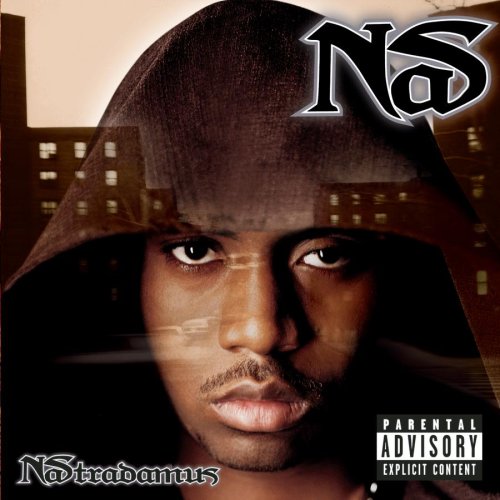
 I realize that referring to Nasir Jones's fourth album Nastradamus as a 'Drink Coaster' is equivalent to jumping on the bandwagon of haters that finds this album to be utterly ridiculous. But it's an honest perspective; after listening to this album again, I feel confident enough to tell my two readers that this album is awful.Nastradamus was Nas's second album to be released in 1999. Supposedly, it was intended to be the fabled "second disc" of the original I Am... recordings, but Nasir decided to record new songs and made an almost completely new album, save for a few tracks he had from those original sessions. It is universally known as Nas's worst album ever, but the reasons vary depending on who you talk to. Some will say that it's due to Nas selling out, and their evidence is the gawdawful title track and the horrible, horrible Timbaland-produced "You Owe Me", featuring Ginuwine, which, if you listen closely (which I don't recommend), you can almost hear Columbia forcing Nas to give them something radio-friendly in order to recoup their budget. Those folks would be only half-right, though, since most people forget Timbaland actually appeared on I Am..., on a song that didn't sound nearly as supposedly-club-friendly as "You Owe Me". In their favor, though, "You Owe Me" is one of the worst Nas songs I've ever heard in my life, and yes, I've also heard "Oochie Wallie".Others will say that Nas sounds lazy on his fourth disc, but that would also only be correct about half of the time. Nas has always been one of the better storytellers in hip hop, and "Some Of Us Have Angels" can actually be chalked up as the best track on Nastradamus. Nasir also sounds energized on "Family", which is a collaborative effort with fellow QB citizens Mobb Deep that, oddly, was not produced by Havoc; after Prodigy spits his verse, we hear a rejuvenated Nas, a byproduct that always occurs whenever Nas rhymes with his friends from around the corner. (Too bad this trend would cease after Nas's fifth album, where he basically destroyed whatever career P had left after Shawn Carter publicly flogged him). When he's inspired, he has the ability to amaze (see: "I Gave You Power", from It Was Written), but when he's tired, he sounds about as good as that dude on the corner rapping for bus fare. Unfortunately for us, we get the lazy Nas for the majority of this disc.My opinion is that Nastradamus is weak because it was destined to be that way. Nas rushed a CD to store shelves for the holiday season, so not every song he recorded in that short span of time can be considered a winner. In the rush, apparently Nas only had third-tier beats to choose from; in addition to the mess of a Timbaland track Nas thought he could improve upon, we are also subjected to a crappy Havoc beat (on "Shoot 'Em Up"), some poor choices by the Trackmasters and L.E.S., and, most surprisingly, DJ Premier, who supplies "Come Get me" with the weakest Primo drums and samples that I have heard in a long while; perhaps it's no wonder their working relationship seemed to end after one more album. Combine all of this gumbo with spoken-word intro and outro interludes, and you have a recipe for the worst solo album of Nasir Jones's career.I cannot truly fathom that Columbia Records (who released this monstrosity on Nas's vanity label, Ill Will Records; since Nas signed with Def Jam, does that label even still exist?) sat around in their boardroom, listened to this album in its entirety, and saw dollar signs; it's just not possible. It's not like Nas is the caliber of artist (yet) that deserves to see a release date for any random ideas he can come up with: he's not Bob Dylan or Bruce Springsteen. Nastradamus is a creative misfire that Nas took two years to recover from; if Nas were not such a strong lyrical performer, this album would be what we call a 'career-ender'. Avoid this one at all costs.-MaxRELATED POSTS:Nas - IllmaticNas - It Was Written
Nas - I Am...
 To your left, I present to you a bizarre sight: a grown-ass man seemingly trying to eat his way out of an enormous latex condom. In order to make sense of this grotesque visual, it helps to understand that the condom represents a "shell", and Rampage, who may or may not be the guy in the picture, is trying to eat his way out of his shell, and doing a piss-poor job of it, kind of like an older Ninja Turtle without his dentures. It also helps to realize that the above metaphor is a complete fabrication, that the album cover for Scout's Honor...By Way Of Blood doesn't really stand for anything artistically, except as proof that rappers truly need to have more "no" men than "yes" men in their entourages.
Rampage, whose birth name is Rampage The Last Boy Scout but uses as a rap alias Roger McNair, has exactly one claim to fame in his fabled career: he just happens to be Busta Rhymes's cousin, which can do more for you than you realize. Because of his blood ties, Rampage has signed record deals, both with and without his Flipmode Squad brethren; he's made cameos on high-profile projects (such as the fan-freaking-tastic remix to Craig Mack's "Flava In Your Ear", which also featured a young Notorious B.I.G., Busta himself, a flirtatious housekeeper named LL Cool J, and...um...Craig Mack); he's received discounts from Starbucks, which have helped support his twelve-Frappuchino-a-day habit; he somehow persuaded Durex to sponsor his album cover; and he convinced Elektra Records (home of two of the most combustible acts in hip hop history, Busta and Ol' Dirty Bastard) that Scout's Honor...By Way Of Blood would be a great title for his debut release, a concept that can be disproved in the two seconds it would take you to read the title.
Scout's Honor... is one of those albums that only exists because Rapper A is friends/cousins/brothers/shares a weed carrier with Rapper B, a trend that exists in all musical genres, but seems all too prevalent in hip hop. The beautiful minds at Elektra found Rampage's guest spots on Busta Rhymes's The Coming to be transcendent, and felt the best outlet for that energy would be on a plastic shiny disc. To be fair, I loved Busta's "Abandon Ship"; I felt that the cousins bounced off of one another with a tandem that couldn't be matched back in 1996. That, and the first single, "Wild For The Night", which (surprise!) featured Mr. Rhymes, are what compelled me to pick up the album back in 1997, back when I apparently had money to burn. It turns out that I would have been better off throwing my money into a wood chipper.
Listening today, I still like "Wild For The Night", but that's only because the beat (provided by Backspin) sounds like an outtake from The Coming. It also happens to be the only song where Rampage doesn't actively try to sound as manic as his more successful predecessor; his calm delivery, while lyrically elementary, sounds great over the piano loop, and Busta's hype/calm/hype/calm hook is an exercise in subtlety. After listening, though, you actually feel cheated, since you want to hear Busta spit a verse, or maybe even Q-Tip (who is seen nodding his head with approval in the video). Not surprisingly, this is the only song worth listening to; the rest of Scout's Honor... suffers from Z-grade production, highly questionable songs for the ladies, bizarre samples, and Rampage's lack of dexterity behind the mic.
After the usual annoying rap album intro, "Flipmode Iz Da Squad" introduces listeners to whoever was in the Squad back in 1997 (read: no Rah Digga), including Serious, an artist who was apparently kicked to the curb by Busta after his appearances on this CD. Serious, which is a terrible name for a rapper anyway, has a voice that shrieks every syllable out, and it wears thin quickly; still, even he comes off better than Rampage on this track. (Lord Have Mercy just beats out Busta for the best verse.) "Da Night B4 My Shit Drop", his ode to having a new toilet installed in his home, starts off with a bizarre Max Headroom-esque vocal effect that never works, not even on Max Headroom. "Talk Of The Town" includes a reference to anal sex at the end of the first verse that comes off as forced, not even as boastful, funny, or threatening; it brings a tear to your eye, knowing how beautiful it could have been.
"Flipmode Enemy #1" makes the mistake of sampling Public Enemy's original track wholesale; Rampage can't keep up with the beat, and as sad as it is for me to type this, he actually sounds worse than Puff Daddy, who also sampled this song in 1999 on his "P.E. 2000". "Take It To The Streets", the club "banger", features vocalist Billy Lawrence, whose claim to fame seems to be that she appeared on the hook for this godawful song, and then retreated to the background, writing hits for the likes of TLC and Blaque. And "N----z Iz Bad" is about as awful as the so-called "n----z" it tries, but fails, to describe.
Scout's Honor...By Way Of Blood is a terrible way to capitalize from the Busta Rhymes movement. The Flipmode Squad wasn't without talent, which is more than can be said about rap crews today; however, they made the wrong move when they decided to start with Roger. You can try to find "Wild For The Night" if you must, but otherwise, you should save your pennies, and your valuable time, for an album that's worth a crap.
-Max
RELATED POSTS:
Busta Rhymes - The Coming
To your left, I present to you a bizarre sight: a grown-ass man seemingly trying to eat his way out of an enormous latex condom. In order to make sense of this grotesque visual, it helps to understand that the condom represents a "shell", and Rampage, who may or may not be the guy in the picture, is trying to eat his way out of his shell, and doing a piss-poor job of it, kind of like an older Ninja Turtle without his dentures. It also helps to realize that the above metaphor is a complete fabrication, that the album cover for Scout's Honor...By Way Of Blood doesn't really stand for anything artistically, except as proof that rappers truly need to have more "no" men than "yes" men in their entourages.
Rampage, whose birth name is Rampage The Last Boy Scout but uses as a rap alias Roger McNair, has exactly one claim to fame in his fabled career: he just happens to be Busta Rhymes's cousin, which can do more for you than you realize. Because of his blood ties, Rampage has signed record deals, both with and without his Flipmode Squad brethren; he's made cameos on high-profile projects (such as the fan-freaking-tastic remix to Craig Mack's "Flava In Your Ear", which also featured a young Notorious B.I.G., Busta himself, a flirtatious housekeeper named LL Cool J, and...um...Craig Mack); he's received discounts from Starbucks, which have helped support his twelve-Frappuchino-a-day habit; he somehow persuaded Durex to sponsor his album cover; and he convinced Elektra Records (home of two of the most combustible acts in hip hop history, Busta and Ol' Dirty Bastard) that Scout's Honor...By Way Of Blood would be a great title for his debut release, a concept that can be disproved in the two seconds it would take you to read the title.
Scout's Honor... is one of those albums that only exists because Rapper A is friends/cousins/brothers/shares a weed carrier with Rapper B, a trend that exists in all musical genres, but seems all too prevalent in hip hop. The beautiful minds at Elektra found Rampage's guest spots on Busta Rhymes's The Coming to be transcendent, and felt the best outlet for that energy would be on a plastic shiny disc. To be fair, I loved Busta's "Abandon Ship"; I felt that the cousins bounced off of one another with a tandem that couldn't be matched back in 1996. That, and the first single, "Wild For The Night", which (surprise!) featured Mr. Rhymes, are what compelled me to pick up the album back in 1997, back when I apparently had money to burn. It turns out that I would have been better off throwing my money into a wood chipper.
Listening today, I still like "Wild For The Night", but that's only because the beat (provided by Backspin) sounds like an outtake from The Coming. It also happens to be the only song where Rampage doesn't actively try to sound as manic as his more successful predecessor; his calm delivery, while lyrically elementary, sounds great over the piano loop, and Busta's hype/calm/hype/calm hook is an exercise in subtlety. After listening, though, you actually feel cheated, since you want to hear Busta spit a verse, or maybe even Q-Tip (who is seen nodding his head with approval in the video). Not surprisingly, this is the only song worth listening to; the rest of Scout's Honor... suffers from Z-grade production, highly questionable songs for the ladies, bizarre samples, and Rampage's lack of dexterity behind the mic.
After the usual annoying rap album intro, "Flipmode Iz Da Squad" introduces listeners to whoever was in the Squad back in 1997 (read: no Rah Digga), including Serious, an artist who was apparently kicked to the curb by Busta after his appearances on this CD. Serious, which is a terrible name for a rapper anyway, has a voice that shrieks every syllable out, and it wears thin quickly; still, even he comes off better than Rampage on this track. (Lord Have Mercy just beats out Busta for the best verse.) "Da Night B4 My Shit Drop", his ode to having a new toilet installed in his home, starts off with a bizarre Max Headroom-esque vocal effect that never works, not even on Max Headroom. "Talk Of The Town" includes a reference to anal sex at the end of the first verse that comes off as forced, not even as boastful, funny, or threatening; it brings a tear to your eye, knowing how beautiful it could have been.
"Flipmode Enemy #1" makes the mistake of sampling Public Enemy's original track wholesale; Rampage can't keep up with the beat, and as sad as it is for me to type this, he actually sounds worse than Puff Daddy, who also sampled this song in 1999 on his "P.E. 2000". "Take It To The Streets", the club "banger", features vocalist Billy Lawrence, whose claim to fame seems to be that she appeared on the hook for this godawful song, and then retreated to the background, writing hits for the likes of TLC and Blaque. And "N----z Iz Bad" is about as awful as the so-called "n----z" it tries, but fails, to describe.
Scout's Honor...By Way Of Blood is a terrible way to capitalize from the Busta Rhymes movement. The Flipmode Squad wasn't without talent, which is more than can be said about rap crews today; however, they made the wrong move when they decided to start with Roger. You can try to find "Wild For The Night" if you must, but otherwise, you should save your pennies, and your valuable time, for an album that's worth a crap.
-Max
RELATED POSTS:
Busta Rhymes - The Coming
 Before I start, I just want to thank my many two readers that religiously check for updates. I realize that I'm not being as prolific as I'd like to be, so sorry about that, but hopefully that will all change. Eventually. I'm realistic enough not to say "soon". So, here's a quickie to help me ease back into things.
John Forte, whose debut album Poly Sci is pictured at left, is currently serving time in a federal prison for possession of cocaine. This is clearly worse than his original gig, possessing weed (instead of coke) for The Fugees as their not-exactly-unofficial-fourth-member-but-should-have-placed-higher-up-than-Pras. He's been locked up for about seven years now, which is most definitely not what I expected to say about the last rapper to appear on The Fugees's "Cowboys" posse cut (a song that doesn't get enough love in my opinion). But that's not why I regret to inform you that Poly Sci doesn't hold up nine years later. The true reason is that I really wanted to like this album, and I just couldn't.
It wasn't always this hard. I remember picking this album up from Best Buy the week it dropped, having only heard the first single "Ninety Nine (Flash The Message)" exactly once, because I was going through my "I have to have every single thing from any rapper who is even remotely affiliated with (insert popular rapper here)" phase, which thankfully has stopped since then, or else I'd be pretty fucking broke. (I actually remember getting mad that it was pushed back from its original June release date, but that's probably because I made the trip to Best Buy based on the promises made by their Sunday circular. You would think I was the guy's biggest fan or something.) Back then, I enjoyed the album thoroughly; Forte has a flow like a more nasal Shawn Carter, his own production work (he provides the majority of the album's 14 tracks) wasn't bad, and there was obviously some thought put behind the lyrics. Yeah, none of that matters now since the album sucks.
The production on the majority of the songs sounds, for lack of a better word, old. (I guess dated would have been a better word. Oh well.) It's not that the music is bad overall, but it's instantly forgettable, in the way that you forget that Forte is in the middle of a verse when you reach for the 'skip' button. The two brand name guest spots are borderline ridiculous; Fat Joe and DMX provide cameos for rent-paying reasons only. X sounds okay on "We Got This", as this was around the time he had something to prove and ripped every guest spot that he could; Big Boned Joe, however, has never impressed me, and as such, remains consistent on "They Got Me". "Madina Passage" sounds like a bad posse cut by a gaggle of Wu-Tang B-Teamers, for good reason; loose affiliates Black Rose Kartel pop up on their only true mainstream offering, and then promptly return to the sewers from which they came. And you know that your album listening experience can't be going well when you feel that Pras submits a decent sounding vocal. Pras! Come on, John!
But the true reason this album fails in 2007 is due to a reason that I let slide for unknown reasons in '98. John Forte relies too heavily on the vocals of one Jeni Fujita, which was a terrible mistake. Her thin voice sounds awful over these tracks. The aforementioned "Ninety Nine" (known mostly for its utilization of Nena's "99 Luftballons") actually sounds pretty decent now; it's catchy enough, and it's exactly what you would have expected Wyclef Jean to produce back in 1998. But then Jeni fucks the whole thing up with an awful chorus that beats any of the track's momentum within an inch of its life. She also demolishes both the intro and outro, which share the title "Hot", neither of which were named accurately. I believe she appeared on Canibus's Refugee Camp-approved Can-I-Bus as well, and was probably the reason that album sucked too. It's just bad. I don't know what else to say about this. I'm tired right now, so it's probably not coming out properly in my writing, but I mean this with every fiber of my being; she is baaaaad.
I listened to this album twice before writing this because I wanted to like this album so much, but it was to no avail. I am happy to report, though, that one of my favorite songs from back then, "P.B.E. (Powerful, Beautiful, Excellent)" still sounds pretty good today; hell, I bet that if you put some harder drums on the track, kept the synths, and turned the vocals up a bit, Forte might have had a club banger on his hands. Always good to hear a catchy pop song with a somewhat positive message that's not all about cranking a soldier boy or something. And "God Is Love God Is War" is an interesting listen, especially with the Suzanne Vega-interpolation in the chorus.
Overall, Poly Sci is one of the biggest disappointments that I've heard since starting this blog back in February, so I just cannot recommend in good conscience. It just doesn't work in 2007, and I feel the need to point out to my two readers when they can easily keep their money in their pockets. If you are curious, download "PBE" and leave me a comment is you agree or disagree with me. And hopefully I can get back on a more regular schedule. Thanks for reading!
-Max
THE ALBUM YOU SHOULD BE LOOKING FOR ON 9/11/2007:
Before I start, I just want to thank my many two readers that religiously check for updates. I realize that I'm not being as prolific as I'd like to be, so sorry about that, but hopefully that will all change. Eventually. I'm realistic enough not to say "soon". So, here's a quickie to help me ease back into things.
John Forte, whose debut album Poly Sci is pictured at left, is currently serving time in a federal prison for possession of cocaine. This is clearly worse than his original gig, possessing weed (instead of coke) for The Fugees as their not-exactly-unofficial-fourth-member-but-should-have-placed-higher-up-than-Pras. He's been locked up for about seven years now, which is most definitely not what I expected to say about the last rapper to appear on The Fugees's "Cowboys" posse cut (a song that doesn't get enough love in my opinion). But that's not why I regret to inform you that Poly Sci doesn't hold up nine years later. The true reason is that I really wanted to like this album, and I just couldn't.
It wasn't always this hard. I remember picking this album up from Best Buy the week it dropped, having only heard the first single "Ninety Nine (Flash The Message)" exactly once, because I was going through my "I have to have every single thing from any rapper who is even remotely affiliated with (insert popular rapper here)" phase, which thankfully has stopped since then, or else I'd be pretty fucking broke. (I actually remember getting mad that it was pushed back from its original June release date, but that's probably because I made the trip to Best Buy based on the promises made by their Sunday circular. You would think I was the guy's biggest fan or something.) Back then, I enjoyed the album thoroughly; Forte has a flow like a more nasal Shawn Carter, his own production work (he provides the majority of the album's 14 tracks) wasn't bad, and there was obviously some thought put behind the lyrics. Yeah, none of that matters now since the album sucks.
The production on the majority of the songs sounds, for lack of a better word, old. (I guess dated would have been a better word. Oh well.) It's not that the music is bad overall, but it's instantly forgettable, in the way that you forget that Forte is in the middle of a verse when you reach for the 'skip' button. The two brand name guest spots are borderline ridiculous; Fat Joe and DMX provide cameos for rent-paying reasons only. X sounds okay on "We Got This", as this was around the time he had something to prove and ripped every guest spot that he could; Big Boned Joe, however, has never impressed me, and as such, remains consistent on "They Got Me". "Madina Passage" sounds like a bad posse cut by a gaggle of Wu-Tang B-Teamers, for good reason; loose affiliates Black Rose Kartel pop up on their only true mainstream offering, and then promptly return to the sewers from which they came. And you know that your album listening experience can't be going well when you feel that Pras submits a decent sounding vocal. Pras! Come on, John!
But the true reason this album fails in 2007 is due to a reason that I let slide for unknown reasons in '98. John Forte relies too heavily on the vocals of one Jeni Fujita, which was a terrible mistake. Her thin voice sounds awful over these tracks. The aforementioned "Ninety Nine" (known mostly for its utilization of Nena's "99 Luftballons") actually sounds pretty decent now; it's catchy enough, and it's exactly what you would have expected Wyclef Jean to produce back in 1998. But then Jeni fucks the whole thing up with an awful chorus that beats any of the track's momentum within an inch of its life. She also demolishes both the intro and outro, which share the title "Hot", neither of which were named accurately. I believe she appeared on Canibus's Refugee Camp-approved Can-I-Bus as well, and was probably the reason that album sucked too. It's just bad. I don't know what else to say about this. I'm tired right now, so it's probably not coming out properly in my writing, but I mean this with every fiber of my being; she is baaaaad.
I listened to this album twice before writing this because I wanted to like this album so much, but it was to no avail. I am happy to report, though, that one of my favorite songs from back then, "P.B.E. (Powerful, Beautiful, Excellent)" still sounds pretty good today; hell, I bet that if you put some harder drums on the track, kept the synths, and turned the vocals up a bit, Forte might have had a club banger on his hands. Always good to hear a catchy pop song with a somewhat positive message that's not all about cranking a soldier boy or something. And "God Is Love God Is War" is an interesting listen, especially with the Suzanne Vega-interpolation in the chorus.
Overall, Poly Sci is one of the biggest disappointments that I've heard since starting this blog back in February, so I just cannot recommend in good conscience. It just doesn't work in 2007, and I feel the need to point out to my two readers when they can easily keep their money in their pockets. If you are curious, download "PBE" and leave me a comment is you agree or disagree with me. And hopefully I can get back on a more regular schedule. Thanks for reading!
-Max
THE ALBUM YOU SHOULD BE LOOKING FOR ON 9/11/2007:

 This would be the last Jay-Z album I can write about before I'm forced to finish up his discography. Since I like procrastinating, I choose to go with the last flat-out awful album in his catalog.Shawn Carter and Linkin Park were brought together by the terrible, terrible folks at Music Television in an effort to legitimize a burgeoning art form: namely, the mash-up. At this point, mash-ups were reinforcing their position in the mainstream subconscious: Jay-Z himself benefited greatly from Danger Mouse's Beatles mash The Grey Album, an album that most people find to be a better listening experience than the actual Black Album. As so happens every time the mainstream tries to force itself into the art house crowd, this project fails miserably. You may be fooled into thinking that Collision Course, the Jay-Z/Linkin Park/presented by MTV Ultimate Mash Up Album, is actually decent, especially since the first single, "Numb/Encore", won a Grammy. Don't believe the hype. You should know better than that. This album is straight trash.Even the use of that word is suspect in this case. This isn't really an 'album'. Collision Course comprises of only six songs over the course of twenty-one minutes. Which wouldn't be bad, if it were marketed as an EP, or at least a maxi-single (remember those?). Instead, the MSRP of this CD is around twenty bucks. True, it comes with a DVD featuring some live performances, but you shouldn't care about that. If you're paying twenty dollars for a CD, in this day and age, it better be worth it, and Collision Course, unsurprisingly, is not.The best mash-ups out there are made by artists who are forced to maximize their creativity in an effort to grab the ears of the listener. They actively try to make a new sound emerge from two or more sources, usually because what they're doing with these songs is, um, illegal. Collision Course, however, reminds me of Tom Cruise in Vanilla Sky, wanting to listen to two different albums at the exact same time. The aforementioned "Numb/Encore" is a perfect example, using generally the entirety of Linkin Park's "Numb" as the basis for the song, save for some medium drum hits from the original "Encore". However, the effect is that of some sonic monstrosity, instead of some elaborate creation by two artists. I mention only two artists, even though there are...actually, I have no idea how many people are in Linkin Park (I'd look it up, but this is a hip hop blog), but this is mainly the Jay-Z and Mike Shinoda (a/k/a Fort Minor) show, with Chester Bennington (a/k/a Screech) in tow, although he doesn't seem pleased to be there. It shouldn't shock anyone that they only brought their respective "hits" to the table for the mix-up (for anyone who was jonesing to hear a rock mix of "I Know What Girls Like", why the fuck are you reading my blog?), but I was shocked to see three separate Timbaland-produced joints thrown in the collective blender. ("Jigga What" was a hit?) "Dirt Off Your Shoulders/Lying From You" is a frustrating listen, mainly for Screech's misplaced vocals. (How has he not shredded his vocal chords tenfold?) Fort Shinoda isn't the worst rapper in the world, and I'm sure he leapt at the opportunity to hear his voice over actual rap beats (Collision Course begat Fort Minor's The Rising Tied). Timbo should be happy to hear that the songs presented here don't even come close to touching the original Jay-Hova hits, as should Kanye West and Rick Rubin, the only other two Jay producers represented.Some of the ideas presented here will make you scratch your head. Jigga only seems to have re-done his vocals for one song, "Jigga What/Faint" (which should actually be called "N---a What N---a Who/Faint", but whatever...), but the rest of his contributions are culled from album tracks, some directly lifted from The Black Album Acapellas, which every blogger who ever even contemplated the thought of dreaming of producing has a copy of somewhere. (Before you ask, mine is in a crate somewhere.) I found it odd that "Izzo/In The End" only uses Kanye West's "Izzo (H.O.V.A.)" beat, without any Linkin Park interruption, save for Fort Mike's second verse, which just sounds off. I also could have done without Mike Minor's reinterpolation of the first verse on "99 Problems" (on "Points of Authority/99 Problems/One Step Closer"), especially since he sounds like he's rapping about Jay-Z, to Jay-Z. I assume that Rick Rubin was extremely pissed about how "99 Problems", which he produced for Jigga, was so badly mistreated, and therefore chopped Shinoda's role significantly on the new Linkin Park album, Minutes To Midnight, which he also produced. Just my theory, though. I could be completely wrong.All in all, your twenty bucks would be better spent on a nice dinner, or a bag of weed, or a half-assed blowjob on the strip, or, oh yeah, buying a better fucking album. I would say 'avoid this at all costs', but you already know that. My two readers are so smart!That said, there is now only one album left in the Jay-Z discography (I'm not counting the Streets Is Watching soundtrack, because it's not a true Jay album, and besides, Ja Rule's on it, and I can't support that). One of the original intentions of this blog was to dissect how the quote-unquote "best rappers" out there have reached their respective peaks in hip hop, and whether or not their titles are deserved. As such, Kingdom Come is coming soon. Then I'll do something constructive, like focus on the discography of Afroman or something.-Max
 Unfortunately for the listening public, the original Best Of Both Worlds collaborative project actually moved units, so Shawn Carter and Robert Kelly were under the mistaken impression that people actually wanted to hear some more duets. Unfinished Business was released one year after Jay-Z's so-called "retirement", in an effort to cash-in on a joint tour that the two were planning together. During the course of said tour, however, R. Kelly would pull some ridiculous diva shit, forcing Jigga to allegedly have one of his weed carriers mace him, which embarrassed Kells so much that he left the tour, thus enabling Jigga to repackage it as a "Jay-Z & Friends" concert series. To be honest, I probably would have done the same thing; there's no room for an artist on your tour who would rather leave the arena and work the McDonald's drive-thru instead of singing his songs. But instead of using mace, I probably would have just called him a child molester on the stage while performing.A lot of people are under the impression that Unfinished Business was compiled of leftovers from the original recording sessions, a belief that has validity, since all of these songs suck as much as the originals did. However, after listening to this drink coaster (twice! See how much I suffer for my craft?), I truly believe these were all new recordings. The following are a few of my reasons why:1. The beats on Unfinished Business, produced by (Red Hot Lover) Tone (of the Trackmasters) and Kells himself, actually sound better than on the first album. If these songs were leftovers, why wouldn't they have kept the good beats for the first release?2. Hova references his "magic stick" on "She's Coming Home With Me", which is a reference to 50 Cent and Lil' Kim's song of the same name, which itself was a reference to what Curtis Jackson may or may not use in his vagina. (Curtis wasn't yet a household name in 2002, when the first Best of Both Worlds was released.)3. The songs aren't all about sex. "Don't Let Me Die" is still just a subpar "Please God/Allah/Buddha/Ganesh, forgive me for I have sinned" song, but it sounds like a direct response to the criticisms surrounding the original album's lack of subject matter. Don't get me wrong, you couldn't mistake Unfinished Business for a hardcore thugged-out album if you had caught a halfway glace at the shiny disc through a funhouse mirror in absolute darkness, but the inclusion of this song makes me believe that they were actively trying.4. Foxy Brown's guest vocal on "Stop" sounds awful, not just in poor rhyming skill, but literally, awful. To be perfectly fair, if this song was recorded in 2004, it would have been around the time that she was losing her hearing, which would affect her speech, thus changing up her vocals. Besides, she wasn't really doing anything in 2002; why would Jigga have even bothered to pay to put her in the booth around that time? Side note: Why would Jay-Z make two different songs called "Stop"? (Jay had a song with the same name on The Blueprint 2.1.)5. A lot of the songs are actually sequels to the original album tracks: "She's Coming Home With Me" is actually referred to by Jigga as "Somebody's Girl Part 2"; more proof of this theory can be found with "Break Up (That's All We Do)" and "Mo' Money" (see "Break Up To Make Up" and "Get This Money", respectively).6. Hova references CJ from Grand Theft Auto: San Andreas several times throughout the course of the album. He also passively references Tony Blair's retirement as Prime Minister, the invention of the iPhone, and how badly he's going to fuck up the marketing of both Ghostface Killah's and Method Man's next albums as Def Jam president.Of course, this is just my own personal theory. I could be completely wrong.Robert sings on this album only about a third of the time; for the rest, he does that sing/rap thing that Nelly believes he pioneered; as such, one of the reasons that this album fails is because Kells is rapping better than Hov. On the album's best beat, "We Got Em Goin'", Kells actually has a much longer verse than Jay or guest star/part-time Def Jam janitor Memphis Bleek combined, and his flow is much better. That's just pathetic, coming from the self-professed "best rapper alive". Once again, I wouldn't be surprised to learn that the two recorded their parts separately, just like with the first album.
The reason I listened to this album twice is because, truthfully, it is actually better than the first release, and I was trying to decide between a full write-up or one of these short ones. The album still isn't any good, though. The guest appearances (at least, the ones that I haven't already mentioned) are inspired; Twista pops up on "Mo' Money" (which is puzzlingly referred to by both Kells and Twista as the remix to the first and only single "Big Chips"), and steals the show, the shine, the bling from the engineers, and everyone's respect and admiration, all before leaping out of a two-story window on the run from security, all while Hov and Kells stand around fighting over the last bottle of Cris. And the most bizarre guest spot is awarded to both Slick Rick and Doug E. Fresh, on the remix to "The Return", a song that paid homage to the two living legends in its original incarnation as the first track on the album. It's always good to hear Slick Rick on a track, even if it's just a marketing stunt.I'm still puzzled why Shawn would even agree to recording more duets with an as-yet-not-convicted-but-it's-a-manner-of-time child molester, except for a tax write-off for Def Jam, which is entirely possible, given it was released in the fourth quarter of 2004. Unfinished Business has a better sound than its predecessor, but there is absolutely nothing on here that is important enough for you to drop everything and jump online to burn it. It's not worth your time, so I would just avoid it.-MaxRELATED POSTS:R. Kelly & Jay-Z - The Best Of Both Worlds
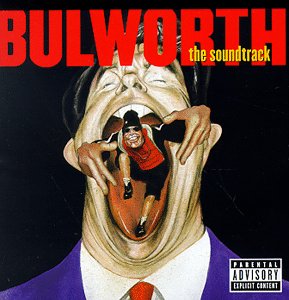
 As if Hollywood made a concentrated effort to prove my comments on The Show's soundtrack review as fact, I present to you the soundtrack to the suck-ass Warren Beatty film Bulworth. I'm sure every one of my two readers will agree, there is nothing funnier than hearing an old white guy rap, especially if it's at a public forum such as a press conference or congressional dinner. (I see you, Karl Rove. You're on my shit list too.) Even having Halle Berry in your film doesn't merit any sort of praise, since she's a horrible actress that has made maybe two good choices her entire career. (I did like Don Cheadle, though.)Unlike The Show, however, Bulworth (The Soundtrack) seems to have been executive-produced by people who were actually trying to put together a compilation of brand name artists and unknowns. The problem is in the song choices themselves. Things start off less than decent with Dr. Dre and LL Cool J's unintentionally hilarious "Zoom"; I just realized that Cool James was the last person I ever wanted to hear on a Dr. Dre track. (That's right: Curtis Jackson actually ranks higher on this rhetorical list.) Of course, you can have your two-year-old son bang on the keyboard with a plastic hammer and find the original version of the track online, which featured Snoop Dogg; this was supposed to be their 'reunion' track, but was nixed since Snoop was still under contract to Suge Knight at the time. You can imagine that the chemistry between Dre and Snoop sparkles, while the lack-of between James and Andre Young sticks out like a sore thumb in a bag of middle fingers.Things don't get much better with "Ghetto Superstar", which was supposed to be Pras (the third wheel from The Fugees) and Mya (whom I've always liked, but not for her music), had it not been for Ol' Dirty Bastard's drunken interruption while wandering into the wrong studio. Pras graciously allowed Dirty a cameo; as such, ODB garnered another radio-friendly hit. This song isn't the worst song in the world, but it's not very good, and does not fit into the rest of the album's sequencing, especially since the focus didn't seem to be Top 40 radio. Canibus trots out a collaboration with Youssou N'Dour, but since it's produced by Wyclef Jean, it's completely worthless. Public Enemy hands us "Kill 'Em Live", which makes you want to reach for their seminal albums instead. Mack 10 and Ice Cube give us "Maniac In The Brainiac", which I'm sure was supposed to be "Maniac AND The Brainiac"; either way, I'm sure that neither artist lists this song on their respective resumes. And every single song with an unknown artist fails; of course, you shouldn't expect much from rappers with names like 'Nutta Butta' and 'D-Fyne', but Eve (from Aftermath/Ruff Ryders/Aftermath/whatever fucking label she's on now) falters on her official debut, "Eve Of Destruction"; and the Black Eyed Peas, before the white chick and commercial fame, loan out their album track "Joints & Jam", which sucks. (In fact, all of the Black Eyed Peas songs are fucking awful, and I believed that even before Fergie joined the group. But that rant has nothing to do with Bulworth, so I'll end it here.) Cappadonna (famous for the previous post, in which I eviscerated his solo album) even loans out his "Run", which still sucks, even when placed on a different album.Bulworth has some medium points, but they're not reason enough to add this album to your 'must buy' list. Southern rapper Witchdoctor included his album track "Holiday/12 Scanner", and it was good enough for me to try to track down his debut. The Rza returns to rhyming and producing on "The Chase", which sounds like a spiritual cousin to Cappa's "Run", but better. The crown jewel, which was not hard to find on an album full of bombs, is the DJ Muggs-produced "Bulworth", which is only the title track by a technicality, as none of the rappers featured mention the film at all. In fact, Prodigy, Method Man, KRS-One, and KAM all attack the media, especially music magazines such as The Source. Major kudos for the inclusion of KAM on here, but one song isn't enough to warrant a purchase.I suppose we should all be thankful for one thing: in early advertisements for this soundtrack, the inclusion of 'Jay Bulworth' was promoted; Jay Bulworth was, of course, Warren Beatty's character in the film, and he was supposed to rhyme over a DJ Muggs instrumental. I'm sure even Warren himself thought the 'old white guy rapping' joke wore thin, and had it removed from the final release. Bulworth (The Soundtrack) is available at the Amazon z-shops (see sidebar for link) starting at one cent. One frickin' penny! There's a reason, people. Avoid this at all costs.-Max
 The musical genre known as hip hop has never really garnered the full attention it deserved from Hollywood. True, there have been many films that use the lifestyle as a jump-off point to delve into other subjects, but the majority of movies and TV shows out there use and abuse hip hop to meet whatever the needs of the story may be. Not all rappers are prison-bound ex-gang members looking for a way out of that life, okay, Hollywood? Conversely, not every rapper is a closet poet with something important to say; this is evident when you listen to the radio for more than three minutes at at time. In an attempt to show the world the true faces of hip hop culture, Russell Simmons gave us the documentary The Show, which featured damn near every mainstream rap artist in 1995. The film was not much of a box office success (unless you're Michael Moore, nobody will actually pay to see your documentary in a theater), but the accompanying soundtrack sold like hotcakes at a clearance sale. The Show (The Soundtrack) was released by arguably the number one hip hop label at the time, Def Jam, and showcased a number of rappers and rap groups that supposedly defined 1995. Well, that's a load of horseshit. The Show (The Soundtrack) is a bloated, 27-track affair with questionable standards as to who was important in hip hop at the time. I remember taking a glance at the back of the CD case when I saw it in stores, and I was excited by the sheer number of artists prominently featured on songs. Oh My God! Dr. Dre! Snoop! Slick Rick! Domino...okay, I didn't really care much about Domino. ("Ghetto Jam" is still a damn good song, though.) I quickly made my purchase, went home, unwrapped the plastic, and started listening, hoping to get a sense of what the film would be like (at this time, The Show hadn't opened in my city yet). I walked away from this experience knowing that the movie would be a failure. Why is that, you ask? Well, for starters, the big names, for the most part, only contribute semi-significant quotes from the movie itself. Dr. Dre and Snoop had jack shit to do with this soundtrack. Secondly, the songs that actually exist can, in no possible way, qualify as a definition of 1995. Fucking Onyx, who hadn't had a hit song since "Slam", contributed their shit sandwich "Live!!!", which knocks all of your high expectations out of a sixth-story window. 2Pac's Easy Mo Bee-produced "My Block" fares much better, but then again, I have a soft spot for any Pac song that isn't about fucking Thug Life and all that bullshit. (Tupac Shakur was a classically trained actor, people! He wasn't a fucking thug until Suge brought him into that lifestyle!) The best song on here, "How High", even pissed me off (at first), as it's not the version promised in the video. Method Man and Redman started their very fruitful collaborative relationship with this Erick Sermon-produced semi-masterpiece, which sounds completely different from the video. (I wasn't appeased until I heard Redman's extended final verse, which was cut out of the radio version. Reggie raps the shit out of the track.) A Tribe Called Quest, or mainly Q-Tip, anyway, appears out of nowhere with "Glamour & Glitz", which is also decent.There isn't anything else on this CD worth a listen. Bone Thugs 'N' Harmony purists will probably rip me a new one in the comments for saying that "Everyday Thang" is a weak throwaway track, but that's exactly what it is. Everything else on this album is Def Jam's blatant attempt to force-feed older Def Jam acts down our collective throats. LL Cool J, who was more of an actor than a rapper in 1995, embarrasses himself with his "Papa Luv It"; Jayo Felony is handed to us twice, on two consecutive songs, neither of which are memorable or even any good. Warren G's gives weed carriers The Dove Shack some shine (on "Summertime In The LBC", which isn't awful but doesn't fit into the sequencing), and even gives himself a song that isn't worth mentioning. Finally, the last real rap song here, "Me And My Bitch (Live From Philly)", finds The Notorious B.I.G. and fucking Sean Combs performing Biggie's song over an overused "Computer Love" sample, to awful effect; is this really the only song from Biggie they could procure? He didn't have any unreleased gems he could contribute? (Before anyone comments, I realize the point of "Me And My Bitch"'s inclusion was to create the effect of going to the live show. My answer to you is this: why that song?)The Show (The Soundtrack) is a weak cash-in for a musical genre that needs all of the support it can get. (The other major rap documentary at the time, Rhyme & Reason, has a much better soundtrack.) It's not the worst album I've ever heard, but life is short, and your time would be better spent elsewhere.-Max
 A wise man who once worked as Debbie Allen's housekeeper once dismissed Germaine Williams (birth name Canibus Jones) as a rapper with a well-known affliction. You see, it seems that ninety-nine percent of his fans didn't exist. And after you listen to Can-I-Bus, his debut release on Universal Records, you will wonder why the remaining one percent hadn't yet defected.
Canibus is probably best known as a battle rapper who hooked up with the wrong crew. The first time I had ever heard him was on his guest appearances on "Beasts From The East" and "My Crew", both taken from the Lost Boyz's Love, Peace, & Nappiness. He sounded great on both tracks (even on "Beasts", where the other guest, one Reggie Noble, rapped circles around everyone), and a promising career was born. I also liked his appearance on that shitty Firm album, too. He was set up to be the next big thing, as all of his guest appearances left the listener wanting more.
However, his career was effectively ended when he was invited to participate on James Todd Smith's Phenomenon, on the infamous "4,3,2,1". Canibus wrote a quick verse about the microphone tattoo Cool James had on his arm, which LL took offense to; he pulled rank and demanded that Canibus rewrite his lyrics. However, James didn't bother changing his own lyrics, which were in retaliation to the young whippersnapper's aborted verse. As such, an otherwise crappy LL Cool J album was suddenly popular, and the LL Cool J/Canibus feud was underway. Normally rap beefs can be entertaining, as long as it's all kept on wax, but young Canibus was handicapped from the get-go by his new found family: Wyclef Jean and company (or, depending on how you see it, Everyone From The Fugees Except For The Talented Chick), the aforementioned "wrong crew".
Can-I-Bus is one of the most horrific debut albums I have ever heard, mainly due to it being such a waste of potential. Canibus is a gifted battle rapper, but not a gifted lyricist; at this point, he still was unable to write a song that was about anything remotely important besides "I'm the best rapper" and "I love my mama", both being overused topics. Clef's production contributions are what hinder young Germaine's progress, though. After the nerdiest rap album intro I have ever heard in the past hour, the first lyrics we hear from the album's star, "I'll make your bitch crew shit stools", sets the tone for what will end up being a very disappointing and altogether shitty listening experience. Free, better known as the co-host from BET's 106 & Park who quit the show, makes her rapping debut on the first song, "Patriots", several years before her TV hosting gig, and she sounds completely out of place. The second song sounds a little better; I will admit to a soft spot for "Get Retarded", but that would be only due to the production work of Salaam Remi (who now works, to much better effect, with Nas), and not because of the rhymes themselves.
A lot of people complain about Germaine's lyrical content, but those people are the type who probably don't like keeping a dictionary on hand whenever they listen to music. Here's something that everyone can understand, though: Can-I-Bus is hampered by Canibus's obsession with LL Cool J. "Second Round K.O.", the first single, features a bizarre cameo by, of all people, convicted rapist Mike Tyson, who instructs young Germaine to "eat, eat, eat MC's", probably starting with the ears. This diss track sounded alright back in 1998, but the fact that it's damn near ten years old (and the fact that Cool James ripped the upstart a new asshole on his "The Ripper Starts Back") makes for an uncomfortable listen in 2007. "N---onometry" also contains a weak jab at Ladies Love, although the song sounds so fucking boring that it would take an act of God for you to listen straight through to the end, where it takes place.
In fact, the only song that I can halfheartedly recommend is "Buckingham Palace", where the beat is kept to a bare minimum while Germaine spits some of his most entertaining boasts , even though the hook sucks. But don't even get me started on the closer, "Rip Rock", where the mere title alone should make you run for the hills.
Can-I-Bus is the worst debut record from an artist who should fucking know better. He's not the best rapper in the world (I don't care if he seems to have a more advanced vocabulary than the average Joe, he's not the best rapper in the world), but the lyrical genius is clearly present. As I have said many times before, without good beats, nobody gives a damn about what the artist has to say. Unfortunately, Canibus doesn't have anything important to say on this CD anyway, so the Ras Kass argument doesn't even apply here. Listen at your own risk.
(Agree/disagree with the above review? Leave some comments below! Don't be shy!)
-Max
 Oh. My. Lord. For everyone in hip hop land who is praising the (Pet) Shop Boyz for their "innovative" mixture of rock and hip hop, I present to you proof that it's been done before. Many fucking times.And it usually doesn't work.Loud Rocks was the brainchild of Steve Rifkind, the founder of the mighty Loud Records, home of Wu-Tang Clan, Mobb Deep, and the Cella Dwellas (don't feel too bad if you haven't heard of them). In 2000, rap-rock was a full-fledged musical force, what with the Limp Bizkits and the Korns of the world, united in their quest to set rock music back by several decades. I never really liked Korn, and there are only two Limp Bizkit songs which I tolerate: "Nookie" and "Counterfeit (Lethal Dose Remix)", neither of which I would place anywhere near a "favorite song" list.Anyway, the concept of Loud Rocks was to take hit songs from their vast musical catalog, and get rock stars (some of whom are questionable, by the way. I mean, Crazytown? Did they even have more than one song?) to "cover" them, sometimes even with the original artists involved. It was on this album that The Rza's love affair with Shavo from Systen Of A Down began, as the latter covers the Wu's "Shame On A N---a" (here renamed "Shame", although the group uses the n-word frequently throughout) to horrific results. Sugar Ray then bastardizes the hook from Tha Alkaholiks's "Make Room", although thankfully the rhymes stay intact. Static X's take on dead prez's "Hip Hop" damn near drowns out the lyrics, and the remake of Xzibit's "Los Angeles Times" by Endo (I've never heard of them either) isn't very good. (That's a running theme, by the way.)The only passable track here is also the most curious: Everlast's "Shook Ones" is actually a decent cover of two different Mobb Deep songs: "Shook Ones Part II" (obviously) and "Survival Of The Fittest". I listened in anticipation for him to drop n-bombs like his racist cop character on Prince Paul's A Prince Among Thieves, it was that good. Tom Morello and Chad Smith prove that the Wu-Tang Clan can be fucked with (I wonder which song they covered from the Wu catalog), especially if you fuck up their song, although to the Wu's credit, it's obvious that they were having a good time while re-recording their vocals, especially The Rza, who is especially animated here. Oddly, the only rap group here who would normally sound good over hard rock beats, M.O.P., comes off as weak and misguided over their remixed "How About Some Hardcore?", but I think that's because their vocals were lifted from the original twelve-inch.Everything else on here isn't worth mentioning. I like rock, and I love hip hop, but this thirteen-track compilation is not the best representation of any mash-ups between the two genres. I can't recommend this in good conscience, but I will admit that I'd rather listen to this bullshit that the (Pet) Shop Boyz on the radio one more goddamn time.-Max(Disagree with the above review? Leave a comment below! Don't be shy!)
 Wow, haven't done one of these in a while. Rapper Jason Hunter of the Wu-Tang Clan, whose Christian name is Inspectah "Deck" Simonson, wasn't yet privy to the solo successes that were lavished amongst his more popular bandmates, as his debut album Uncontrolled Substance, which was released on Loud Records, didn't really sell as well as everyone else's. The disc was criticized as sounding "four years too late", as most magazines put it, so it wasn't much of a shock when he was sent packing from the label, only to turn up as the groundskeeper and softball coach for the other rappers in the Koch graveyard. A second shot at stardom, The Movement, was quickly recorded and released.