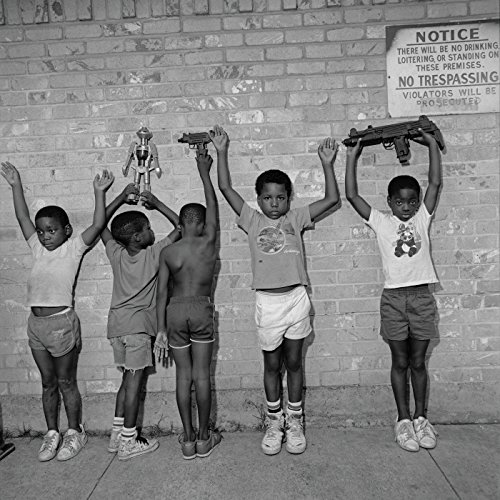
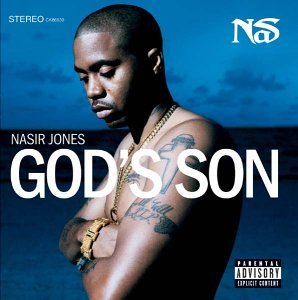
Legend has it that Nasir Jones went to sleep one night after mixing several bottles of vodka with Yoo Hoo chocolate drink and several bong hits (for good measure). As could be expected, he had a restless night: his dreams all seemed to revolve around clowns at a nearby circus fucking his mother, cashing out his 401k and spending it willy-nilly on privatized health care, and doing battle against vampire elves whose diet consisted exclusively of vacuum cleaner filters. When he eventually awoke the next afternoon (Nas needs his beauty rest), he immediately had the title for what would end up being his eighth solo album,
Hip Hop Is Dead.
That legend may or may not be bullshit, but the album title is real. Sort of. After the audio abortion that was his previous project, the double album Street's Disciple, Nas took a step back and observed our chosen genre from the perspective of an aging rapper who isn't taken as seriously as he once was, thanks to a severe lack of quality control and a tendency to coast on laurels that no longer exist, and he wasn't happy with what he saw. The music industry had decided that commerce was more important than artistic expression, resulting in hip hop music that focused on materialism versus substance dominating the airwaves. Unfortunately, this was a direction that hip hop had taken at least a full decade prior, during Puff Daddy's Shiny Suit era: one could say that Nas was late to this party.
One could also say that Nas was on the winning side of the argument, placing his early, post-
Illmatic career in the hands of production team The Trackmasters, who were, admittedly, a part of the problem that
Hip Hop Is Dead's title was attempting to address. However, Nas himself admitted that he chose the album's title (which was originally entitled the more confusing
Hip Hop Is Dead...The N, in reference to...I don't know,
something he thought was important at the time, I'm sure) as purely a publicity move, and nothing more, and it worked:
Hip Hop Is Dead received more press than any other Nasir Jones project in history (hell, I inadvertently draw attention to it
every single time I add a post to my blog, which wasn't really named after this album but kind of was anyway), at least until his follow-up, which he wanted to call
N----r but his label forced him to leave
Untitled, which was more controversial for obvious reasons.
Not that Nas needed any help generating interest. Dissatisfied with the way he was being promoted at Columbia Records (a conglomerate that also distrubuted his vanity label, Ill Will Records), he accepted an offer by his arch-nemesis, Shawn Carter, to sign with Def Jam Records (again, part of the problem), in an effort to put his music ahead of any petty beef he once had with Jay-Z (see: Hova's "Takeover"; Nasir's "Ether"; Jay's "Supa Ugly"). Jay himself announced this new alliance onstage at a concert, which was hinted at by Nasir's mere presence on Roc-A-Fella employee Kanye West's sophomore project Late Registration on "We Major", one of the better-received tracks on that album (and 'Ye's personal favorite); having Nas appear on a Def Jam album in the midst of a war of words with their biggest star, Jay-Z, would have been unheard of as little as six months prior.
Hip Hop Is Dead serves as Nasir's Def Jam debut, and the attention he received during the recording process led to a slightly larger budget, which our host spent on higher-priced production from names such as Kanye, Dr. Dre, and will.i.am from the Black Eyed Sellouts. However, Nas is astoundingly loyal to some of his previous collaborators, securing beats from the likes of L.E.S. (who was given the opportunity to helm the we-all-saw-it-coming Nas/Jay-Z collaboration, "Black Republican") and Salaam Remi, the guy who had gifted Nas with some of his best songs over this current, lesser phase of his career.
Nasir's plan was a success:
Hip Hop Is Dead became a critical darling, if not the blockbuster seller that Def Jam was hoping for. It represented a huge step forward in our host's career, even though he had to abandon his Ill Will imprint in order to make the move. (As part of his agreement to Columbia Records, in order to be released to swim around in Def Jam's money vault, he had to shed the vanity label and release one final project, a greatest hits album called, amazingly enough,
Greatest Hits, which dropped less than a year after this project.)
None of this shit matters, though, if the
music isn't any good. So I put it to you, Nasir Jones, God's Son: do you have what it takes to
finally win back the audience that loves
Illmatic, or does
Hip Hop Is Dead represent a man diving further up his own ass, living in denial instead of simply hanging it up and taking the day shift at the old folks home down the way?
You tell me.
1. MONEY OVER BULLSHIT
Nasir forgoes a rap album intro for his Def Jam debut, admonishing those who oppose his ideals and reiterating that our chosen genre is, indeed, dead. He also calls people “bitches”. A lot. The three verses on here aren't bad, as they serve as the rebirth of an unquestionable hip hop icon, but the L.E.S. beat (also credited to producer Wyldfyre) isn't nearly as dramatic as it should be for such an occasion: it does the job, but in a half-assed manner that would cause many an employer to question why it is still on the payroll when they could hire six less-qualified beats to fill in the space at a cheaper rate. Also, the hook was fucking garbage. But by Nas standards, though, this was alright enough.
2. YOU CAN'T KILL ME
Personally, I could give a fuck what Nas does in his private life in NYC, so the fact that he starts “You Can't Kill Me” with a random list of destinations, like the hip hop equivalent of a Zagat's guide, is a turn-off. He quickly ditches that concept to tell a tall tale about a night on the town and how one of his friends turned against him, and then quickly abandons that concept to spout random shit about how indestructible he is. L.E.S.'s instrumental is fucking weak, and Nas, who is normally a good storyteller, isn't able to pull it out in the clutch. Nothing about this track will ever save hip hop from its imminent death.
3. CARRY ON TRADITION
There's a rather large chunk of this song that is censored: if anyone can help fill in the blanks, I would appreciate it. Nobody's questioning Nasir's love for hip hop: in fact, he comes across as an embittered patriarch, watching his loved ones continue to make mistakes, sullying the family crest in the process. While he has a valid point (most rappers never evolve beyond working as an employee for a record label: Nas feels that the genre would remain viable if more artists took control of their own destiny, running those very same labels), I don't personally believe that hip hop would necessarily benefit from the implementation of his ideas: the lure of the almighty dollar would probably still fuck up the quality of our chosen genre, thanks to the resounding horrific taste of the general public (hey, Soulja Boy Tell 'Em came up on his own with his self-produced shitty version of rap), and besides, not every rapper has a handle on the day-to-day operations of running a label. I appreciated Nasir's attempt to inject some humor into what is ultimately a somber discussion, as he threatens to record a double LP using only samples from different parts of “Nautilus” by Bob James. See, even Nas believes that sample appears in every rap song ever made!
4. WHERE ARE THEY NOW
Taking his love of old-school hip hop to its obvious next step, Nasir Jones ponders the whereabouts of the rappers who were popular around the time he was growing up and establishing himself. He drops so many names that he's bound to hit one artist that you yourself were
also wondering about. Salaam Remi's instrumental sounds like the type of beat Big Daddy Kane might have used back in the day. This concept runs out of steam after two verses, but Nas goes even further: as a pretty fucking cool marketing tool, he actually tracked down a lot of the hip hop ghosts represented on this track and convinced them to spit a few bars on one of three “Where Are They Now” remixes, which were divided up into a 1980s version, one for 1990s-era rappers, and a West Coast remix. All in all, this was actually a pretty cool idea, and it led to something pretty amazing, so that was nice, but when you see it as it was originally intended, within the context of an album entitled
Hip Hop Is Dead and nothing more, it's merely alright.
5. HIP HOP IS DEAD (FEAT. WILL.I.AM)
I'm still confused as to why Nas felt the need to re-use the Iron Butterfly “In-A-Gadda-Da-Vida” sample so soon after “Thief's Theme”, but he acknowledges this fact at the very beginning of this title track, so at least he's aware. “Thief's Theme” uses the source material in a far better manner, in my opinion, but obviously (given the name of this very blog) the subject matter on here hits a bit closer to home. The “Apache” breakdowns made me wish that Nas would have simply spit over that particular breakbeat, and as an opponent of censorship, I hate the fact that the fucking song is essentially a radio edit, removing any and all violent references from the version that originally leaked online (for instance, the entire chorus is altered to remove a mention of an AK and to change the “murder the deejay” line into “wreck the deejay”, which actually sounds more painful than an outright homicide). Nas sounded just fine, but will.i.am's schizophrenic production work was a bit iffy.
6. WHO KILLED IT?
A lot of listeners apparently didn't understand what this song was supposed to be back in 2006, so for those of you in the cheap seats, Nasir Jones is playing a Sam Spade gumshoe detective-type who trying to solve the murder of hip hop (and he does so GZA/Genius-style, dropping so many names and ideas that I hope The Game was following closely behind with a dustpan). The execution is actually quite ambitious (I'd rather hear Nas rhyme with this particular inflection than listen to his altered Scarlett persona again): not surprisingly, most of the complaints about “Who Killed It?” were derived from Nasir's performance. It's just a fucking song, folks: who cares that he kind of sounds like Bugs Bunny? I actually liked this much more than the title track, so finally, one of his experiments actually paid off.
7. BLACK REPUBLICAN (FEAT. JAY-Z)
This collaboration was a long time coming; the very moment Hova announced that he signed Nas to Def Jam, hip hop fanatics had been foaming at the mouth. So of course, the resulting track has to sound fucking majestic, and in that respect, L.E.S. did not disappoint, jacking from “Marcia Religiosa” (best known for its use in The Godfather Part II) while Shawn and Nasir celebrate their new business dealings and, I can only assume, the fact that they both used to fuck the same girl. I can understand why Jay can look past the attacks on “Ether”, but I never got why God's Son let Jay get away with “Supa Ugly”, which took their beef into a new and disgusting personal level (remember the used condoms in the baby seat in the back of the car?), but fuck it, money talks, I guess. This song was well worth the wait, even if these two have never been able to recapture lightning in a bottle with their later collaborations.
8. NOT GOING BACK (FEAT. KELIS)
Signing with Def Jam has its obvious benefits (see: “Black Republican”, which probably would have never happened otherwise), but Nas still being Nas,
Hip Hop Is Dead still has to include crappy songs that feature our host throwing a lot of words at you without truly saying anything. Just like it was during my write-up for
Street's Disciple, hearing Nas and Kelis appear on the same track is still fucking awkward, but one must keep looking forward. The only interesting aspect of this song was when Nas declared that he would never go back to Sony (read: Columbia). Unless they show him the money, of course. Don't want to burn
too many bridges.
9. STILL DREAMING (FEAT. KANYE WEST & CHRISETTE MICHELE)
Another benefit of signing up for the Def Jam hip hop health care plan: easier access to Kanye West's Late Registration leftovers. Okay, that's (probably) not what this song is: it sounds too much like “Late” for a perfectionist such as 'Ye to have ever considered it for his own album. This sounds really fucking good, though: 'Ye's brash attitude contrasts Nasir's elder status nicely, while Chrisette Michele's vocals are woven throughout the beat as though she was the living embodiment of a soulful sample that the producer would have used otherwise. The result is a pleasant, enjoyable track, one of Kanye's finest (outside of those on his own albums, of course).
10. HOLD DOWN THE BLOCK
Nasir's occasional excursions into thugged-out territory tend to ring hollow these days, mainly because we are keenly aware that he fucking knows better than to resort to that life, especially given his high public profile. (When stories about you appear on TMZ, you should assume that people are watching your every move.) Even when he's just telling stories on behalf of other folks who are actually living that lifestyle, you're left wondering what he's doing out in such a bad neighborhood so late at night, and you'll probably offer to give him a ride back to his well-kept home. This was all a very roundabout way to say that this song sucked.
11. BLUNT ASHES
The idea of Nas smoking himself retarded and then spouting half-informed stories and conspiracy theories isn't the worst that hip hop has come up with: we've all had that experience with that one stoner that just won't shut the fuck up. Nas also nails the paranoia that is inherent with this behavior, as well. The song itself is only alright, but the most interesting aspect is the production, provided by NBA star Chris Webber, formerly of the Golden State Warriors. Yes, people are allowed to do more than one thing in their lifetime, thanks. His beat isn't bad, either.
12. LET THERE BE LIGHT (FEAT. TRE WILLIAMS)
I didn't care for this song. That's all I got.
13. PLAY ON PLAYA (FEAT. SNOOP DOGG)
I don't think anybody was eagerly anticipating a collaboration between Nas and Snoop Dogg, especially one over a Scott Storch beat that coerces Nas to start bragging about his prowess with the ladies instead of, I don't know, saying anything worthwhile. So it's to their credit that this song isn't entirely awful, although I must stress that I enjoyed Snoop far more than God's Son on here, as he is
much better suited to this fuckery. Still would have preferred hearing Snoop make a cameo on the Dr. Dre beat that appears later on
Hip Hop Is Dead, though. (Oops! SPOILER ALERT!)
14. CAN'T FORGET ABOUT YOU (FEAT. CHRISETTE MICHELE)
I like Chrisette Michele's voice, which makes its second of three appearances on
Hip Hop Is Dead: it's lifted straight out of a different musical era that is far more interesting than the one she is forced to perform within. This second single is as much her song as it is Nasir's, and it isn't bad, thanks to its overall jazzy feel and actual effort from our host. The Nat King Cole “Unforgettable” sample is already too prevalent, though, so letting the song end by actually playing the original song was a bit much.
15. HUSTLERS (FEAT. THE GAME & MARSHA AMBROSIUS)
Nas does have a point: he
was the first East Coast rapper to embrace Dr. Dre's beats (on his “Nas Is Coming” off of
It Was Written, which wasn't all that great), so Dre's appearance behind the boards isn't all that surprising (actually, I take that back: it
is a shock, considering our host's tendency to purchase bargain-bin beats). When
Hip Hop Is Dead dropped, it was considered a big deal that The Game was to be featured on a Dre song, since his working relationship with the head of Aftermath had already been severed, but it's fairly obvious that Jayceon was added after the fact: Nasir's two verses don't even provide a hint that there was supposed to be a second artist, as the references to Compton during the hook could easily apply to Dre himself, and Game turns in a performance that sounds as though he believed this was going to end up on one of his
You Know What It Is mixtapes instead of an actual album. There isn't anything revolutionary about this track, especially Dre's rather plain generic replacement fir a name-brand prescription, but given the rest of
Hip Hop Is Dead, this could have been worse.
16. HOPE (FEAT. CHRISETTE MICHELE)
A curious way to end the evening. This wasn't originally supposed to be a Nas spoken word outro: the underlying beat, taken from Friends Of Distinction's cover of one of my favorite Beatles songs, “And I Love Her”, passed away during the sample wars, and yet Nasir decided to honor its memory by leaving the song on the album anyway. As a result, Michele's contribution sounds ridiculously out of place, but hey, at least she made some money off of this shit. The surprise is that our host's lyrics are actually compelling enough to hold your attention without the aid of any music. So that was unexpected.
FINAL THOUGHTS:
Hip Hop Is Dead appears to declare Nas as a part of the solution and not a part of the problem, but I pose that the reverse is actually true: a lot of Nas albums suck rhino cock (save for
Illmatic, of course), as they feature our host coasting on the credibility his first album bought him and nothing more, lyrics and (especially) production work be damned. There is usually one or two really fucking great songs on each Nasir Jones project, but if he were being graded on consistency, it would be proven that he is actually
more detrimental to the hip hop cause than many of the “artists” that we feel actually
did fuck everything up. Nas will forever receive an immense amount of goodwill because
Illmatic is probably as close to a perfect rap album that one can get, and I imagine that is an awful lot of pressure for one man to shoulder, so I'm not all that shocked at the lack of quality control on his later output. That all being said,
Hip Hop Is Dead truly is more of the same, albeit with a different record label's logo on the back: Nas has yet to learn from his past mistakes (“You Can't Kill Me” and “Not Going Back” may as well have been recorded during his
Nastradamus years), and he cements his reputation as being the rapper least likely to pay any attention to what the fans actually
want to hear from him (*
cough* DJ Premier collaboration album *
cough*).
Hip Hop Is Dead isn't all bad news, though: even though, by his own admission, he chose the title for shock value and free publicity, he actually sticks with the theme for several tracks, with varying degrees of believability: if Nas
really felt that our chosen genre was dead, then why would he continue to rhyme? Doesn't he have any other life skills? (Oh wait, he probably doesn't – he states on “Hope” that he's never held a summer job.) This critique has already become far too long, so I'll end by saying that
Hip Hop Is Dead is just your typical post-
Illmatic Nas album, with a handful of really good songs thrown in with the wash. At least it's much better than
Nastradamus, but if hip hop is truly dead, Nasir Jones is an accomplice to murder, albeit one of many.
BUY OR BURN? I can see the hate mail coming, but I don't give a damn: this is worth a burn only. This album is filled with a lot of good ideas, but its poor execution causes it to trip over its own shoelaces at the starting line, and most of these songs don't really hold up four years later.
BEST TRACKS: “Black Republican”; “Still Dreaming”; “Hustlers”
-Max
RELATED POSTS: