May 31, 2011

Punchline and Wordsworth - Punch 'N Words (November 7, 2000)


In the late 1990s, New York underground stalwarts Punchline and Wordsworth (not to be confused with the artist Word Of Mouth) were freestyle cypher royalty. As solo artists and as a duo (who went by the truncated team moniker Punch-N-Words), they quickly impressed a lot of people in our chosen genre with their lyrical skill and engaging deliveries. They were known mostly for their association with the Lyricist Lounge, a series of club shows (mostly in the New York area, although it morphed into a nationwide tour once the buzz grew too large to contain) that focused their open-mic spotlights on lesser-known rappers, deejays, and graffiti artists (a fresh-faced Notorious B.I.G., pre-Ready To Die, once appeared at one of their events, and the likes of Eminem and 50 Cent (for some fucking reason) have also graced their stage), and their allegiance to Rawkus Records, an underground label that doesn't exist today thanks to the power moves of its owners. But that's a story for another day.

1998 was the apex of popularity for the duo, as they managed to score cameo appearances on two of that year's most highly anticipated projects: the Rawkus-released Mos Def & Talib Kweli Are Black Star (on the posse cut “Twice Inna Lifetime”) and on A Tribe Called Quest's farewell album, The Love Movement (on the posse cut “Rock Rock Y'all”: interestingly, both songs are sequenced at the end of their respective albums, which were both released on the same day, and both songs also feature appearances by female rapper Jane Doe, so if you replaced Kweli with Q-Tip and accidentally forget to credit Mos Def with a verse on the Tribe album, you would get pretty much the exact same fucking song). They also appeared on the Rawkus compilation Lyricist Lounge Vol. 1, a two-disc collection that celebrated the concert series while also acting as a label sampler (in a similar fashion as their earlier Soundbombing mixtape had). Egged on by the critical acclaim, Punch and Words decided to try their hand at recording an album together, and in 2000, what they managed to come up with was the Punch 'N Words EP, a title that could be seen as a direct commentary as to how rappers record their songs today, although that would be giving these guys a bit too much credit.

Because herein lies the problem: this project, which was produced in full by Curt Gowdy, sold zero copies and probably caused one of group members to have to move back in with their parents. (My money is on Punchline, since he virtually disappeared from the rap game after Punch 'N Words was released, right up until Masta Ace plucked him from obscurity to become a part of his eMc supergroup alongside himself, Stricklin, and...surprise, surprise, Wordsworth.) It was kind of surprising to see just how far these two had fallen in such a short span of time: just a couple of years prior, these guys were celebrated freestyle fanatics, and now, after the failure of the Punch 'N Words EP, one-half of them was unemployable. (Wordsworth quickly moved on to a starring role on MTV's The Lyricist Lounge Show, a sketch comedy series loosely based on the original club dates, and attempted to reignite his solo career with his debut, Mirror Music, and a slot alongside Prince Paul, Chali 2na, Scratch, and Ladybug Mecca in the kid-friendly rap group Dino 5. The eMc thing came much later.) Critical acclaim was nonexistent, and the support from their peers all but disappeared entirely: the duo were left to their own devices, and they had failed miserably.

So what the fuck happened?

1. PUNCH N' WORDS (INTRO)
Rap album intros should be banned from EP releases. There's hardly enough time alloted to get to know the artists in the first place: why waste the listener's time and risk his or her wrath by throwing obstacles in their path?

2. PUNCH N' WORDS
The reason why Punchline and Wordsworth felt the need to reintroduce themselves to the audience on this EP is lost on me: the only people who would ever look for this project in the first place are those who were already familiar with their work. That said, Words is the clear winner of this song, although there is no apparent competition to be found: Wordsworth has a way with, um, words that captures the ears of the listener and forces you to drink in every syllable, while Punch merely sounds like a serviceable underground rapper. Curt Gowdy's instrumental threatens to turn “Punch N' Words” into an outright party song: thankfully, that never actually happens, but it's touch-and-go at times. The hook on here was also pretty fucking awful.

3. LAST DAYS (SO WHAT)
Punchline fares much better on this track, as he manages to hold his own with his boy Wordsworth on a track that isn't nearly as dark as the first part of the song's title would have you believe. While Punch gives the best verse (and actually rhymes for longer than his counterpart, which doesn't seem entirely fair), Words gets to give us the best line, though: “You couldn't drop an album if it slipped through your hands”. That shit is fucking hilarious. Gowdy's instrumental fits the duo a lot better than on the previous track: even though the chorus makes me weary, this actually still works as a song today. So it's too bad that everything falls the fuck apart from here on out.

4. MISTRESS
Misogyny isn't really the strong suit of either of our hosts, so hearing them dive into one of the most archaic of hip hop hallmarks is more than a little bit awkward. All of their attempts at clever wordplay when describing chicks that they would fuck but would not want to build a life with are invalidated by their lazy verses, although, interestingly enough, sexist remarks appear to be in within Punch's wheelhouse, as this song contains the umpteenth reference to how he refuses to go down on his girl. The instrumental sounds as though it had been crafted for another type of track entirely, and neither host is very comfortable with the end results. This song is pretty bad, but not because of the subject matter: it just sucks as a piece of music.

5. I-95
Punchline and Wordsworth somehow got it in their head that they were recording Punch 'N Words for a mainstream audience. That's the only rationalization I can come up with to explain why this bounce track, with our hosts speed-rapping for nobody in particular, exists in the first place. The beat is generic Southern rap, and the rhymes use twice as many syllables to say even less than the average Punchline and Wordsworth track: the two rappers come across as doing their impersonation of a Jay-Z and Twista song, but a truly terrible one, with an R&B hook thrown in for absolutely no reason, and a title that has nothing to do with the song itself (save for a lone mention during the intro). I'll pass on this slick bullshit, thanks.

6. WATCHING ME
Punchline and Wordsworth select a moderately better instrumental to conduct their lyrical seminar: it's too bad that these two no longer sound like the same guys who stole the show on the closing tracks on both The Love Movement and Mos Def & Talib Kweli Are Black Star. It's almost as though these two have been put through the wringer of the Generic Rap Song Generator 3000 ™ (patent pending), as their rhymes don't explore new territory: both Punch and Words seem content to further hip hop stereotypes. As your grandfather would probably complain, this shit truly is just two guys talking to a beat: the problem is that the conversation they're having isn't engaging, nor is it even worth having. I officially regret my decision to review this.

7. WAR
What the fuck is this shit? Punch and Words officially lose their status as respected underground wordsmiths over this crappy Curt Gowdy production that features a faux DMX-type chorus that would be laughably bad if the listener wasn't already pissed off about the money they just wasted on the Punch 'N Words EP. I almost want to punch a hole in the wall behind my computer, this project was so fucking terrible: at least then I could have a place to hide the disc, so I would never have to see it again. Instead, I think I'll just wind things up now. At least this horseshit was an EP and not a full-length album, anyway: sometimes, you have to count the little victories.

FINAL THOUGHTS: Talk about wasted potential: Punchline and Wordsworth go all in with producer Curt Gowdy, and the results are the Punch 'N Words EP, a project that would be confused with fucking excrement in a blind taste test. It's no wonder these two were locked up in hip hop jail up until Masta Ace handpicked them for his eMc supergroup (I realize Wordsworth actually released a solo project, but since nobody actually bought that album either, it doesn't count): this shit fucking sucks. Not only is Gowdy the wrong producer for them to place all of their trust in, as he seems to only be concerned with copying existing trends (the bounce song “I-95” is truly appalling), both Words and (especially) Punch have dumbed down their material for a general audience that never existed for them in the first place. These aren't the Lyricist Lounge freestyle kings we knew: the Punchline and Wordsworth that released this EP might as well have signed with Bad Boy. Fuck this EP. Not literally, though: you probably don't want to get your dick trapped in a piece of plastic.

BUY OR BURN? If you actually find the Punch 'N Words EP in a record store, you should probably punch the cashier in the fucking mouth. This shit was horrible: one lone decent song in a sea of mediocrity is not enough to warrant rescuing it from the sharks. Again, fuck this EP.

BEST TRACKS: “Last Days (So What)”

-Max

May 29, 2011

Rahzel - Make The Music 2000 (August 10, 1999)


Rahzel Brown, also known as Rahzel, also known as Rahzel the Godfather Of Noyze, also known as Rahzel Brown, is probably best known as a performer who specializes in the human beatbox, which has become one of those hip hop elements that has grown especially scarce in these end times that feature star turns by people who call themselves “Waka Flocka Flame” and “Lil' B the Based God”. He's probably best known as being a former member of the Philadelphia-based band The Roots, although the reasons behind his leaving a crew that has earned truckloads of critical acclaim (and a slightly higher public profile, thanks to their day jobs on Late Night With Jimmy Fallon) are still a mystery to me. (My money is on the fact that The Roots actually employed two beatbox specialists at one point, Rahzel and Scratch, and maybe our host was feeling a bit underappreciated. Why they needed two when the rest of our chosen genre had zero is beyond me.)

Rahzel parlayed this talent into a consistent role as a guest star, working alongside acts as varied as Rakim, Everlast, The Crystal Method, C-Rayz Walz, and, um, Björk. But his best-known performance with the Roots Crew came early in their career, on Do You Want More?!!!??!'s “The Lesson Part 1”, on which he provided all of the musical backing while Black Thought and Dice Raw (in his debut appearance) did their thing, “The Lesson Part 1” is considered to be one of the many classics in their catalog, so at some point, MCA (the home of the Roots Crew) thought it would be an excellent idea to give the man his own album deal, allowing him free reign to go nuts with his beatboxing techniques. This idea eventually grew into Make The Music 2000, Rahzel's debut project, which, as you may have expected, failed miserably when it hit record shops in 1999. (Back then, the clout that the Roots name carried didn't hold that much weight. Actually, that kind of rings true today, too.)

It turns out that the mainstream audience wasn't ready, prepared, or even cared enough for an album chock-full with vocal trickery: it takes a special kind of person to hear someone literally spitting into a microphone and consider that to be music. It doesn't help that the project itself seemed a bit uneven from the jump: if Rahzel is considered to be one of hip hop's master beatboxers, why the hell were there beats from Marley Marl and Pete Rock on Make The Music 2000? That question was never really answered, although Rahzel did allow enough room on the project for himself to play the background (again, literally) while A-list guest stars worked around him. Confused yet? All of this was framed around multiple interludes that purported to feature snippets of his live show, which, apparently, consisted of him, a microphone, and nothing else. I certainly hope the audience didn't feel as though they were being ripped off.

1. THE HUMAN BEAT BOX (INTERLUDE)
Your standard rap album intro, although it does set up the overarching theme nicely.

2. MAKE THE MUSIC 2000 (FEAT. TJ SWAN)
The first track on Make The Music 2000 (and the album's second single) is a Marley Marl-produced, TJ Swan-featuring homage to one of the original human beatboxes, the diabolical Biz Markie. As Rahzel isn't tasked with providing the entire beat, he is able to focus on tossing little vocal flourishes (scratches, sound effects, and the like) in between his bars, which are helped immensely by the presence of a grand master behind the boards. Not bad, although it is a bit forgettable, admittedly.

3. SUPER DEE JAY
An excerpt from Rahzel's live show, in which he explains hoe he doesn't need silly peripherals such as “instruments” to create “real rap music”. The fact that this skit was placed in between two tracks that obviously used instruments to provide their respective beats has, apparently, been completely lost on him. He does have a fairly nice take on LL Cool J's “Rock The Bells”, though.

4. ALL I KNOW
Make The Music 2000's first single features a human beatbox performing over a Pete Rock instrumental. I liked this track back in 1999, and it still sounds pretty good today, but admit it: you're sitting there thinking that this particular combination was a rather peculiar way to promote an album from Rahzel. Peter may be handling the production, but he doesn't even have to do all that much work, aside from letting his (mildly interesting) beat play, as Rahzel does all of the heavy lifting, creating his own chorus by performing his own scratches and sound bites (brilliantly, I might add). I have the instrumental lying around on my hard drive somewhere, but it sounds pretty empty without Rahzel's fake scratches, he's of that much importance to this song actually working.

5. CARBON COPY (FEAT. VINIA MOJICA)
This track is indicative of why Make The Music 2000 wasn't very successful overall. Rahzel's lyrics, while alright, aren't all that great, and they are quickly overshadowed by his vocal trickery anyway, so there seems to be little point to them. As such, hearing him spit three verses (which are fucking censored, by the way) verges on overkill. It doesn't help that the Scott Storch instrumental is bland as shit, and the chorus, performed by Vinia Mojica, is flat. Nobody's accusing Rahzel of copying anybody, so it's strange to hear him launch a preemptive strike against anybody who would potentially think otherwise. As you probably expected, this song blows.

6. I KNOW WHAT YA SAYIN' (INTERLUDE)
...

7. NIGHT RIDERS (FEAT. SLICK RICK)
Guest star Slick Rick, who apparently has such little faith that the audience will recognize his voice that he feels the need to confirm his own appearance at the very beginning of this track, revisits his “Kit (What's The Scoop)” (from The Great Adventures of Slick Rick) concept by playing the Michael Knight to Rahzel's KITT, although to be fair, Ricky doesn't really interact with the car: he just focuses on a couple of hot verses while Rahzel supplies the beat, scratches, and samples all by himself. I appreciate Ricky's cockiness, which never eases up even when he is reduced to making sporadic cameos in our chosen genre, and our host does a very credible job with his instrumental, so this shit simply clicked for me. Very nice.

8. JUST THE BEGINNING (INTERLUDE)
...

9. BUBBLIN BUBBLIN (FEAT. SHAWNA RAW & EMANON)
What the fuck was this shit?

10. TO THE BEAT (FEAT. Q-TIP & ?UESTLOVE)
Contains the most complete Rahzel-derived instrumental of the entire project, although to be fair, the music on here wasn't entirely made with his mouth. Our host goes damn near Dilla-esque with his musical backing for A Tribe Called Quest's Q-Tip, who lends a performance straight out of the Beats, Rhymes & Life sessions, sounding fucking fantastic while doing so. This is exactly the type of track that should have filled the entirety of Make The Music 2000: maybe then this would have been considered a successful Roots spinoff, unlike Dice Raw's Reclaiming The Dead, Black Thought's aborted Masterpiece Theater, and Reading Rainbow.

11. WU-TANG LIVE (INTERLUDE)
Another interlude, albeit one that features our host recreating “Wu-Tang Clan Ain't Nuthin Ta Fuck Wit” and Raekwon's “Guillotine (Swordz)”, complete with goofy fake Kung-Fu flick sound bites (and, inexplicably, plenty of Mortal Kombat references). Huh.

12. STEAL MY SOUL (FEAT. ME'SHELL NDEGÉOCELLO)
Rahzel provides approximately ninety-five percent of the musical backing for surprise guest star Me'Shell NdegéOcello, who essentially does fucking nothing on here. (Spoken word poetry does not count for me.) To his credit, Rahzel's backing sounds entirely different that everything else presented on Make The Music 2000, so his skill should not be denied. However, this is still hardly a song, and it will undoubtedly fail to keep your interest beyond the first five seconds. What the fuck, man?

13. FOR THE LADIES (INTERLUDE)
...

14. SUGA SISTA (FEAT. THE ROOTS & AARON HALL)
Rahzel aims for the female demographic that wouldn't have purchased this album even if Oprah Winfrey herself had endorsed it, and abandons the project's focus while doing so: the L.E.S. production is decidedly beatbox-free (or -lite, as any potential input our host had is negligible at best). As such, this sounds like an orphaned Roots song that inexplicably features Rahzel's lyrics instead of, say, Dice Raw's. Black Thought (who makes up the entirety of the Roots' participation on here) swoops in for a cameo that eats the rest of this song whole, so much so that his brief contribution is the only goddamn thing I remembered about the track. Never a good thing, that.

15. SOUTHERN GIRL (FEAT. ERYKAH BADU)
As a song, this song is awful: guest star Erykah Badu may as well be reciting a portion of her monologue from her one-woman show, The Pretentious Girl From The South Who “Subtly” Passes Judgment On Everybody Else While Trying To Sound “Humble”. As a musical experiment, it also stumbles, as Rahzel's backing is weak at best, never coming close to engaging the audience, all of whom have just been insulted by the song's performer and, as such, deserve to be coddled. The kids would refer to this shit as an “epic fail”. I just think of it as a fucking waste of my valuable time. Thanks, guys.

16. IF YOUR MOTHER ONLY KNEW (INTERLUDE)
This interlude-slash-outro features Rahzel kind-of paying homage to the late Aaliyah by recreating her Timbaland-produced “If Your Girl Only Knew” sans instruments, although it's not like he starts belting out her verses or anything. (This is apparently one of his signature bits, or at least it was at the time Make The Music 2000 was recorded: at one point, he performs the chorus and the beat at the same time.) After a brief bit of silence, Rahzel returns to present listeners with the true outro to Make The Music 2000 as he and Kenny Muhammad battle guest stars DJ Skribble and DJ Slinky in a war of beatboxes versus turntables. It's interesting, but only the once.

FINAL THOUGHTS: Although it starts off interestingly enough, Rahzel's Make The Music 2000 stumbles and never fully recovers. Part of the problem is that it has absolutely no idea what kind of project it wants to be when it grows up: is it a straight-up beatbox album? Is it a rap album with occasional beatboxing? Was Rahzel trying to record his interpretation of a Roots album? Nobody will ever know our host's true intention, as Make The Music 2000 sounds like a combination of all of those options, with some other bullshit thrown in for padding. Rahzel isn't that great of a rapper, so focusing on his rhyme skills was a questionable move, even if he was able to secure some A-list talent (Marley Marl, Pete Rock) behind the boards: those slickly-produced tracks also take away from the impact of the beatboxing showcases, which can't help but sound rudimentary in comparison. (Of all the guest stars, only Slick Rick and Q-Tip manage to emerge unscathed.) Rahzel simply was not ready for a solo showcase, and the scattershot nature of Make The Music 2000 proves that he shouldn't have been handed the keys. Some of this still held up for me today, but the majority felt like a really long interlude that wasn't bookended by anything. Beatboxing deserves a better showcase than what MCA was able to provide.

BUY OR BURN? Burn this one. The tracks listed below are alright for what they are, but you won't die if you never get to listen to them.

BEST TRACKS: “To The Beat”; “Night Riders”; “All I Know”

-Max

RELATED POSTS:

May 27, 2011

Big Shug - Never Say Die: The Pre-Album (April 26, 2005)


After the unfortunate passing of Guru in 2010, I briefly found myself gravitating to his solo work, although not in any way that would allow a write-up: I just wanted to listen, to wrap my head around a concept that would never again occur. (I'm not saying that I won't write up Guru's solo material: it's just going to be a while, so please stop holding your breath.) This led to a run-through of all the Gang Starr albums (again, not in any way that would allow a write-up, especially not a re-review of certain projects that I still get shit about to this day: I stand by my opinions), and, thanks to the ringing endorsement from DJ Premier and the late Keith Elam, a cursory look at the various members of the loosely-knit Gang Starr Foundation. Listening to the first two Jeru The Damaja albums was easy, as was the first Group Home project, Livin' Proof: the lyrics may be weak as shit (even Primo admitted to this in a recent interview), but the beats were banging, and Lil' Dap and Melachi The Nutcracker sounded great over them, at least.

This natural course of events took me to Big Shug, Guru's hometown homeboy who sporadically appeared on the final few Gang Starr projects in a guest star capacity. As he also hailed from Boston, Shug shared a similar sensibility when it came to his lyrics: he specialized in blunt threats and crime tale recollections minus the bullshit. Word has it that he was originally supposed to be a part of Gang Starr, in that he and Guru would have shared mic time while Primo got busy behind the boards, but he caught a prison sentence shortly before No More Mr. Nice Guy was a twinkle in their respective eyes, so Guru was forced to go it alone. (This would help explain why Shug came out of nowhere on Hard To Earn.)

Although he recorded a few singles for various record labels, Big Shug was never given an opportunity to record a solo project until Sure Shot Recordings signed him in 2005. Sensing that the hip hop climate had changed since he first broke out onto the scene, he decided that the best way to advertise his debut, Who's Hard?, was to release a mixtape pre-album, which is the topic of today's post. Never Say Die: The Pre-Album collected some of his older work and most memorable cameos and combined them with newer material, all mixed together and hosted by his homey DJ Premier, who also provided some color commentary on some of the tracks in an effort to get people to pay attention to songs they probably already have on their hard drive.

So it goes.

1. DJ PREMIER INTRO
After a goofy sound effect that would sound more natural coming from Bobby Digital, DJ Premier introduces the evening with a bunch of random gibberish that could have simply been replaced with the phrase, “Big Shug is my friend”. It doesn't run for very long, so I guess it's alright, but I will say that Primo's shout-out to Guru sounded eerie today.

2. THE WAY IT IZ
So Never Say Die: The Pre-Album begins with a plodding Primo instrumental and a bored Big Shug trying to stay awake? Probably not the smartest move, guys. The Shug that appears on here has no business performing on tracks alongside the likes of Guru and Bumpy Knuckles, but it isn't entirely his fault: Primo fails him royally with this fifth-tier bargain-basement beat. I hope this shit picks up from here.

3. THE JIG IS UP
Okay, now that's more like it. “The Jig Is Up” is an older Primo-produced one-verse wonder (I'm not sure exactly how old it is, but it appears on a twelve-inch single alongside the lost Gang Starr track “Doe In Advance”, so it's fairly elderly) that sounds both commanding and dramatic, allowing Shug's threats to actually resonate with the audience without him hanging out longer than necessary. Not only is this a fine example of a perfect marriage between an artist and the beat, it's also proof of DJ Premier's versatility: try as you might, you cannot imagine another one of Primo's protégées sounding as good as Shug over this track.

4. COUNTER PUNCH (FEAT. GURU)
This Primo-produced ditty contains the first collaboration between Big Shug and Guru, the two men responsible for creating the actual Gang Starr Foundation before Primo was even in the picture, on Never Say Die: The Pre-Album, so any lack of chemistry between them would be troublesome for the project as a whole. Thankfully that isn't the case, although Shug quickly claims the track as his own, leaving the late Keith Elam in the dust, delivery-wise. The chorus on here is appalling, though, so there's that.

5. WHO? (GOT MY BACK)
This is just fucking weak. Big Shug not only raps, he also sings on here, providing his own chorus and hitting notes that most of you two wouldn't have expected, but the Alchemist instrumental just kind of loops around itself, spinning off into redundancy. Shug sounds like the kind of rapper who is in dire need of someone, anyone, to have his back by sharing the microphone, which is a complete one-eighty from his better performances. This is just a terrible song.

6. PREMIER SKIT
The best thing about this interlude is that our helpful host, DJ Premier, actually informs the listeners of what songs played before, but not only that, he also tells us who produced each effort. You just do not get that with most mixtapes, so for that, I tip my hat to you, Primo.

7. WE GOTTA GET UP FREESTYLE
Shug hijacks the Kanye West-laced beat from Cam'Ron's “Down & Out” with pretty decent results. Unfortunately, he gives up after the minute-and-a-half mark, and the track resorts to verbal shout-outs to pad the time artificially. He also breaks out his singing voice again, showing that he has a bit of range, at least.

8. PREMIER SKIT
Primo provides listeners with the history of the next track. He fails to mention why Big Shug's previously released single “Treat U Better” failed to make the cut of Never Say Die: The Pre-Album, though.

9. CRUSH
Another older DJ Premier-produced single, and like “The Jig Is Up”, this shit fucking rocks. Easily one of my favorite Primo beats, and the Inspectah Deck vocal sample is the icing on this musical cake that tastes of vinyl and fondant. The swooping sounds on the underlying beat help you picture Shug performing this shit with the backing of a full fucking orchestra, and it sounds completely natural. As “Crush” was released on Payday Records (which was once the home of Jeru The Damaja) back in 1996 as a twelve-inch single, I'm just glad it made a comeback of sorts on Never Say Die: The Pre-Album.

10. PREMIER SKIT
Primo dives into a brief history of Gang Starr's “The Militia”, which is still best known as the second coming of Bumpy Knuckles, also known as Freddie Foxxx, and even tells listeners what happened to “The Militia 2” (and, in turn, why that track doesn't appear on this project). I have to say, I'm enjoying Primo's candor and his outright hip hop nerdiness on this mixtape thus far.

11. THE MILITIA (FEAT. GURU & FREDDIE FOXXX)
This classic track, lifted directly from Gang Starr's Moment Of Truth, may be best known for Bumpy's nine hundred and sixty bars of fury, but both Guru and Big Shug acquit themselves very well. But this is the Bumpy Knuckles show all the way, so it's best to simply turn this shit up and get back to reading this write-up when it's over.

12. THE MILITIA PT. 3 (CAPTURE) (FEAT. GURU & FREDDIE FOXXX)
I wrote about this track from Gang Starr's The Ownerz shortly after Guru's passing, and I still feel the same way: Big Shug outclasses his peers, not because his verse is better, but because he restrains himself and actively tries to recapture the feel from the trio's original song, unlike Guru's confused effort and the rambling Foxxx running amok.

13. PREMIER SKIT
Primo quickly drops the names of “Team Shug”, Big Shug's very own weed carriers T. West and Singapore Cane, both of whom appear later on during Never Say Die: The Pre-Album, before introducing the next track. Hey, I never said that all of these Primo interludes were worthwhile.

14. SERIOUS RAP SHIT (FEAT. GROUP HOME & GURU)
Guru's production effort from Group Home's Livin' Proof is, well, living proof that DJ Premier did not produce the whole fucking thing, which is what most people (and bloggers) appear to believe. It's kind of a shame that Lil' Dap is stuck with hook duties only while Melachi the Horrible Rapper gets his own verse, but oh well. Guru and Big Shug rule this roost anyway, so this was an interesting choice for a throwback.

15. WE GANGSTA (FEAT. SINGAPORE CANE & T-WEST)
Starts off boring and never recovers. Bless One's beat isn't gangsta at all: it couldn't even make for convincing incidental music for somebody stealing your lunch money. And the rhymes were all less than credible, although I will admit that the lyrics are hampered by the beat (that happens a lot more often than you would think), which appears to have been created for another artist entirely.

16. LOVE OR HATE (FEAT. SINGAPORE CANE)
The hook on here is more than a little bit embarrassing: I wish rappers would learn that mashing together random thoughts with phrases that you may have used during prior appearances rarely makes for a good chorus. I was more interested in Cane's verse than Shug's, but the song fails as a whole due to producer Crux's ineffective instrumental.

17. OFFICIAL (FEAT. ED O.G. & SCIENTIFIK)
Boston rap veteran Ed O.G. Teams up with Big Shug and the late Scientifik to provide us with a lo-fi, passive version of “The Militia”. Not for all tastes, as you can almost reach out and pluck the dirt particles off of this underground track, but I found this pretty fucking entertaining, especially as all three rappers ride Bless One's beat smoothly. The only thing that grated on my nerves was the Craig Mack vocal sample (taken from his “Flava In Ya Ear”). If you've already read the two Scientifik write-ups on HHID, you may be familiar with this track, as I recall posting a “video” for it.

18. PREMIER SKIT
It's too bad that Scientifik never got to rock a Primo instrumental. That is all.

19. STAY OUT OF MY FACE (FEAT. GURU)
Shug decides to pronounce “valet” as “va-let” in order to fit the needs of his rhyme scheme, and then proceeds to mispronounce the word “wallet” anyway. I'm not against artists toying with the English language to fit the needs of their creation, but they already misspell words at random: they shouldn't also mispronounce words just because they can. Anyway, Guru sounded pretty good with his opening verse, at least.

20. F.A.L.A. (FEAT. GANG STARR)
On this Gang Starr album cut taken from Hard To Earn, Shug and Guru take a leisurely stroll over DJ Premier's rolling piano keys. This won't ever be considered one of the greatest Gang Starr tracks, but it's good enough for what it is: a back-and-forth between two longtime friends.

21. DO WHAT PAYS YA
This was taken from Guru's Baldhead Slick & The Click compilation. Although Shug fails to convince anybody that he's a good rapper, it's obvious that he spent a lot of time crafting these lyrics, which touch on his past life as a non-rapper who did whatever it took to make money. It's like listening to one of the older Jay-Z songs pre-fame, if Jay-Z was terrible behind the mic.

22. GANGSTA LUV (FEAT. GURU)
Big Shug puts on his crooning hat over some pretty tight drums, but Keith Elam steps in to deliver an unorthodox (for him, anyway) and violent verse that doesn't fit the proceedings. Groan.

23. PREMIER OUTRO
Wait, did Primo just imply that M.O.P. is a part of the Gang Starr Foundation? Man, would that be something. He also lists a ton of other rappers that most of you two won't give a fuck about anyway, but such is life.

24. TREEZ
Big Shug ends his own “pre-album” with a smoky interlude that would make the perfect argument for marijuana use even if it wasn't about getting high as fuck. There is almost zero substance to this track, but look at it as the outro it's pretending to be, and all will be right with the world.

SHOULD YOU TRACK IT DOWN? Only if you're a Gang Starr enthusiast. Never Say Die: The Pre-Album contains more than a few heat rocks, especially for those of you two who have been patiently waiting for the likes of “Crush” to appear on an album-type project, but the newer material, which is what the mixtape is supposed to be promoting, merely prove Big Shug to be mortal and, worse yet, not that good of a rapper. Dude has his moments, but he shines when his collaborators (typically Guru and the tape's host, DJ Premier), step their own respective games up. Small doses of Shug go a long way, apparently. Never Say Die: The Pre-Album is an entertaining enough listen, especially whenever Primo steps in to provide the history of certain tracks, but for the most part, it fails to drum up excitement for any future album release. Once again, this mixtape is for Gang Starr Foundation historians only.

-Max

May 25, 2011

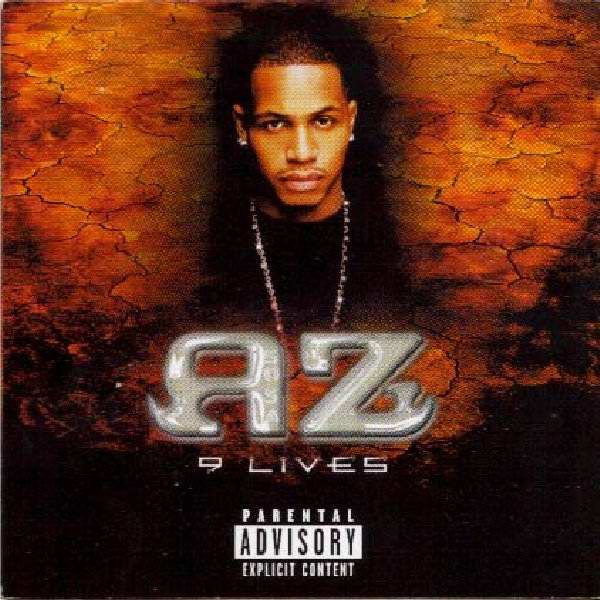
AZ - 9 Lives (June 12, 2001)


When Anthony Cruz found himself homeless (music industry-wise, anyway) after releasing his sophomore effort, Pieces Of A Man, to indifferent criticisms and even more apathetic sales figures, he did what any hustler would do: he regrouped and fought back. After the mandatory ten-day wailing period, in which he blamed everybody but himself for his failures, AZ recorded a quickie project for the “streets”, S.O.S.A. (Save Our Streets AZ), that was intended to keep his name in the national hip hop conversation while slyly doubling as his resume for any future employer. Motown Records, the historic home of such acts as the Jackson 5, The Supremes, and even Boyz II Men, somehow took the bait, and signed him almost immediately; in return, AZ provided them with the masters for his third proper album, 9 Lives.

The title 9 Lives was supposed to be a commentary on how AZ believed himself to be cat-like, rebounding without missing a step after the commercial failure of his last project. Considering the man had only suffered one major loss in his battle with the music industry at this point in his career (his debut, Doe Or Die, was a minor hit, in that everybody knows what it is but almost nobody seems to actually own a copy), the title felt a bit premature: a quick glimpse into the crystal ball that is Wikipedia reveals that his days at Motown were also numbered (he lasted for about two albums), so perhaps it was more of a self-fulfilling prophecy than it was a sarcastic look at his own life. Either way, 9 Lives sold zero copies, as could be expected when the label's marketing team isn't exactly familiar with exactly what they're working with.

9 Lives consisted of a handful of tracks from S.O.S.A. (Save Our Streets AZ), newly remastered but with slightly altered titles, and some newer material that aped Pieces Of A Man in their overall content and glossy quality. Although AZ's introduction to the rap game was on the shoulders of his friend Nasir Jones (on Illmatic's “Life's A Bitch”), his own career trajectory has followed a materialistic path: even though his rhymes would seem to suggest those of a jaded gangster type who is tired of his way of life but is unable to clearly see a way out, the music those rhymes are set to almost exclusively promote a radio-friendly party lifestyle (which was also one of the many downfalls of the side project from rap supergroup The Firm, which consisted of AZ alongside Nas, Foxy Brown, and Cormega Nature). Those two worlds hardly ever mix in a manner that would taste good, so, unsurprisingly, AZ comes across as a guy who doesn't know who his audience is supposed to be.

Anyway.

1. INTRO
Anthony attempts to get back into the good graces of hip hop heads by turning this rap album intro into a quick verse. Unfortunately for him, the Big Shy beat sounds like a Xerox of a Xerox of something that could have ended up on The Firm: The Album (this is a bad thing, kids), and his bars hold no resonance whatsoever: they evaporate from your consciousness even before they leave our host's mouth. Groan.

2. WHAT CHA DAY ABOUT (FEAT. ALI VEGAS)
9 Lives kicks off with a poor Trackmasters impersonation (provided by producer Qu'ran Goodman), over which AZ attempts to reclaim the throne he never actually had by reminding the listener that his life is much better than yours (mostly because he appeared on Illmatic, mind you). The question asked within the title is used as yet another way to separate himself from the masses, but he then expects those same masses to buy his album when he drops it. Great job alienating your potential audience, Anthony. Especially since everyone already knows that you're not quite as successful as you say you are.

3. I DON'T GIVE A FUCK
This was the same song as S.O.S.A. (Save Our Streets AZ)'s “I Don't Give A Fuck Now”, except now without any sense of time specificity: AZ now just doesn't give a fuck, period.

4. AT NIGHT
With the help of producer Chop D.I.E.S.E.L., AZ attempts to bridge the gap between “What Cha Day About” and “I Don't Give A Fuck”, ending up with a mixture that uses the worst elements of both tracks and turns them into an awful-tasting confection that means very little to the general hip hip landscape. Even still, Anthony believes that the majority of his lyrics will fly right over the heads of most of the audience. Nah, man, you have that wrong: the audience (whatever's left of them, anyway) will clearly understand what you mean. They just won't give a fuck now.

5. AZ'S BACK
Anthony takes a risk, tries out a double-time flow over a Southern-tinged Tank instrumental, and manages to sound decent enough merely by not resorting to his usual braggadocio. This type of flow suits him just as well as a 4-year old child wearing one of his father's suits, though, so even without the added stigma embarrassing himself would have caused, “AZ's Back” is still laughable at best. I've always wondered why AZ was so focused on appealing to a mainstream crowd so early on in his career: his crime narratives would seem to be a bit too polarizing for a general audience to accept. Also, the hook on here was fucking terrible. Some ideas are better left in the mind of the artist in question.

6. PROBLEMS
This is the same song that first appeared on S.O.S.A. (Save Our Streets AZ).

7. EVERYTHING'S EVERYTHING (FEAT. JOE)
AZ was never a successful commercial artist. Doe Or Die didn't sell all that well, and his work with The Firm was laughable at best. So why does AZ believe that he is destined to have the same level of success as, say, Nas (who isn't really a sure thing anymore, either) or Jay-Z (who is on an entirely different plane of existence, even if his name sounds similar to that of our host)? Collaborations with R&B stalwart Joe aren't doing you any favors, Anthony: you come across as a rapper who decided long ago that money is all that matters, artistic integrity be damned. It wasn't Motown that imposed this radio-friendly requirement on 9 Lives: Pieces Of A Man sounded this glossy, too. Bleh.

8. THAT'S REAL (FEAT. BEANIE SIGEL)
Please refer to my notes from “Problems”.

9. WHAT Y'ALL N----S WANT (FEAT. FOXY BROWN)
AZ and his invited guest Inga Marchand exhibit so little chemistry on this godawful song that it's a mystery how they share the same planet, which makes the fact that this is technically a mini-reunion between two members of The Firm completely bewildering. Chop D.I.E.S.E.L.'s beat is fucking garbage, AZ sounds awkward as hell when he tries to recite his lines, and Foxy Brown, no longer being guided by the hand of either Jay-Z or Nas, comes across as a Lil' Kim clone who believes that reciting the Notorious B.I.G.-esque “uh” multiple times throughout her verse makes her sound (a) hardcore and (b) sexy, but in reality it helps her come across as (c) mannish and (d) retarded. I think I speak for the universe when I say that what y'all n----z want from AZ is a good fucking song. Pretty please?

10. LET'S TOAST
Same track from the previous project, except it was entitled “Let Us Toast” before. I prefer the earlier title, as it sounded much more formal, as though it was a black tie affair.

11. HOW MANY WANNA (FEAT. AMIL)
AZ does his best impression of a hedonistic Shawn Carter song, managing to somehow make the act of fucking sound even more appalling than Kanye West does on any given verse. He even somehow convinced Jay-Z's former colleague Amil to lend some assistance, which probably wasn't all that difficult, since her cashier shift at Target ended at seven that evening. AZ really has no clue what crowd he should be aiming for, and this song is the aural equivalent of his Newt Gingrich-level flip-flopping. What the fuck was this shit, man?

12. LOVE ME
Same track from the previous project, except it was entitled “Love Me In Your Special Way”. Maybe Motown charged by the word?

13. QUIET MONEY TBS (FEAT. QUIET MONEY)
Anthony lends this goofily-named track its opening verse, but quickly leaves the building to go get some soup, leaving the rest of his weed carriers with the pressure inherent with introducing the posse Quiet Money to the rest of the world. Obviously, this statement didn't end up being a very effective one, since you don't have a fucking clue as to what I'm talking about today: while the generic instrumental plays a role in that collective amnesia, the uncredited day players (which includes Animal, who stole the show on S.O.S.A. (Save Our Streets AZ), along with two others: I'm pretty sure the late Half-A-Mil is among them, but I can't place the last guy, as that's how badly they all blend together) all drop the ball with their interchangeable verses and lack of charisma behind the mic. Although AZ doesn't really charm listeners behind the mic either, so maybe they did actually hook up with the right man. Regardless, this shit sucked kangaroo penis. This was one of the blandest posse cuts I've ever heard: nobody appears to be excited to simply be there.

14. OUTRO
Yay! We're done!

FINAL THOUGHTS: AZ is, ultimately, an also-ran who lucked into an early friendship with one of the biggest artists in hip hop, but no matter how hard he tries, he will never actually be Nas, and it would be best if he gave up this particular course of action as soon as possible. His third proper album, 9 Lives, burns through about eight of them fairly quickly, as our host is unable to decide who his audience is supposed to be, and as a result, he ends up appealing to absolutely nobody. The (mostly shitty) production is too polished to be considered grimy, but his materialistic lyrics focus more on the streets than on any sort of enjoyment a large amount of money could bring: by trying to have it both ways, he damns his rap career to an eternal hell, one which he has yet to fully escape from. If 9 Lives is really what AZ thought would work after dropping S.O.S.A. (Save Our Streets AZ) and the commercial flop Pieces Of A Man, then he was not only sorely mistaken, he was also fucking delusional. 9 Lives is most definitely one of the most boring albums I've ever listened to for this blog.

BUY OR BURN? You should just avoid 9 Lives entirely. To save yourself the trouble, you see.

BEST TRACKS: “I Don't Give A Fuck”

-Max

RELATED POSTS:

May 23, 2011

My Gut Reaction: Canibus - Mic Club: The Curriculum (November 19, 2002)

Contrary to popular opinion, I am not the only guy who believes that Canibus lost his battle with LL Cool J. But allow me to show my work: I never said that Cool James bested Germaine Williams lyrically. Although I prefer LL's response over “Second Round K.O.” any day of the week (since I still believe that including Mike Tyson on your dis track, allowing him to brag about “eat[ing] MC's”, is in extremely poor taste), I won't waste my breath arguing against Germaine's delivery, as what he says is infinitely more interesting than anything James Todd Smith talks about today. But the problem I have with Canibus is that I don't give a fuck about him, and the majority of the hip hop audience clearly feels the same way, and not just because LL Cool J is the guy who still works today (albeit in the acting sector of the entertainment industry).

Just take a look at the man's career trajectory: Canibus went from being a gifted lyrical beast who would tear every cameo appearance handed to him to shreds, to becoming a guy who uses his vast vocabulary as a crutch, resorting to his ten-dollar words simply to exert dominance in our chosen genre when the occasion would just as easily call for an entertaining verse. The man never learned how to write a song, not even when he was under the tutelage of Wyclef Jean (who, like it or not, is an international superstar, and probably knows a thing or two about doing just that), he has no idea how to capture an audience's attention, and his ear for selecting beats has been infected since his time spent in the womb. Canibus is a man who refused to learn from his mistakes, choosing to kick-start ridiculous beefs with other, higher-caliber artists in an effort to re-brand his name on hip hop blogs: in the present day, I understand that he has apparently picked fights with both DJ Premier (seriously, dude? Are you fucking retarded?) and Royce da 5'9”, two guys who will continue to enjoy the fruits of their labor long after Canibus finally accepts his fade into oblivion. His beef with Eminem, which still doesn't make much sense to me, is also fresh on his mind. When it comes down to it, his problem with LL Cool J was the only justified battle in his entire career: all of this other petty shit smacks of Canibus getting his feelings hurt and, instead of confronting the perpetrator and talking it out in a mature manner, choosing to air out his dirty laundry without the aid of context, hoping to win back some fans before they realized that he was in the wrong.

Canibus seems to make his living by burning pretty much every single bridge that has been presented to him: when was the last time you saw Germaine make a guest appearance on someone else's album? The man has very few friends left in the industry who are willing to put up with his bullshit (I count Keith Murray and the other three members of the Four Horsemen as his only remaining allies, but those guys don't wield much influence in our chosen genre these days), leaving him to his own devices, as his mind twists and warps the world around him into a place suitable for living, all because he failed to compromise his style, delivery, and rhymes (which wouldn't be a terrible thing, had his style, delivery, and rhymes not grown stale back when he was rhyming with the Lost Boyz), and because he refused to fucking listen to anybody who was willing to help him out. Canibus also doesn't know how to accept blame for anything, passing off the failure of his debut, Can-I-Bus, to executive producer Wyclef, and the middling sales of his other two projects to the labels in question.

Conversely, LL Cool J will always be a part of the hip hop culture, even if he never records another album (which, hopefully, he won't, given the quality of his later output), because he has the back catalog to prove his worth, and the only bridge he burned in the industry was, well, the one with Canibus. (LL had issues with both Jay-Z and Kool Moe Dee in the past, but I'm willing to bet that any bad blood between them has long since faded.) Shit, if Cool James walked off of the set of N.C.I.S. Los Angeles next Thursday and decided that he wanted to record another rap album for the “streets”, I have absolutely no doubt that he would have his pick of the litter when it came to securing beats from the best producers in the game (I'm talking Pete Rock, Marley Marl, The RZA, some older Dilla donuts, the aforementioned DJ Premier, and their ilk), based on the clout his name still holds. No matter what LL Cool J does with his career, he will always have the respect of hip hop as a whole, whereas Canibus has become the laughingstock of the community, albeit a laughingstock that still spits decent verses every once in a while.

So clearly, LL Cool J won the war.

However, Germaine isn't an idiot. He may refuse to accept blame for his own failures, but he is at least cognizant enough to realize that his fanbase is dwindling at an alarming rate. His album-length Eminem obsession, C! Tru Hollywood Stories, certainly didn't give him much of a leg to stand on. So when he recorded his fourth full-length album, Mic Club: The Curriculum, he tried his best to respond to the criticism of his earlier work, attempting to select better beats (mostly from unknown producers, but he scores a single instrumental from future collaborator Stoupe the Enemy of Mankind, of Jedi Mind Tricks fame) while essentially giving up on learning how to write a proper song: he figured that the fans that remained preferred to simply hear the man spit straight through a track for five minutes plus. He's not wrong: the reason people gave a damn about Canibus in the first place was because of his freestyles (which in no way were created on the spot, not with the way Germaine carefully crafted his bars) and his showstopping guest appearances on the albums of his then-peers.
Mic Club: The Curriculum is built around the conceit that Canibus is a professor trying to teach the youth about what he believes hip hop to be. Either that, or he's a student trying to re-learn his craft. The theme isn't quite clear. Regardless, the fourth album from Germaine Williams clearly finds the man at a roadblock, trying to find his way around the obstacles in his path in order to continue his day job as a guy who recites words to a beat for a living.

As my understanding is that Canibus was seriously trying to redeem himself after the artistic failures laying in his wake, I promise to give Mic Club: The Curriculum a true shot during my initial listen. No, seriously, I'm not kidding. Regardless of what I wrote above, I have no preexisting bias for or against Mic Club: The Curriculum. I've never listened to it before: how would that even be fucking possible?

1. MIC CLUB INTRO
Germaine spits a quick verse using a guttural growl that acts in sharp contrast to the way he usually sounds behind the mic. This is still a rap album intro, so it's ultimately useless, but at least Canibus avoids the trappings of C! Tru Hollywood Stories by not attempting to set up an ongoing storyline. Let's see where he goes with this.

2. POET LAUREATE
The DJ Kemo instrumental grows more and more annoying as the nearly five-minute runtime goes on, but at least it sounds much more conducive to a glorified freestyle session (as that is exactly what “Poet Laureate” is for our host) than some of his previous work. Germaine tackles the microphone and kicks bars for seemingly forever without the need of a chorus (or an editor, but that's neither here nor there), and truth be told, this type of shit is exactly what the man's few remaining fans want to hear. So why the fuck doesn't he just take twelve of these type of songs and call that his next album? Truth be told, this wasn't bad, although I would have preferred if the beat adjusted itself a bit throughout. Can't have it all, I suppose.

3. MASTER THESIS
Part of the reason Canibus is no longer relevant to hip hop heads is because he only functions on two speeds: battle-rhyme and lengthy, lyrically obtuse tangents. His lack of versatility has sealed his fate. However, when the man is on, he is fucking on, and “Master Thesis” is a prime example of that. Over a simple and yet banging Kyros instrumental, Germaine lays into a nearly four-minute-long one-verse wonder spanning a wide, goofy range of topics (most of which revolve around academia, so as to stick with the underlying theme of Mic Club: The Curriculum) and hits the mark, delivering the sequel to Can-I-Bus's “Buckingham Palace” that nobody knew they wanted. This one song is what I'm sure the entirety of 2000 B.C. (Before Can-I-Bus) was supposed to sound like. Pretty nice, if you can get around his pretentious use of wordplay.

4. BEHIND ENEMY RHYMES
And here is the opposing side of that argument. “Behind Enemy Rhymes”, with its poppy instrumental that Canibus doesn't seem sure what to do with, earns an automatic “skip” from anyone still listening at this point, thanks to our host's penchant for overestimating the audience's attention span for bizarre threats, wordy hooks, and ten-dollar words that I'm not even convinced he knows the definitions to at this point. A word to the wise: this is why aspiring rappers shouldn't just take a film title and change a word or two to fit your needs, as the shit will not make any fucking sense. Besides, why would you name your song after any non-Wes Anderson Owen Wilson movie?

5. ALLIED META-FORCES (FEAT. KOOL G RAP)
It could be argued that, had Canibus never signed a solo record deal and instead focused on his craft exclusively with cameos on other high-profile projects, his time in the spotlight may have extended much further than his two main competitors in his field in the late 1990s, DMX and Busta Rhymes. The man simply sounds good as a part of an ensemble cast: a little of Germaine goes a long way. (This alternate path was never going to actually happen, as our host's fate was sealed when LL Cool J reneged on his promise to alter his “4,3,2,1” verse, leading Canibus to respond with a solo dis track, but it's still nice to dream once in a while.) So this collaboration actually works, for the most part. Canibus and Kool G Rap may not have been in the studio at the same time to actually record it, but they still somehow come across as feeding off of each other's energy, so the performances were alright. Too bad the instrumental was bland as fuck.

6. CENIOR STUDIES 02
If you never cared much for Canibus before, “Cenior Studies 02” won't change your mind: this long-winded one-verse wonder, in the vein of “Poet Laureate” and “Master Thesis” is nearly impenetrable, save for when our host panders to the audience by quoting MC Hammer. The man is a decent writer, and he has a much broader vocabulary than most rappers in the game, but that doesn't mean that he should be ranked near the top of any list, as he spends too much of his personal time letting his mind float and paying zero attention to what his fans actually respond to. This song is the epitome of that lack of awareness.

7. “C” SECTION
PlusScience's instrumental sounds pretty fucking catchy: had it been attached to a more mainstream artist (I'm thinking Fabolous for some reason), it might have become a mild radio and club hit. So, obviously, Germaine sounds entirely out of place, especially when he ditches his bid for accessibility (his first ten bars or so could have possibly attracted some new fans, had things been different) and returns to his navel-gazing. When a rapper's only line of defense is to talk about how much of a better rapper he is than you will ever be, it makes sense when that same rapper eventually loses his audience: one-trick ponies don't get very far in our chosen genre. At least the beat was alright.

8. DRAMA A/T (FEAT. LUMINATI)
The beat is appropriately dramatic, but it lacks that epic feeling that it was clearly shooting for. Germaine's verse actually sticks to a theme, rattling off as many examples of what he feels can be described as “drama”, although more than a few of them are a stretch. Guest star Luminati, our host's invited guest (who, apparently, doubles as Germaine's (former) business manager, Louie Lombard III, interestingly enough), doesn't fare nearly as well: his verse sounds as though Killarmy's 9th Prince found Germaine's book of rhymes and decided to recite some passages at random. This was a bit too long for anyone's tastes, but at least our host sounded okay.

9. DR. C PHD
The Kyros beat was interesting, but once again, Canibus isn't a perfect fit: instead of even attempting to adapt to his surroundings, he stays in his lane, unaware that it turns into an exit-only ramp leading down to a frontage road of inadequacy in approximately half a mile. His random boasts and even more out-of-left-field threats sound heavily sound heavily mismatched to the instrumental, so toward the very end, when he takes a brief shot at Eminem, it's likely to fly right over the head of the listener, who probably won't give much of a fuck anyway.

10. BIS VS. RIP (FEAT. RIP THE JACKER)
As this song is over six minutes long, I assume that Germaine meant for this duel between the opposing sides of his psyche (coming across as a dis track aimed at himself, as hinted when he gave a guest-starring credit to his alter ego Rip The Jacker), to be the centerpiece of Mic Club: The Curriculum. For those who weren't aware (as I surely didn't care enough to become informed prior to throwing this disc into my computer), “Canibus” is a soft-spoken intellectual, prone to reasonable discussion and who probably drinks his tea with his pinky finger sticking out, while “Rip The Jacker”, the name itself a direct swipe at LL Cool J's song “Jack The Ripper”, is the guy we've heard the majority of Germaine's career, except for when the music sucked, which was often, when the songs were pawned off on “Canibus”. And, apparently, there can be only one. Our host makes some interesting points and proves that he is more self-aware than we may have believed, but this song was still self-serving and ultimately stale.

11. LIBERAL ARTS (FEAT. JEDI MIND TRICKS)
In what turned into an impromptu audition for his work handling all of the production on this project's follow-up, Rip The Jacker, Stoupe The Enemy Of Mankind provides the most complete-sounding instrumental on the entire album thus far, and yet, it doesn't hit quite as hard as his work with his Jedi Mind Tricks partner Vinnie Paz, who pops in to deliver a random verse that could have been applied absolutely anywhere, had he not made the mistake of mentioning our host's name within it. To his credit, Germaine sounds more comfortable on here than he has in a while, but this song wasn't anything to write home about.

12. CIRRICULUM 101
Sounds too similar to “Poet Laureate”, “Master Thesis”, and “Cenior Studies 02” for me to give much of a damn. These aren't songs: they're freestyles set to a beat (a point I realize I've already made), allowing nothing for the audience to latch on to. I don't need choruses in my rap songs, but I do require the artists to have a genuine interest in entertaining an audience that consists of more than just the guy in the mirror staring back at them. Sigh.

13. MIC CLUB OUTRO
Canibus delivers another verse on here, in a style similar to what he did on the intro, but it's fucking terrible, so it just doesn't matter. The beat-boxing near the end was an unexpected touch, though.

THE LAST WORD: Canibus has been consistently building a case for his expulsion from our chosen genre with his disappointing Can-I-Bus, the awful 2000 B.C. (Before Can-I-Bus), and the excrement simply known as C! Tru Hollywood Stories. Seemingly backed into a corner, Germaine Williams comes out swinging, and as a result, Mic Club: The Curriculum is actually much more entertaining than his previous three efforts, although that isn't saying a whole lot. He still sounds as though he writes his verses first, making sure to check his thesaurus to locate the most unnecessary synonyms possible, and then purchases a beat from the lowest bidder after the fact: he even mentions during at least one of the songs on here that he doesn't give a fuck about the actual music. Um, yeah, great career choice, motherfucker. For fans of lyrics alone, Canibus actually doesn't disappoint, but his style still isn't flexible enough to stretch out over a full-length project. Germaine starts strong (“Poet Laureate” and “Master Thesis” are actually pretty interesting tracks), and he coerces a grand guest appearance out of hip hop legend Kool G Rap (who will apparently work with absolutely anybody if the price is right), early on, but Mic Club: The Curriculum quickly falls apart, although, for once, the production isn't the real problem. The man simply sounds better when the dosage is concentrated into one or two cameo verses. I could end this write-up with a corny joke about not wanting to enroll in this particular curriculum, but that would be too easy.

-Max

RELATED POSTS:
There are some more Canibus-related posts to be found on the blog. This link will get you started.

May 21, 2011

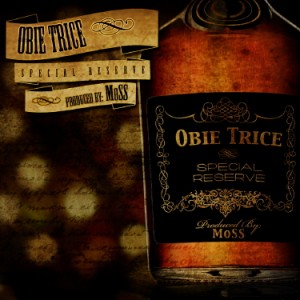
My Gut Reaction: Obie Trice - Special Reserve (December 15, 2009)

I've always felt kind of sorry for Detroit-based rapper Obie Trice. While it's true that he was lucky enough to score a deal with a major label, something that a lot of people are never able to accomplish within their lifetimes, he was never treated as an equal amongst his peers. Eminem signed Obie to his Shady Records imprint in 2000, even going so far as to briefly feature him on both The Eminem Show and D-12's Devil's Night, but the moment that Marshall signed Curtis Jackson to the label, all of the marketing focus was shifted away from the man actually born with the name Obie Trice, forcing him to scramble on his own to finish up his own debut album, Cheers, which was released in 2003 with little to no interest. Obie would go out of his way to pledge his allegiance to Shady Records, but the favor was never returned (I don't count Marshall including Obie on Eminem Presents The Re-Up, since he was contractually obligated to do that shit.) Cheers was loaded with A-list talent, including big names such as Busta Rhymes, Dr. Dre, DJ Muggs, Timbaland, and Em himself, but Obie was never able to capitalize on these favors by jumping onto any of their own albums (save for Em, but, once again, contractual obligations are a bitch). 50 Cent appeared on Cheers (alongside his fellow G-Unit tool Lloyd Banks); did he allow Obie Trice more exposure and an opportunity to impress a wider audience by offering him a guest slot on The Massacre? Fuck no he didn't; why would he? As it became blatantly obvious that the only artist on Shady Records that Marshall Mathers cared about (after Curtis imploded, anyway) was himself, it barely registered that Obie Trice severed ties with them: I assume that the majority of the hip hop audience had been under the impression that Obie was dropped from the label long after his sophomore release, Second Round's On Me, tanked.

Unsurprisingly, Obie is currently attempting a comeback, promising that his third album, the as-yet-unreleased Bottoms Up, will be a return to form, a form that most hip hop heads will be unfamiliar with, as Obie's name didn't even appear on the radar until after Marshall signed him. I have no idea if the man will actually succeed in his quest to win over an increasingly fickle audience: our chosen genre has a relatively short attention span, and given the response some of his teaser singles have been receiving when they hit the other blogs, I'm not even sure if the interest exists to begin with. Hell, I don't think that even this post will garner that many comments. But I still believe that this project is worth mentioning.

In 2009, Obie Trice unleashed Special Reserve, a compilation album whose title keeps with his ongoing theme of having album names that remind you of getting shitfaced. It's a short collection of tracks he recorded between the years 1997-2000, before his Shady deal, with Canadian producer MoSS, who just so happens to be the first producer signed to DJ Premier's imprint, Works Of Mart. I'm not clear how these tracks came into being, as I'm not familiar enough with Obie's life to know whether he actually had a deal with an independent label prior to signing with the Marshall Mathers Experience, but Obie clearly thought that these songs would hold over the fans he still had while he was busy readying Bottoms Up, a project which still has not been assigned a release date. So Special Reserve won't sound cohesive as an album, but it was never intended to, and it isn't a mixtape, as Obie would have released it as such otherwise.

The collector in me tends to enjoy when artists open up their vaults and let loose some material that would remain unheard under normal circumstances, so I'm intrigued by what Obie Trice has to offer.

1. WELCOME
Although the song's very title would lead you to believe otherwise, this is not a rap album intro, since Obie actually spits over some catchy MoSS production work. It also isn't intended to be an introductory song, either: there is nothing welcoming about Obie's need to impress listeners and his threatening bodily harm against any of his adversaries. Even though “Welcome” was recorded well before Cheers, it somehow sounds like a natural extension of that project, which can only mean one thing: Obie Trice has somehow perfected the art of time travel. We should send some of our finest scientists to Detroit post haste.

2. GOT HUNGRY
Well, I'll give Obie credit for an accurate song title: the man sounds hungry as fuck over this hard-hitting instrumental. While most of this sounds pretty fucking terrific, Obie does manage a couple of missteps throughout his two verses: his “chorus” (by that I mean he repeats the last set of bars in the first verse twice) is terrible, and, in an effort to make his very last line rhyme, he uses the phrase “Fuck N-O!” instead of just going with a sentence that real people actually use, “Fuck no!”, unless they happen to be talking shit about the city of New Orleans for some reason. Obie was much younger back when “Got Hungry” was recorded, and he probably wouldn't pull the same stunt today, so I'm willing to let it slide.

3. YOU HAVE BEEN SLAIN
That title is hilariously corny, but it masks a really fucking good one-verse wonder from Obie Trice, as he narrates what happens when someone is shot and bleeds to death while waiting for the paramedics to arrive. He makes the interesting choice to begin the song with the actual shooting, but he doesn't add any sort of context: was it gang-related? Wrong place at the wrong time? The listener is caught unaware of the facts: the guy just gets shot, and you can only watch him die (or listen to him die, I suppose). Not only is this some pretty powerful shit, Obie proves himself to be an ace storyteller, tossing in enough one-off details to make you feel even worse when the protagonist passes away. (SPOILER ALERT!) MoSS lends our host a beat that mixes some ominous organ keys with steel drums, of all things, and that shit works beautifully.

4. ON & ON
MoSS hits the listener (and also Obie, I'm assuming) with a pulse-pounding instrumental that is a spiritual cousin to the best song Trice will ever record, Second Round's On Me's “Cry Now”. While “Cry Now” is still the much better effort, Obie actually sounds like he gives a shit on “On & On”, and yes, I realize I just wrote the word “on” nearly three times in a row within a single sentence.. Obviously, his relatively short tenure on Shady Records (where he at least released more material than Stat Quo and Ca$his) left him complacent, while back in the late 1990s the dude was fucking starving. The chorus annoyed the shit out of me, as MoSS seems to take listeners on a guided tour of every single rap song that has ever used the phrase “On & On”, but I still liked the song regardless.

5. I AM
There's a reference to Eminem on this track which comes across as a bizarre anachronism, even though I guess it's entirely possible that Obie Trice was on friendly terms with Marshall at the time “I Am” was recorded: they both hail from the same city, after all. Since I'm focusing so much on such a minute portion of a three-minute song, it's clear to me that I can only remember that one lone part. MoSS makes his first mistake with an instrumental that clashes ideologically with Obie Trice's need for approval, and neither side pulls out a victory. Still, it took Obie five tracks into Special Reserve to finally fuck up: you can't say that about any of his other albums.

6. 4 STORIES
Obie somehow fits four separate verses into a two-minute song without sacrificing anything lyrically. He isn't the best writer of our generation, but when he's giving a damn, his bars measure up to some of the better rappers out there, and that is the case for at least two of the verses on “4 Stories”, especially the final one, which sounds like an alternate take for “You Have Been Slain”. MoSS provides a beat that manages to be both entertaining and annoying as shit all at once: having to rely on soul samples as a crutch might be the man's downfall. But at least our host is up to the challenge.

7. ROUGHNECKS (FEAT. DEUCE WONDER)
I don't buy that everything on Special Reserve was recorded before Obie's interlude on Shady Records: if “Roughnecks” was sitting in the vaults while he was recording Cheers and wasn't up for album consideration, then the man must have been smoking some powerful shit with Em's money, as “Roughnecks” fucking bangs. MoSS starts with some hard drums and sprinkles in some organ keys, and Obie Trice rips the shit to pieces. Why, it's almost as though “Roughnecks” was the song that “Cry Now” wished it could be (although “Cry Now” has a much better beat). Even the chorus provided by Deuce Wonder (the lone guest star on Special Reserve) isn't that bad: I could legitimately see this song easily sliding onto radio playlists today, if only anybody gave a fuck about Obie Trice.

8. COOL CATS
MoSS's beat isn't that bad, but Obie trips over his own shoelaces, bangs his head against the concrete sidewalk, and now is unable to utter any phrase other than “I'm a cool n---a first, a grimy n---a later”. At least, that's how it feels when you actually have to listen to this shit. Maybe some of these tracks should have remained in the vault: when Obie demands that MoSS “turn this [music] the fuck off” at the very end, you're left feeling that he just read your mind.

9. WHAT YOU WANT
This song was fairly meh as well. What the fuck just happened?

10. JACK MY DICK
Obie Trice devotes an entire song to the art of masturbation, sounding like a guy who has flat-out given up on even trying to hook up with chicks in favor of jacking off, just because it takes him less effort. Amusing at first, but the track gains several degrees of sadness before it finally fades out, and now I just want to set up an online dating profile for the guy, just so he might get lucky again someday. Oh, the song? It's pretty bad. Why do you ask?

The following is considered to be a bonus track on Special Reserve.

11. DOPE, JOBS, HOMELESS
At least this song ends Special Reserve on a not-so-boring note, even though the title makes this sound like it was three separate freestyles strung together. It isn't all that great, either. MoSS provides an instrumental that sounds like it took him all of thirty seconds to put together, but it still works better than the previous two tracks: for his part, Obie even sounds okay. However, it's pretty clear why this was locked away for so long. And with that, we're good.

THE LAST WORD: Obie Trice's Special Reserve starts off surprisingly strong, but as I had feared, it tapers off significantly at the end. Still, the front half of Special Reserve ranks among Obie's best work, proving that the man did actually have the talent to warrant the Shady Records deal, even if he pissed it away shortly after signing the contract. Producer MoSS also gives the listener some inspired beats, acting as the DJ Premier to Obie's...um, more talented Lil' Dap, I suppose. A handful of these tracks are pretty fucking great, which was entirely unexpected: the younger incarnation of Obie Trice sounds just as assured behind the mic as the latter-day version, aside from some obvious verbal slips and poor lyrical decisions that only get repaired with time and experience. While I have no such high hopes for his eventual Bottoms Up, Obie Trice has given listeners a glimpse at his past on Special Reserve, and it's actually interesting enough to care about, or at least to bang in your car. Huh.

-Max

RELATED POSTS: