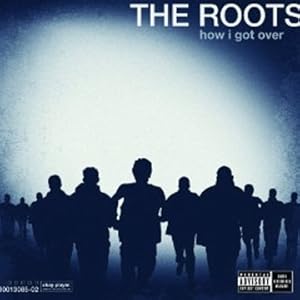
Before I essentially take the month of July off from the blog (the tentative plan is for me to pop in from time to time with random updates in between Reader Reviews, but we'll see how that goes), I figured I would try to ride the high that How I Got Over created by jumping back into the discography of The Roots. So the next logical step for me would be to move on to the collective's fourth album, Things Fall Apart.
During the three years between illadelph halflife and Things Fall Apart, The Roots found themselves suddenly traded up to the big leagues, but not by choice: the numerous mergers between record labels in the late 1990s resulted in many acts being shuffled around like a deck of cards, and the Roots Crew was essentially treated like the 'rules for playing poker' card that only's slightly more useful than the 'coupon for future purchase', as their label home DGC/Geffen sent them packing to parent company MCA, as they ultimately had no idea what to do with them. (GZA/Genius, who was also a part of the Geffen family, saw this same move happen to his contract. I've always wondered how The Genius and Black Thought shared a label home for so long, and yet never collaborated on anything. That shit could have been epic.)
Undeterred, The Roots (led by idea men Thought and ?uestlove) continued to do what they did best: create music. During the studio sessions that eventually formed their fourth album, the crew actually helped record three additional projects: D'Angelo's Voodoo, Common's Like Water For Chocolate, and Erykah Badu's Mama's Gun. (Not coincidentally, all three artists appear on Things Fall Apart, although D'Angelo is stuck playing the bass in the background on one track, "The Spark".) All four albums were produced under the banner The Soulquarians, a musical collective that shared the singular vision of bringing the soul back into aquariums the world over. And they probably would have succeeded, too, had it not been for those meddling kids.
Things Fall Apart, whose title was borrowed from Chinua Achebe's novel, ended up being the crew's most successful album at the time, as its critical acclaim was, for the first time ever, matched by record sales of over five hundred thousand units. This was no doubt caused by the project's first single, "You Got Me", which earned heavy-ish airplay on MTV (instead of being limited to just BET) and won a Grammy in 2000 for Best Rap Performance by a Duo or Group. It also didn't hurt that Things Fall Apart's first pressing was a limited edition, in which fans got to choose from one of five distinct and collectible album covers: the photo I chose above isn't the cover that The Roots eventually ended up going with for the remainder of their run, but it is the one I actually own, so let's go with that.
Okay, let's do this.
(The tracklisting presented below represents how the songs factor into the overall Roots catalog, and also match the numeration that ?uestlove has assigned to the tracks himself, so if you're new to the blog, please don't get too confused. There will be a handy link at the end of the write-up that will help you catch up.)
54. ACT WON...THINGS FALL APART This rap album intro sheds light on something that The Roots have been afraid of their entire career: the fact that it could all end in a second because of a lack of support, combined with the thought that nobody supports them because the music they make goes over the head of the general public. (It's interesting how a sound bite from Mo' Betta Blues can sum up that exact argument.) Hopefully, music historians will treat the back catalog of The Roots as much more than disposable.
55. TABLE OF CONTENTS (PARTS 1 & 2) Part 1 features Black Thought expending palpable energy over a tight-as-fuck lo-fi musical creation, making this an excellent reintroduction to the Roots Crew. My biggest complaint is that the track fades away while Tariq is still rhyming. (I ask again: what the fuck is the point of doing that shit?) Part 2, which immediately follows, features Malik B. going for dolo with unsuccessful results over a boring beat. Stick with the original recipe here, folks: the extra tasty crispy sequel will leave you feeling sad and empty.
56. THE NEXT MOVEMENT (FEAT DJ JAZZY JEFF & THE JAZZYFATNASTEES) The second single from Things Fall Apart, this was the song MCA used to remind listeners that The Roots were still primarily a rap group. Its jazzy feel doesn't quite mesh with the majority of this album, which prides itself with its more direct hip hop tone, but this song still fucking rocks. Think of “The Next Movement” as the calm before the storm, or the tasty appetizers served before your main course at Benihana. Even the video for this song is goofy as hell, and I mean that in the best way possible. Will Smith's former deejay (and fellow Philly resident) DJ Jazzy Jeff provides some cuts and scratches for good measure.
57. STEP INTO THE REALM I've always felt the inclusion of this track on Things Fall Apart was a mistake: its low-key sound and apathetic performance by Malik B. doesn't fit within this album's rich color scheme, and placing it so early in the sequencing runs the risk of the actual album, um, falling apart. Had this been included on illadelph halflife, it would have made much more sense, but as it appears on here, this track is best utilized as a smoke break.
58. THE SPARK Meh. It troubles me to use that one-word review so early on, but then I remember what is still to come on Things Fall Apart, and my conscience feels that much better.
59. DYNAMITE! This J Dilla-laced donut matches its tone with that of “The Next Movement”, but still manages to sound out of place on Things Fall Apart. (Those of you who are listening to this album while reading down the list may not have any clue what I'm referring to when I talk about the overall sound of the album: rest assured, starting with the next track, you'll soon see.) “Dynamite!” sounds like Beats, Rhymes & Life-era A Tribe Called Quest (and not just because of the Jay Dee connection), which most readers will either love or hate. I choose indifference.
60. WITHOUT A DOUBT (FEAT LADY B) Thanks to a sample lifted from Schooly D's “Saturday Night”, “Without A Doubt” helps The Roots reach an old-school aesthetic that they both embrace and completely fucking destroy. Black Thought uses his verses to exercise their dominance over most rap acts, using threats of actual talent over those of violent acts (although Thought does mention that he will “send a verse in the mail like a death threat”). The final minute of the track is reserved for a quick jam session that blends seamlessly into...
61. AIN'T SAYIN' NOTHIN' NEW (FEAT DICE RAW & EVE OF DESTRUCTION) That's not a typo: the artist currently known simply as Eve provides backup vocals for this track. This is actually my favorite song off of Things Fall Apart. The calm and collected beat contrasts directly with the harsh lyrics, which are chock full of goofy boasts (such as Black Thought's claim that “Chase Manhattan endorse[s] my mic checks”). Technically, this tirade against the overt sameness of hip hop at the time isn't really saying anything new either, but it is entertaining as fuck, even as it devolves into an abstract scat song toward the end. This still sounds as good today as it did way back in 1999.
62. DOUBLE TROUBLE (FEAT MOS DEF) According to ?uestlove's liner notes, “Double Trouble” originally contained contributions from Mos Def's Black Star partner Talib Kweli, but he was soon removed because Black Thought liked the idea of an old-school back-and-forth between two emcees (and besides, the song is called “Double Trouble”, not “Triple Threat”). While I feel bad for Kweli (this would have most certainly been a good look for him so early in his career), I can't imagine this track playing out any other way: Tariq and Dante play off of each other with a chemistry that most romantic “comedies” would fucking kill for. The xylophone also helps add to the relaxing vibe. Mos Def's homage to “Planet Rock” at the end is all sorts of unnecessary, though.
63. ACT TOO (LOVE OF MY LIFE) (FEAT COMMON) Judging by the title (and by ?uestlove's own admission), this was originally intended to be an interlude, built in the same fashion as the other two parts lying around elsewhere on the album, but The Roots somehow mysteriously turned this into an indirect sequel to guest star Common's “I Used To Love H.E.R.”. To his credit, Common's extended metaphor uses very little repetition from his original classic (and he even manages to send shots toward Puff Daddy, which I'm sure Roots fans fucking loved back in 1999). Lyrically, Tariq is also on point, and most listeners, even those who aren't “coffee shop chicks and white dudes”, will love the musical breakdown immediately following Lonnie's verse. Nice.
64. 100% DUNDEE Human beatbox Rahzel doesn't make all of the music with his mouth, but he does supply the backbone, as Black Thought and Malik B. dance within the melody as if this were their senior prom. It was also very nice of Tariq to mention Chinua Achebe by name. Although he isn't the greatest rapper in the world and I know he has his own personal issues to deal with, Malik B.'s presence was missed on How I Got Over.
65. DIEDRE VS. DICE (FEAT DICE RAW) Proving that a little bit of Dice Raw can go a very long way, he kicks a pretty good verse on this short interlude (with music provided by cello player Diedre Murray). I still hate it when songs songs fade out before the artist is finished, though.
66. ADRENALINE! (FEAT BEANIE SIGEL & DICE RAW) Although this track is probably best known as the debut of Philly's own Beanie Sigel (spelled “Beenie Siegal" in the liner notes), recorded either shortly before or shortly after his signing with Roc-A-Fella Records (I'm not sure which), “Adrenaline!” can easily be seen as “Clones” redux, although M.A.R.S. Is switched out for the Mac Man. The beat, co-produced by Roots member Scott Storch (I added that tag because most people forget that jackass was once a part of the greatest hip hop band of all time) provides listeners with a nice headrush, while all four participants straight-up rip shit, with Beans providing a more-than-adequate reason to continue following his career. (That goodwill didn't extend very far, but oh well.) When compared to the rest of the Roots Crew's catalog, “Adrenaline!” still holds up today, which is impressive for what is essentially a posse cut.
67. 3RD ACT: ? VS. SCRATCH 2...ELECTRIC BOOGALOO A beatbox skit that isn't long enough to become truly annoying, but isn't short enough to avoid hitting the 'skip' button.
68. YOU GOT ME (FEAT ERYKAH BADU & EVE OF DESTRUCTION) I find the backstory for this Grammy-award winning single to be far more fascinating than the actual song. If you're not aware, The Roots wrote this love rap with a then-unknown Jill Scott and a then-unknown Eve Of Destruction (which is what Eve called herself while signed with Aftermath the first time around, prior to hooking up with the Ruff Ryders), both of them Philly musicians who would make waves within the music industry later in their careers. Jill Scott's vocals were replaced by Erykah Badu's, as Erykah was a well-known commodity at this point and the label felt she would help The Roots sell more copies of Things Fall Apart (this probably wasn't a bad move, given the overall result); Eve was allowed to retain her contribution on the song, but doesn't appear in the accompanying music video at all. (?uestlove apparently blames himself for this oversight.) I've always found this song too sickly sweet, more so sickly, as Thought sounds entirely out of his element, as if even The Roots knew that this song only existed to sell records. I'm glad they won the Grammy (even though that award means nothing, at least this means the band's name flashed on television screens for a split second back in 2000, as rap awards are never given out during the live broadcast), but I still wish it was for a better song. The drum-and-bass bit toward the end was a nice touch, though.
69. DON'T SEE US (FEAT DICE RAW) This boring-as-shit song is best remembered for its out-of-left-field and out-of-context Radiohead reference and for its selective censorship (which happens often in Roots songs, for some reason). I suppose it would be virtually impossible to keep the pace that started with “Without A Doubt” and ended with “Adrenaline!” going forever, but the fact that The Roots didn't even try on this jazzy Do You Want More?!!!??! throwback (that's not a compliment, by the way) pretty much signifies the end of the album.
70. RETURN TO INNOCENCE LOST (FEAT URSULA RUCKER) Ursula Rucker provides some more spoken word poetry to cap off the evening. This could have been a lot worse, but we all know how Max feels about this sort of thing.
Here's where things get interesting. The back insert under the plastic disc holder for Things Fall Apart teases that “there is no bonus track...or is there?”, or something to that effect (my plastic case is put away in storage, so I'm going off of memory here). Well, yes, there is a bonus track: the marketing card the record label slipped into the liner notes gives that shit away, as they include one more song than what is mentioned within the liner notes themselves. However, back when people listened to albums on actual compact discs, the only way to find this song was to skip to the final track and then rewind into the negative space, which I always found both sneaky and brilliant. Since you would more than likely be listening to Things Fall Apart on iTunes, the bonus track appears shortly after “Return To Innocence Lost” ends.
UNTITLED BONUS TRACK (A/K/A OUT THERE) Hilariously, The Roots specifically refer to this as “the hidden track” right at the beginning of the song, which is far more meta than most rappers would ever dare to be. It doesn't really fit into the album's sequence: the beat is a bit too freeform to grasp. But Black Thought regains his composure and provides listeners with a proper sendoff that probably could have also ended illadelph halflife on a high note.
The compact disc version of Things Fall Apart ends with an additional track.
71. ACT FORE...THE END? Because the bonus track plays out before this track even starts, we are left with four seconds of silence before Things Fall Apart just ends. The marketing card lists the title of this track, as does iTunes when you throw this disc into your computer for uploading, but there is no reference to a fourth “Act” interlude anywhere in the liner notes. Tricky bastards, The Roots.
FINAL THOUGHTS: Things Fall Apart is easily the most accessible album in the Roots Crew's catalog; it's just a bonus that it was also their most consistent (until How I Got Over, anyway). The continuing adventures of ?uestlove and Black Thought (inarguably the heart and soul of The Roots), along with their many musical friends, has its share of missteps (Malik B. is so outclassed behind the mic that guest Dice Raw sounds like Rakim by comparison), but the marriage of music and lyrics knocks more often than not, especially during the fucking brilliant second act. The Roots deserve a wider audience, and with Things Fall Apart they got what they wanted, albeit for only a short period of time. Based on sheer entertainment value alone, Things Fall Apart is their finest hour, although I will admit that The Roots have crafted much better material since 1999.
BUY OR BURN? Buy this shit. The masterful second act alone is worth the price of admission, and besides, you two will probably enjoy “You Got Me” more than I do anyway.
BEST TRACKS: “Ain't Sayin' Nothin' New”; “Act Too...Love Of My Life”; “Double Trouble”; “Adrenaline!”; “100% Dundee”; “Without A Doubt”; “Table Of Contents (Parts 1 & 2)” (Part 1 only)
I'm devoting the month of July to burning off the Reader Reviews that have been collecting virtual dust for the past few months. For those of you who have been patiently waiting for your submission to post, please accept this as my apology, and look for a message from me soon regarding your publication date.
Those of you who don't really look forward to Reader Reviews should have nothing to fear: some of the write-ups I've received touch upon albums that I would not have gotten to otherwise, which is always good for stirring up conversation. Also, this gives me a chance to relax a bit without huge delays between reviews.
You still have time to steer the direction of HHID. If there is an album that you wish to discuss, and I haven't gotten to it yet, your best bet might be to shoot me your own Reader Review by sending it to the e-mail address in the sidebar. You may get chosen for publication, and as such, you may finally know the joy of making your opinion known while everyone else on the Interweb hates you for it. Or something.
As usual, you can also send me your requests, either via e-mail or by hitting me up on Twitter.
I glanced at the first paragraph in the New York Times write-up for the ninth (seriously!) album from The Roots, How I Got Over, and the author proclaimed them to be the most widely-seen hip hop group ever. I think that would be giving Jimmy Fallon a bit too much credit: although it was a stroke of genius to hire on the Roots Crew as his house band after taking over for Conan O'Brien, it's not as though ?uestlove and company have suddenly turned into household names. If anything, they are simply better-known to college stoners then they normally would have been.
This is not to call The Roots sellouts or anything. It's well-documented that they took the NBC gig for the promise of a consistent paycheck, what with the economy going into the shitter and all. But it is a positive sign that they have not allowed the lure of a day job (of sorts) to hamper their continued musical career: The Roots still perform tons of live shows (most of them are simply much closer to 30 Rock in proximity now), and they still found the time to record How I Got Over, even though they had earlier proclaimed their previous effort, Rising Down (which I still find underwhelming today), as their final album.
How I Got Over consists of a streamlined fourteen tracks, three of which are interludes, and nearly all of which feature guest stars from different corners of the music industry. A cynic, such as myself, may feel that this was done simply due to the lack of available time to schedule studio sessions. But I also happen to enjoy music when it is well done, whether it is an original composition or a remake of someone else's work: art is all about one's interpretation.
How I Got Over was produced primarily by ?uestlove and affiliate member Dice Raw, who worked as an A&R for the project and even lends his singing vocals to more than one track. Unfortunately, we have been deprived of the story behind Dice's newly furnished executive leanings: even though ?uestlove put out a call for questions to be answered within the liner notes of How I Got Over (always a pleasure to read on Roots albums), Def Jam Records screwed the pooch, fucked the neighbor cat, and fingerbanged those squirells in your backyard by failing to include anything except the song credits. Really, Def Jam? What the hell?
(Once again, I'm going with the standard numeration for this Gut Reaction post: if I ever get around to re-reviewing it, I'll honor the tracklisting as a part of the Roots catalog as a whole.)
1. A PEACE OF LIGHT (FEAT AMBER COFFMAN, ANGEL DERADOORIAN, & HALEY DEKLE) Some calm and soothing introductory music from the female members of Dirty Projectors. Pleasant enough, I suppose.
2. WALK ALONE (FEAT TRUCK NORTH, P.O.R.N., & DICE RAW) “Walk Alone”, a mediation on loneliness, could just as easily double as an official statement from the Roots Crew as to their place on the hip hop spectrum. How I Got Over begins with a down note, although the song itself is actually pretty good: the production is meandering and non-celebratory (I mean that in an unobtrusive way), and the guest rhymes from Truck North and the still-unfortunately named P.O.R.N. are decent enough. Hell, I even enjoyed Dice Raw's crooning voice. But when Black Thought, the fourth artist to appear (on his own goddamn album, mind you), steps in to get his “Charlie Parker on”, the eyes in your ears are glued to him alone. Good to see that he can still captivate an audience nine albums into his career. Also, it was pretty funny to find out that a song ostensibly about walking alone through life is actually a posse cut.
3. DEAR GOD 2.0 (FEAT MONSTERS OF FOLK) One of the more notable aspects of How I Got Over is just how many of the presented tracks are remakes or remixes of already existing songs outside of the hip hop universe: it's almost as though The Roots were actively responding to Drake's So Far Gone (the free mixtape version with all of the uncleared samples, anyway). Never mind the fact that the Roots Crew have already utilized the “borrowed song” idea in the past (see: the Cody ChesnuTT redo “The Seed (2.0)”, also featuring ChesnuTT, from Phrenology, an album I will get to eventually). On here, they borrow “Dear God (Sincerely, M.O.F.)” from the supergroup Monsters of Folk (made up of My Morning Jacket's Jim James, Conor Oberst and Mike Mogis from Bright Eyes, and M. Ward, all names that you wouldn't expect to read about in a rap album review) and turn it into one of the gloomiest (Thought discusses the murder of his father and, at one point, simply lists a bunch of societal ills) and transcendent hip hop songs ever fucking recorded. Yes, it plays into the depressing themes introduced on “Walk Alone”, but it remains powerful in its melancholy. One of the best songs The Roots have ever recorded, easily, and Black Thought's performance especially deserves applause.
4. RADIO DAZE (FEAT BLU, P.O.R.N., & DICE RAW) Blogger favorite Blu, who everyone likes to pretend is still an indie artist but in reality is actually signed to Warner Bros., makes the first of two guest appearances on How I Got Over, thereby earning himself much more exposure than his cameo on The Alchemist's Chemical Warfare could ever conjure up. Maybe now his Below The Heavens will see a re-release. I like how the Roots Crew's taste in hip aligns so closely to my own (and that of most of you two, I assume): this makes nearly any artist that they choose to work with worthy of listening to. (The lone exception I can come up with is when Black Thought worked with the shitty duo Philly's Most Wanted, but I think that was more of a hometown solidarity thing and not an act of mutual respect.) All “Radio Daze” makes you wish is that the radio really did play songs such as this on a regular basis. And who knew that Dice Raw had such a good voice?
5. NOW OR NEVER (FEAT PHONTE & DICE RAW) I kind of miss Dice Raw the lyricist. Although his vocals on How I Got Over are not anywhere near the musical abortion I had feared, I still wish that he would use that high-pitched delivery (well, it isn't as high-pitched now) to spit a quick sixteen, just like the good old days. (For the record: his recent single “100” is actually pretty good.) So when he finally raps on here, it's a welcome sight, as his skill set has advanced greatly since his early days pre-”Clones”. Black Thought and Little Brother's Phonte hold up their end of the bargain as well, and “Now Or Never” is a pleasant drive through town, one with no true destination (but nowhere near aimless) and no hurried pace. This shit was nice.
6. HOW I GOT OVER (FEAT DICE RAW) The first single, which came out roughly one fucking year ago, although my perception is probably a bit off. This jazzy number features singing vocals from both Dice Raw and Black Thought, and they both come across as competent-to-good singers (Thought is even nice enough to throw a verse at the listener). The song, which sneaks up on your subconscious like a hip hop ninja, feels at once joyous and empty, as though the act of giving of oneself can result in losing oneself: the track seems to invite the listener to fill the void with their...I don't know, their hearts or something. Either way, this shit is tight, and the timeless quality that it evokes after having been available for so long prior to the album's release will bode well for its future. Also, my wife started singing along to the catchy chorus immediately after hearing it the first time, so that was nice.
7. DILLATUDE: THE FLIGHT OF TITLE A nice instrumental way to break up the day's events. Glad to see that the late J. Dilla is never far away from the Roots Crew's collective thoughts.
8. THE DAY (FEAT BLU, PHONTE, & PATTY CRASH) Both Blu and Phonte turn in their final cameos on this particular track, which is built around a chorus from Icelandic vocalist Patty Crash. The beat keeps with the low-key approach How I Got Over is striving for: at this point in their careers, The Roots are free from their need to impress anybody, as you would have paid attention to this particular project only if you were a fan to begin with. This allows them to explore themes such as maturity and fear without any sort of hassle, and as a result, they end up impressing everybody anyway. I will say that this song sounds as though it was performed by three different personalities of Black Thought, due to the complementary cadences and subject matter from the rhyming guests, which was a little weird, but when the lyrics sound good, you won't get any real complaints from me.
9. RIGHT ON (FEAT JOANNA NEWSOM & STS) The chorus, performed by and borrowed from Joanna Newsom and her “The Book Of Right-On”, is pushing it a bit, as the title phrase is never actually used, but who the fuck cares when you get Black Thought (who really should be in your top ten at this point) spitting over some hard fucking drums, drums so hard that they have been literally aroused by the rest of the musical accompaniment and now require the aid of a cold shower to calm back down? The hook only exists to set the song into a conventional verse-chorus-verse structure, but neither Thought nor his invited guest seem to mind, as both men dress to impress. I don't think a Roots album has ever been as consistent as How I Got Over thus far: I hope I didn't just jinx myself.
10. DOIN' IT AGAIN Playing into the idea that How I Got Over is a response to the importance of mixtapes within the culture of hip hop, the Roots Crew craft a remake-slash-sequel (or, more appropriately, a “remix”, as Black Thought helpfully expresses in his very first line) of John Legend's “Again” that comes across as both completely unnecessary and entirely appealing. The lyrics are concise, the music is made up of some of the better elements of today's R&B music (if you can still call it R&B music, what with all of the Auto-Tune and bullshit that falls into that category these days), and the Legend vocal sample isn't intrusive, keeping to itself in the corners of the beat.
11. THE FIRE (FEAT JOHN LEGEND) Unlike on here, where Legend actually takes a central role. “The Fire” contains the most accessible (and conventional, I suppose) hip hop beat on How I Got Over thus far, but The Roots can do conventional masterfully, so that isn't a detriment in the slightest bit. I imagine that most rap fans may gravitate toward this track first: hard drums have a tendency to spur such behavior in hip hop heads. It isn't a perfect song: although Black Thought still sounds more than proficient, he does come across as a bit bored with the proceedings. Then again, I just prefer to hear him pissed off at something (or somebody), as he is one of the best artists out there when it comes to channeling his rage into a cohesive argument for his greatness. Still, I really liked this track, and its official remix featuring current rap music wunderkind B.o.B. is also pretty interesting; I wonder why it didn't make the final cut.
12. TUNNEL VISION The least essential musical interlude of the three present on here.
13. WEB 20/20 (FEAT PEEDI PEEDI & TRUCK NORTH) Over an unorthodox musical creation, Black Thought invites two of his friends to straight up fucking spit, easily outshining them (even with a bit of the selective censorship that The Roots traffic in), although Truck North manages to hold his own. Peedi Peedi (the artist formerly known as Peedi Crakk who is now best known for his occasional pot shots at Shawn Carter), however, is still coasting on the goodwill spurred by his cameo on “Get Busy” (from Rising Down), going so far as to reference that particular song three fucking times within his first four bars, so it isn't surprising that his contribution to this posse cut isn't interesting or creative in any way. Oh well. I enjoyed the first two thirds, anyway.
The following song is labeled as a bonus track on How I Got Over.
14. HUSTLA (FEAT STS) The use of Auto-Tune on here is a bit discomforting, as its wails and whining sound like a robotic baby in need of its bottle. (Which is the point, I know, but it's still annoying.) Aside from that, “Hustla” sounds like ?uestlove's attempt at a bona fide gangsta rap beat, as it rolls through your hood slowly, probably in a Cadillac of some sort. This doesn't really fit in with the rest of the album (which is why it's listed as a bonus track, naturally), but it could be argued that hustling is an art that The Roots excel at: not for nothing are they still considered the premier hip hop band. Caps off the evening in an interesting fashion, but when presented with the option between spoken word poetry and an actual song, I think you two already know which way I'll lean.
THE LAST WORD: For all of its depressing undertones, How I Got Over ends up being a celebration of consistent entertainment. The Roots, as directed by the duo of ?uestlove and Black Thought as hip hop's answer to the Coen brothers, dig deep and explore life's ills, loneliness, unfortunate circumstances, maturity, politics, and other topics that only realists would give two fucks about discussing, let alone write songs about them. And they succeed, as How I Got Over ultimately leaves the listener with a feeling of hope. While I don't believe it to be the best album they've ever recorded (that has yet to be decided by me, although I'm sure you two have your own set opinions), it is far and away a project that can be listened to from start to finish without skipping a single track, which is rare in our chosen genre. However, this isn't for every audience: those of you who feel that rap music is dictated by how the radio sounds will fucking hate this, and Jimmy Fallon's fans will find themselves dumbfounded, at least before they gravitate toward “Dear God 2.0” and proclaim it to be their most favoritest song ever (due to the Monsters of Folk's inclusion). But for those of you two who care about the music and all of its variable transgressions, The Roots, with one of the most rewarding and eclectic back catalogs in the genre, may well be hip hop's answer to Radiohead: I halfway expect them to start giving their shit away once their Def Jam contract is fulfilled. In short, How I Got Over was really good, much more so than Rising Down, although the final bonus track does seem a bit ill-fitting, like a sweater with one arm longer than the other and the neck hole missing. Definitely a good antidote to the bullshit tandem that was Thank Me Later and Recovery.
June 22, 2010 is a busy day for music lovers. In addition to new offerings from the likes of The Chemical Brothers and RJD2, hip hop fans get to choose between How I Got Over from The Roots (which I want to digest further before reviewing) and the Wu Music Group's Pollen: The Swarm Part 3, yet another z-grade Wu-Tang Clan offering that is notable for at least explaining what the hell happened to the original version of the "Smooth Sailing" track that appeared on Wu-Massacre. (As you can tell, I'm not really looking forward to that one.)
But the new release that the world is looking at today is the seventh album from Marshall Mathers, Recovery. With the album, formerly known as Relapse 2 before he scrapped the original concept and elected to record what he thought a mainstream rap album was supposed to sound like, Eminem atones for his misgivings (such as the original Relapse) while fully embracing his status as a pop artist. In no way does he abandon his hip hop roots, however: in fact, he takes his love for our chosen genre one step further, securing beats and rhymes from outside of his comfort zone, thereby furthering the notion that this is Eminem's perception of what hip hop actually sounds like. This means that there are absolutely zero guest appearances from the likes of Curtis Jackson, D-12, and whoever the fuck is still signed to Shady Records at this point, which is a great thing, but they've been replaced by such big names as Lil' Wayne, Pink, and Rihanna, so you take the sweet with the sour. Nearly all of the production comes from the outside, as well, with the likes of DJ Khalil, Boi-1da (still riding his Drake high), and Just Blaze providing the majority of the assistance, but there is only one song produced by Dr. Dre, which is, well, that's also kind of a good thing, considering his output as of late (*cough* "Under Pressure *cough*).
And Marshall himself only adds a few production sprinkles onto a couple of tracks, so that's nice.
Recovery hit the Interweb a full two weeks before its release, and Eminem was blessed with an almost unreal number of positive reviews, most of which singled out specific tracks, such as the Rihanna collaboration. This leads me to believe that Recovery will probably be a huge financial boon for Aftermath/Interscope, but it also makes me think that all of those other early reviews were written by Interscope staffers, so it remains to be seen how this will affect the actual hip hop fans that have followed Marshall Mathers since day one.
Until now, anyway.
1. COLD WIND BLOWS While I appreciate the fact that Marshall has avoided the rap album intro this time around, he kicks off Recovery with more of his trademarked horrible singing, which is almost worse somehow. When Just Blaze's beat finally kicks in, though, Em adopts his usual antagonistic persona, cursing out anybody and everybody within the tri-state area, sounding angrier than any multimillionaire has any right to, while still managing to diss both Mariah Carey again (sort of) and use the word “cunt” (not while referring to Mariah). This version of the Slim Shady character sounds damn near forty years old, an age at which he should know better. The hook is ass, but truth be told, this is the Em that everyone wanted to hear on Relapse, as he doesn't hide behind any goofy accents. This could have been worse.
2. TALKIN 2 MYSELF (FEAT KOBE) So yeah, it sounds like complete bullshit that Eminem almost recorded disses against both Lil' Wayne and Kanye West (because they were drawing all of the attention away from him, even though he was busy popping tons of pills around the time that both men rose to prominence), but I can buy that he feels that he would have lost these battles. Not because Weezy and West are masters behind the microphone or anything (definitely not that), but because nobody would side with Marshall; hell, if he started a fight today, he might have trouble drumming up any support for his side. (Unless he battled Curtis Jackson. That would be very fucking interesting.) This DJ Khalil track is a strange amalgam of pop music and rap that shouldn't exist, and I'm afraid that this is what the majority of Recovery will actually sound like, given the Pink and Rihanna guest spots that are still to come (not to mention Em's own cameo on B.o.B.'s “Airplanes Part 2” with the chick from Paramore). The shout-out to DJ AM was a nice touch, and I like than Eminem doesn't even bother to pretend that he's invincible anymore, but I wasn't feeling this one.
3. ON FIRE Not very good, but fucking hysterical all the same. I disagree with Marshall's statement that critics have never been kind to him throughout his career: at least early on, everyone was occupying prime real estate on his nut sack. But he obviously reads every review: after delivering a characteristically weak hook, he actually says, “I just put a bullshit hook in between two long-ass verses”, and that awareness of his own limitations and abilities cuts through any possible criticism this track will endure. Marshall still goes out of his way to attack unnecessary targets (David Cook? Brooke Hogan? Who cares?), and Mr. Porter, the only member of D-12 to make the album, provides a beat that is a bit too lazy for my taste, but I walked away from this laughing, which is always a better response than wanting to throw the CD out of a car window and punching the driver in the throat, so that was cool.
4. WON'T BACK DOWN (FEAT PINK) In an interview, Em mentioned that he wanted Pink to sing the chorus on “Won't Back Down” because he felt that she would “smash it”. So why does she sound like every other generic pop tart? Where's Dina Rae when you need her? This is a better choice for a single than “Not Afraid”, as it is chock full of punchlines (some of which are actually funny, which is getting harder and harder for our host to pull off), and DJ Khalil's beat has that guitar-sample-driven sound that the kids are into these days. Also, everyone will probably laugh at the part toward the end where the music is turned down, followed immediately by Em admonishing the listener (who didn't do anything) for talking over him, shouting “Shut the fuck up when my shit's playing!” For a pop song, this wasn't entirely horrible.
5. W.T.P. Marshall gives listeners yet another overproduced club track filled with mediocre one-liners mixed in with occasional inspired jokes (“Even my dentist hates it when I floss”). The beat, from something called a Supa Dups, would be pretty goddamn great for an entirely different artist, as Em is clearly out of his element. To his credit, his ability to ride any beat has remained intact ever since The Slim Shady EP (he was a completely different artist on Infinite, so this wasn't an issue back then), but he insists on singing to an audience that has never existed. I picture this as being the club song where guys will stop dancing, stare very carefully at the girl they're with in a brighter light, wonder what the hell just happened, and then buying another drink and saying “Fuck it, at least I'm getting something.” Ah, defeatist club music.
6. GOING THROUGH CHANGES Okay, let me get the negative comments out of the way first: the hook on “Going Through Changes”, culled from a sample of Black Sabbath's “Changes”, is awful, and the track's placement immediately after “W.T.P.” is questionable. Aside from that, Marshall's recollection of the ups and downs of drug dependence is gripping. More so than during any point of Relapse, Eminem discloses his depression after losing his best friend Proof and how he tried to deal with it, all the while worrying about his daughter finding out. Pretty brilliant stuff, actually: I haven't been this touched by an Eminem song since “Mockingbird”. Emile's beat is low-key enough to not be intrusive while Marshall reaches catharsis within his four verses: had it not been for the cop-out on the hook, this could have been pretty great. Instead, it's merely really good.
7. NOT AFRAID The first single from Recovery, notable for being the first track on which Marshall acknowledged Relapse as being “ehhh”. When taken within the album's context, Em's bars work much better, and there are some actual gems in here, such as “Like a 'fuck you' for Christmas, his gift is a curse”, but the singing on the chorus will severely try your patience. As it is produced by Boi-1da, “Not Afraid”, unsurprisingly, sounds like one of Drake's castoffs: thankfully, Marshall doesn't appear to be one to turn to Auto-Tune when he croons his little heart out. Seriously, though, who told the man he could sing? That person should be stabbed in the face. Not killed, though: they just need to think about the hell that they have brought upon the world. That would be punishment enough.
8. SEDUCTION All sorts of embarrassing: the only saving grace on here is the Boi-1da instrumental, which is quite stark and minimal, not unlike most of the Thank Me Later beats. Who the hell wanted to hear Eminem resort to the tries-and-true trope of “I'll steal your chick”? Marshall seems to take things one step further, threatening to take another rapper's girlfriend away, and he toys with his flow as he is wont to do, but this was about as appealing as mixing peanut butter with spinach, or mixing Lil' Wayne with a toothbrush. Speaking of which...
9. NO LOVE (FEAT LIL WAYNE) You are fucking shitting me! “No Love” samples Haddaway's “What Is Love”, and attempts to do so in an not-ironic fashion. Will Ferrell and Chris Kattan must be rolling over in their Roxbury graves. That was an interesting experiment, Just Blaze, but your production skills don't quite pull it off. This track is so much more unintentionally hilarious than “Like Toy Soldiers”, and the fact that Lil' Weezy is the first artist you hear only adds to the overt misguidedness of it all. Also, Em feels it important to mention that “you could still get roasted, because Marsh[all] is not mellow!” I'm sorry, but I can't even write about t his abomination anymore: the urge to laugh my ass off is too overwhelming. Everyone goes balls-out, but this track is a hilarious failure. Rumor had it that Eminem recorded a track with Royce da 5'9” and DJ Premier for what was formerly Relapse 2: the fact that he cut that track in favor of this kind of shit is mystifying.
10. SPACE BOUND Sounds as though Marshall swiped an older Zero 7 song and replaced Sia's vocals with an effeminate, bionic Adam Levine from Maroon 5. The music (produced by Jim Jonsin) is alright enough, but Marshall has demonstrated throughout Recovery that he doesn't know what kind of beats he sounds good on (unless they're handled by Dr. Dre, anyway), and this is no exception. To be fair, I'm not a big fan of the serious Marshall anyway, so I'm kind of biased, but this was still weird.
11. CINDERELLA MAN The repetition of the song's title is goofy, but I actually liked this track, which is essentially an extended Eminem apology for the lackluster Relapse, created in the hopes of appealing to his long-gone older fans. I don't think that the hook will help matters any, but fuck it, at least he's trying something new, and the wordplay that made everyone fall for Marshall Mathers to begin with is present by the bucketful. I also laughed out loud at the “Shady Dane” reference, even though referencing Dana Dane's “Cinderfella Dana Dane” was kind of an obvious way to go. All that was missing was yet another stellar performance from Safe Men's Paul Giamatti. The football stadium chant of a beat was also pretty stellar.
12. 25 TO LIFE Marshall is so bitter about his marriage and how poorly his “wife” treats him that he compares the commitment to a prison sentence! How novel! Em sounds like an angrier Drake, except for when the twist ending occurs, when you realize that he's actually pissed about his relationship with (gasp!) hip hop! Fun! Seriously, Marshall still has a captivating flow that draws you into his pain: as long as he wasn't adopting a stupid fucking accent, this has never been his problem. So, even though the hook on here bothered me and the overall outcome sounds like frustration for frustration's sake, I appreciated the effort.
13. SO BAD A three-verse-long pickup line directed towards...well, I guess you, the listener, as I can't imagine there are many women who still line up to listen to Eminem songs. Over a characteristically lazy present-day Dr. Dre prescription (and we're all eagerly awaiting Detox why?), Slim Shady tries every possible way to get a girl's phone number, even resorting to telling his life story (well, Shady's life story, anyway), and since this is an Eminem song, it ultimately works, and he ends up sleeping with her. At least I think that's what happened: I got bored midway through and allowed my mind to wander. Oooh, look, a blue car!
14. ALMOST FAMOUS Um, Eminem is already famous, so already this track seems to be self-serving. True, Marshall is allegedly recounting his life pre-The Slim Shady LP, but still. Apparently, Em believes that the future of hip hop involves having a studio musician perform on the chorus sounding like Karin Dreijer Andersson from The Knife, which isn't entirely horrible, to be honest. Ignore all of the references to fame, and “Almost Famous” (I guess you'd have to ignore the title, as well) becomes an effective reintroduction to Slim Shady, as Marshall sounds almost interested in upping his lyrical game again, which is a direct result of DJ Khalil's instrumental, which is pretty damn good, especially when it avoids the cliché of looping the word “famous” throughout the beat: you'll know what I'm talking about when you hear it.
15. LOVE THE WAY YOU LIE (FEAT RIHANNA) Remember the online petition that hit the blogs last November, encouraging everyone that wanted to hear Eminem and Rihanna on the same track to contact Aftermath/Interscope and demand that it happen during our lifetime? You don't? Oh, that's right: you were busy washing your hair that day. Anyway, looking past how disturbing it is to hear Rihanna sing about how she “like[s] the way it hurts”, this ode to a radio-friendly doomed relationship hits all of the usual points, even allowing Marshall to become slightly violent (I imagine that, had it not been for the presence of the guest star, there would have been a Chris Brown reference somewhere). It's depressing that Em's maturing as a songwriter has to be clouded by this Clear Channel piffle, which will probably be a huge fucking hit.
16. YOU'RE NEVER OVER Whenever Marshall produces his own shit, you know exactly what to expect (overwrought, dramatic schtick that collapses underneath its seriousness and the overt insincerity of the host), but when he cedes to outside help, as Recovery has proven time and again, , he receives the kind of shit that T.I. probably turned down first. I don't understand how Em believes that this kind of shit is preferable to what he usually does when he's crawling up his own ass, but maybe he was creating a satirical comment on the disposable nature of today's hip hop. More than likely, he just wanted to sell records, and to do so, he studied Billboard and crafted tracks that all sound as though they could have been recorded by your average shitty radio rapper whose biggest goal is to have a hit song, just so they can tell that cute girl in their apartment complex that yes, they are a successful artist (word to Little Brother). Em's obvious contempt for our chosen genre isn't a progressive attack: it's a disappointment, and with this Recovery finally ends. Or does it?
17. UNTITLED Marshall wastes a Havoc beat with an aimless final track that consists of nothing but punchlines, which is a strange way to cap the evening. Hard to believe that this is the same Havoc from Mobb Deep, but I've never doubted the versatility of the man: I can't imagine Prodigy rhyming over a sample of Lesley Gore's “You Don't Own Me”. At least Marshall thanks everyone for listening, so that was nice. Treat this as the outro that it is, and it still isn't all that great, but at least you're expectations will be lowered.
Fans who pick up the deluxe version of Recovery on iTunes are treated to two additional songs: the Dr. Dre-produced “Ridaz” and the Just Blaze-helmed, Slaughterhouse-featured “Session One”. Considering the fact that I'm not the biggest fan of Joe Budden (who didn't make the final cut of “Session One”), guess which track I'm more interested in? Royce and Eminem, on the same song? For the first time in eighty-seven fucking years? I'm in. However, I don't actually have those tracks, so I can't write anything about them: let me know in the comments if they're worth the effort.
THE LAST WORD: In the long run, Recovery will have the same impact as Relapse: Eminem's seventh album will be a big deal for a short while, and then will fade into hip hop obscurity. What's strange to me is that, for the first time ever, Marshall acknowledges the rest of the hip hop community (at least those outside of his own four walls) and picked up the majority of his beats from a third party, but the end result still fails to render him relevant to today's audience. The accents are long gone (thanks for accepting our feedback, Marshall), and the lyricism (or the wordplay, more accurately) has taken their place, but the majority of Recovery seems to have been designed to make us feel bad for a man who has millions of dollars, lost his best friend, and is still very aware that his former dependence on prescription drugs can come back at any time. He spends a lot of time apologizing, which was an interesting approach, but Recovery stands alone in Eminem's catalog as an album without a cohesive theme, sounding more like a collection of singles than anything even remotely resembling a coherent body of work. A few of the songs click, but I said that about Relapse, too. Recovery just isn't worth it in the long run. There, I said it.
The UK crew Delusionists, made up of Ben Black, DBF, and Slim Pickens, have pulled a GZA/Genius and released a song that works the names of many hip hop blogs into a coherent verse. And yes, HHID gets a mention as well, although I'm just happy to be named among such esteemed company.
Give the song a listen by clicking above, and be sure to check out the official Delusionists website. Their new album Prolusion Plus, which features "Digital Connects", is available for purchase directly from there; if you use the code "digifam", you'll even get 25% off. Not too shabby.
Here's another one of those albums that took me forever to get to. Given the artist involved, I'm sure a lot of you two are shocked at the delay, but hey, shit happens.
When Dennis Coles, who only responds to the names "Ghostface Killah" and "Snookums", announced that he would release an R&B album, the Interweb collectively worried. Even though the man never shied away from his emotions on all of his other albums and guest appearances (even on the Theodore Unit album 718, you could feel everything the man was saying, even when he was talking about food, as he is wont to do), and even though he had a working relationship with the likes of Mary J. Blige and Ne-Yo, everybody still wondered exactly what he meant. Was he going to sing himself? How would that even sound? Would his soulful candor translate into a Motown/Stax mutation mixed with The RZA's pointy claws, or would it come across like all of the other rap & bullshit that plays on the radio every single day? Would he write his own songs, or would he go to the professionals, such as Diane Warren, Linda Perry, and Rodgers & Hammerstein? Why would I immediately go to those particular names as references? And will I ever get to the beginning of this write-up?
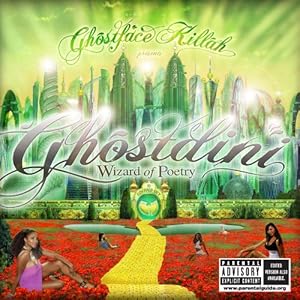
When Def Jam announced a release date for what turned out to be Ghostdini: The Wizard of Poetry In Emerald City, Ghostface's eighth (eighth!) solo album, we received answers to a few of those questions. It turns out that Pretty Toney simply made an entire album's worth of songs that featured him with some R&B backing, although some of the choices he made are questionable at best. (Lloyd? Does anyone really think Lloyd has so much clout that a member of the fucking Wu-Tang Clan would hand-pick him to appear on here?) Ghost sticks with what he knows best (that would be rapping) and turns in fourteen tracks of love songs (with one huge exception) that share two common themes: none of them feature any of his other coworkers from his day job with the Clan (including behind the boards: no Wu-Elements on board this time around), and all of them ultimately betray a slight misogynist bent. Otherwise, Ghostdini: The Wizard of Poetry In Emerald City (which is a terrible title) is just your typical Ghostface Killah album, albeit one that fails to explain how Ghost's alleged nickname GhostDeini (see: Supreme Clientele and GhostDeini The Great) somehow changed to Ghostdini overnight (great job, Def Jam proofreaders).
Ghostface's R&B experiment, which is rumored to be his swan song from Def Jam as a solo artist (if this is true, it's a weird way to end a relationship), was met with generally kind reviews and typical low sales, because nobody buys Wu-Tang Clan albums anymore. I've heard surprisingly good things about this project from fellow bloggers, but the project never appealed to me: even though I picked this one up a month or so after its release, I hadn't bothered to open it up until now. I think it might have been the ugly neon green album cover poisoning my eyes and, by proxy, my ears.
But hey, I've been wrong before.
1. NOT YOUR AVERAGE GIRL (FEAT SHAREEFA) Okay, maybe I have nothing to worry about. Aside from the Shareefa-helmed chorus, which isn't all that bad, Dennis rides this Scram Jones production as if it were an outtake from The Pretty Toney Album. Ghostface Killah has proven time and again that he can rhyme over damn near any kind of beat, and on here he does not disappoint. This search for a life partner set to music is a fairly good way to kick things off. If I had one complaint, it's that the title implies that Ghostface Killah is not your average girl, which might be due to the fact that he has a penis.
2. DO OVER (FEAT RAHEEM “RADIO” DEVAUGHN) While “Not Your Average Girl” came across as a Ghostface track featuring a special guest, “Do Over” is the exact opposite: on here, Dennis barely registers while “Radio” Raheem (who swiped his nickname from the Spike Lee joint Do The Right Thing) mans the ship. His verses are inconsequential, and his monologue at the end is cut off before it ends, leading me to believe that even the producer didn't care for Ghost's contribution. For what it's worth, DeVaughn sounded okay, but overall this song didn't work for me.
3. BABY (FEAT RAHEEM “RADIO” DEVAUGHN) I can get with this one, though. Over a moving instrumental that reminds me of Jay-Z's “Lost Ones”, “Radio” Raheem and Pretty Toney show love to their respective babies. Ghost was custom-built for beats such as these (which helps whenever The RZA is otherwise occupied), and his guest's chorus, even though Auto-Tuned to such a degree that an ATM may as well have performed on the track, hits all of the right notes. I prefer the more aggressive GFK, but this tamed-down version is pretty good, too.
4. LONELY (FEAT JACK KNIGHT) Only Ghostface Killah (and, to a far lesser extent, Method Man) could get away with a rap song about being lonely. (I suppose Chef Raekwon could also sound credible on a song about being friendless while surrounded by bricks of cocaine, but where's the fun in that?) “Lonely” relies far too much on the Jack Knight-crooned hook and the Sean C & LV beat, which believes itself to be more clever than it actually is, and the overall product suffers in the end.
5. STAPLETON SEX I remember early promotional material proclaiming that Ghostface Killah dedicated this dirty-as-fuck track to Natalie Portman, who had earlier proclaimed her love for filthy sex raps. While the mental image of Natalie Portman enjoying this song works for me in an entirely different way (okay, I just keep thinking of her line from The Lonely Island's “Natalie's Rap”: “I bust in dude's mouths like gushers, motherfucker!”), Sean C & LV's beat successfully captures a seedy 1970s porn vibe, and the track is short enough that you won't feel guilty for enjoying it, even if you'll need to shower afterward. This is easily the most graphic song that any member of the Wu-Tang Clan has ever recorded, although some of The RZA's solo bars come pretty close.
6. STAY Uses the sped-up R&B vocal sample technique throughout that Dennis tends to ride like a prize-winning llama, but the sentiment here falls flat, probably because all the beat consists of is that fucking sample. Boring as shit, as even Ghost would probably attest to.
7. PARAGRAPHS OF LOVE (FEAT VAUGHN ANTHONY & ESTELLE) Ghostface Killah swoops in and tries to snatch a pregnant woman away from her fiancée. There isn't much actual rapping on here, but I remember Starks talking about random food items, which is one of his longtime trademarks, so this wasn't bad at all.
8. GUEST HOUSE (FEAT FABOLOUS & SHAREEFA) Ghost's first uttered word on “Guest House” is a pissed-off “Fuck!”, which means that this will most definitely not be a love rap. Dennis starts to panic while at home alone, as his girl was only supposed to be going to the store, but when he goes out to his guest house (where he hides his gun) to prep for the search, he discovers her getting banged by, of all people, the cable guy (played by his labelmate Fabolous), who tries to talk his way out of getting shot the fuck up. F-A-B-O doesn't end up dying (oh, sorry: SPOILER ALERT!), but this track proves that Pretty Toney is one of the best storytellers on wax, period, even with the bizarre interlude featuring one of his girl's friends on the phone that can barely be understood. I don't know if this actually belonged on Ghostdini: The Wizard of Poetry in Emerald City: this sounds like a much better fit for More Fish or The Big Doe Rehab.
9. LET'S STOP PLAYIN' (FEAT JOHN LEGEND) The pairing of Ghostface Killah and John Legend isn't entirely unnatural: indeed, GFK is the most soulful member of the Clan (the late Ol' Dirty Bastard would have been a close second). Which makes it a shame that this track never fully clicks. Both men appear to be performing on separate songs, which doesn't exactly make for a cohesive listening experience. That's just too bad.
10. FOREVER The only track on Ghostdini: The Wizard of Poetry in Emerald City that features Ghost going for dolo, but even without assistance, he carries the theme of the project admirably, delivering a monologue that adheres fairly closely to his previously mentioned requirements from “Not Your Average Girl”. The beat probably could have also fit in seamlessly on The Big Doe Rehab. Not the greatest GFK performance ever, but not bad.
11. I'LL BE THAT (FEAT ADRIENNE BAILON) I hated this song, and not just because it isn't a cover of the Reggie Noble classic. From the production on down to the uninspired verses of our host, this shit sucked pretty hard. However, kudos to the fact that I was able to sit through ten full tracks before stumbling upon a song that I absolutely hate, so that counts for something. I wonder if the fact that the guest artist on here used to be a part of Disney's The Cheetah Girls means anything.
12. GONER (FEAT LLOYD) This track sounded pleasant enough, but other than one section that featured Pretty Toney singing a couple of bars in a fashion that mimics Snoop Doggy Dogg's “Gin & Juice”, this was entirely forgettable. How is it possible that this is the final song on the actual album, Ghost? What the hell?
13. SHE'S A KILLAH (FEAT RON BROWZ) Ron Browz is a detriment to hip hop and needs to shut the fuck up. There, I said it. However, unlike everyone else on Earth, apparently, I don't hate this song. Erase the annoying vocals from the aforementioned Browz, and what you're left with is a minimalist arrangement (save for where the chorus would be) from producer Anthony Acid that Dennis Coles rips the shit out of. It aims for a club audience, which may be why this is simply a bonus track: the rest of Ghostdini: The Wizard of Poetry in Emerald City was far more subdued. But this shouldn't be completely ignored. I understand if Ron Browz is too much for you two to look past, though.
14. BACK LIKE THAT (REMIX) (FEAT NE-YO & KANYE WEST) I can see why Def Jam included this track on Ghostdini: The Wizard of Poetry in Emerald City: not only does it adhere to the album's theme (a love rap, albeit one that turns into a revenge tale), it features two other Def Jam artists that can obviously use the free publicity. However, “Back Like That (Remix)” has already appeared on two previous Ghostface Killah projects: More Fish and the overall shitty GhostDeini The Great. So the third time is definitely not the charm: in fact, it verges on overkill. At least the label had the sense to designate this as a bonus track this time around.
THE LAST WORD: Leave it to Ghostface Killah to render the concept of a rapper's R&B album into something so goddamn appealing. The awkwardly titled Ghostdini: The Wizard of Poetry in Emerald City (mostly) works because Dennis Coles doesn't water himself down in any way: his mixture of love and anger is a skill he's been honing since Ironman. All of his solo albums contain love songs, as you will notice when you pull out the man's back catalog: he's just never done an entire disc full of them until now. The project is overloaded with guest spots, and a few of the songs outright suck, but otherwise, this was a pleasant surprise. Ghost's storytelling and emoting (he truly is one of the finest emo rappers today, although he would probably dismiss that categorization) appears in full force, and while the harder-hitting production values and cameos from other Wu-Tang Clan members are missed, Ghostdini: The Wizard of Poetry in Emerald City makes for the perfect complement to Raekwon's Only Built 4 Cuban Linx...Part II, in that it sounds absolutely nothing like it. Who says the Wu isn't versatile? I was expecting to hate this shit, but I was shocked at how well this admittedly absurd premise works.